


Israel Aerospace Industries Chairman Boaz Levy says he will “never sleep soundly” over Israel’s interceptor stockpiles, warning that a prolonged war and sustained ballistic missile fire create a constant need to replenish the country’s missile-defense arsenal.
“There are Israeli constraints and there are American constraints,” Levy told Ynet on the sidelines of the MEAD conference when asked whether nearly three years of war had left Israel facing a genuine shortage of interceptors. “There will always be a shortage because the war is asymmetric,” he said, adding that IAI production lines are operating around the clock to meet demand from Israel’s defense establishment as well as overseas customers, including Germany.
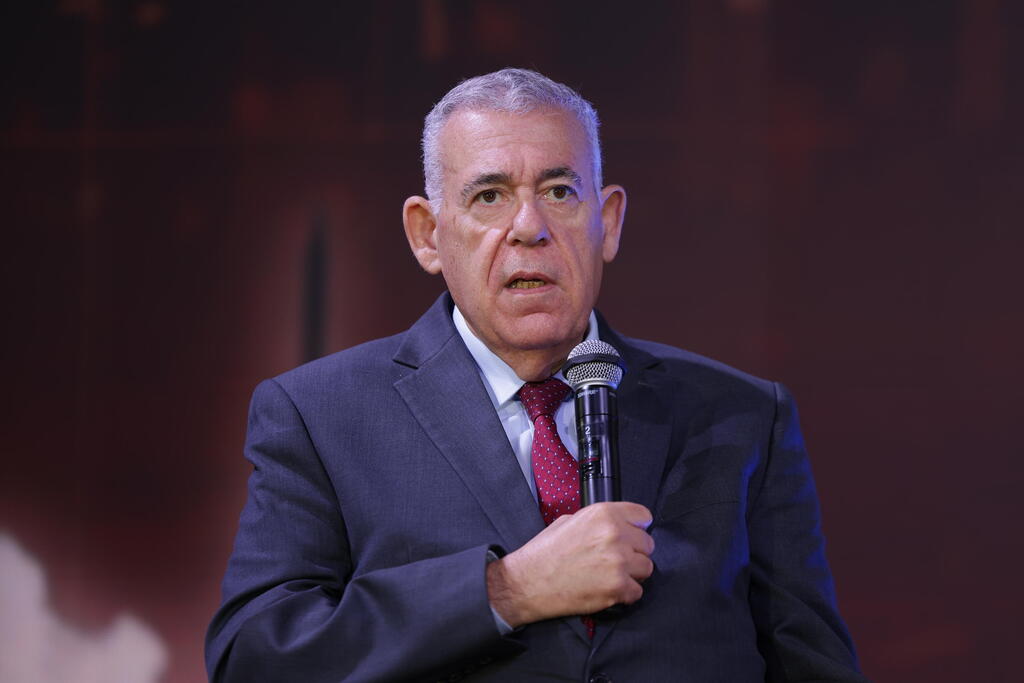
Levy also used the interview to send a message amid disputes over additional defense spending. “If you want more interceptors, you need bigger budgets, and the blanket is too short,” he said.
He said Israeli decision-makers understand the need, while the Defense Ministry is responsible for defining requirements and the Finance Ministry ultimately determines the available budget.
Asked whether he sleeps soundly knowing the size of Israel’s interceptor inventories, Levy replied: “I will never sleep soundly when it comes to interceptor stockpiles, because there will always be a need for more. Our job at IAI is to provide them as quickly and efficiently as possible, but these are highly sophisticated systems, and their production time is not negligible.”
The comments came during a conference where, behind the scenes, meetings were also held with representatives from a number of countries, including some that do not have diplomatic relations with Israel.
Levy, who was appointed IAI chief executive in 2020 after previously leading the Arrow missile-defense project and the Barak 8 program, has attended the conference annually. He said he sees air defense not only as an operational capability but also as a potential foundation for deeper cooperation between Israel and countries across the region.
“This conference is a good platform,” Levy said. “IAI is both a defense and civilian company. It is a national company, and it has responsibilities that go beyond supplying systems to the security forces.”
IAI employs about 16,000 people, including some 8,000 engineers, and Levy said the company supports roughly 50,000 Israeli households. That scale, he argued, gives it a responsibility to help create technological bridges that can strengthen both security and the economy while opening doors to additional countries.
‘There is nothing like this anywhere else’
Levy said technology should serve as a bridge for both civilian and military cooperation, particularly as the distinction between the two becomes increasingly blurred.
“The boundary between civilian and military is becoming blurred,” he said, adding that the latest war had demonstrated that reality to Israelis directly. “In our worldview, we always imagined a war with a distant front, and then the war was in Tel Aviv.”
Artificial intelligence is changing that equation even further, Levy said. Continuous data collection, including through Earth-observation satellites, can be used not only to detect threats such as missile launches from Iran but also to analyze terrain, movement, agriculture and water resources in both hostile and friendly countries.
“If you can generate insights from that, you can sell them, share them and create alliances with countries. It’s a win-win,” he said.
(Photo: IDF)
Levy said regional cooperation could eventually include shared use of space-based assets to provide both civilian and military intelligence, combined with ground-based systems to build a regional defense network.
“When a missile is headed toward Israel, or toward any other country in such an alliance, it passes through other countries,” he said. “If you advance cooperation, you increase your ability to respond. That is what Israel should aspire to.”
Israel, he added, already has enough allies to pursue such cooperation, some through public relationships and others through ties that are less visible.
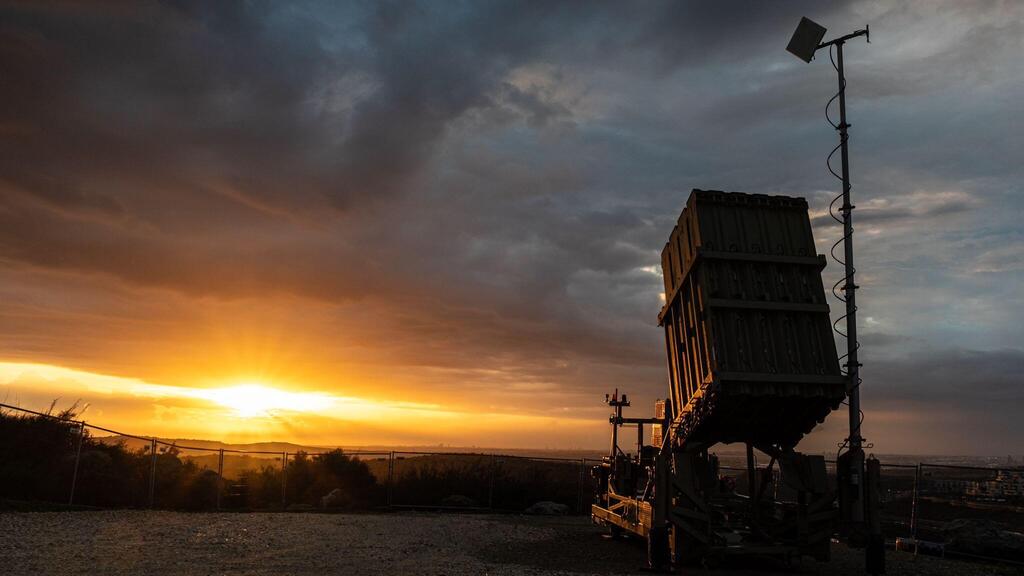
Levy said Israel’s particular advantage lies in its layered air-defense architecture, combining interception systems operating at different altitudes with early warning, command-and-control and cooperation between multiple systems.
“Today it is clear to every citizen in the world that Israel is the leading air-defense power in the world,” he said.
He pointed to advance warnings given to Israeli civilians before incoming missile barrages. “You sat at home and were told that a barrage would arrive in 10 minutes. There were no surprises,” Levy said, arguing that the combination of technology and civilian discipline helped limit casualties.
Defense cooperation as an engine for normalization
Levy said Israel’s air-defense capabilities could also become a diplomatic asset.
“Anyone who says, ‘I am entering an alliance with Israel and meet its criteria as an ally,’ can potentially share in your capabilities,” he said. “And this is already starting to happen. Requests are coming in from all over the world. They want to know.”
For national leaders, he argued, the ability to provide citizens with better protection offers an unusually strong justification for cooperation with Israel.
An interception over central Israel during Operation Roaring Lion
(Video: Nurit Shtenger)


Levy said talks are underway with numerous countries in Europe and the Gulf, although in most cases they currently involve the sale of defense systems rather than formal alliances.
Many of those countries understand that such relationships take time to develop, he said, predicting that some of today’s commercial relationships could eventually evolve into broader strategic alliances.
He described defense cooperation as a potential “locomotive” for normalization with countries in the region.
“What are we talking about here? People’s lives,” Levy said. “That is the most legitimate basis on which a decision-maker can build cooperation. No one is going to condemn him for that. If a leader says, ‘Through cooperation with Israel, I am giving my citizens protection,’ what could be more legitimate than that?”
Levy said IAI’s broader strength comes from operating across space, air, sea and land, with systems that can connect detection, communications, command and control and interception into a single operational chain.