


Iran claimed Tuesday that it had seized an unmanned U.S. military submarine near the entrance to the Strait of Hormuz, but provided no evidence to support the assertion and said footage would be released later.
The Islamic Revolutionary Guard Corps said the vessel was captured in what it described as a complex intelligence and operational mission carried out at dawn.
Gallery
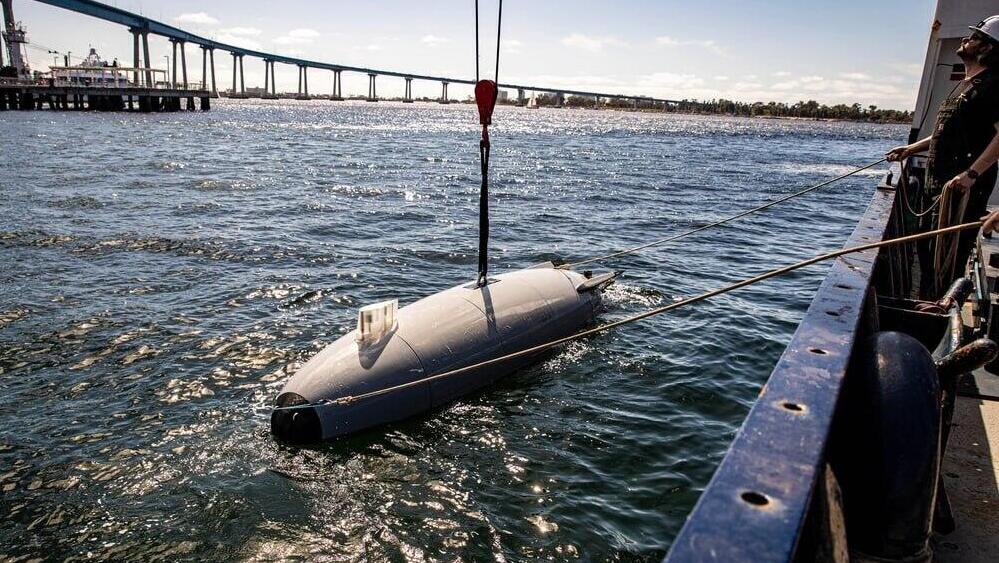
File photo of a Dive-LD unmanned submarine. Iran has yet to release any footage supporting its claims
(Photo: U.S. Navy photo by Ian Delossantos)
“The American submarine is equipped with extremely advanced technology and was supplied to the U.S. Navy in 2025,” the IRGC said, adding that images of the vessel would be released “in the coming hours.”
There was no immediate confirmation from the U.S. military, which had also not publicly denied the Iranian claim.
Iran’s Tasnim news agency said the vessel was a Dive-LD unmanned underwater vehicle made by U.S. defense company Anduril Industries, which reported last year that it had supplied systems of that type to the U.S. Navy.
According to Anduril, the Dive-LD is a roughly three-ton autonomous underwater vehicle capable of operating at depths of up to 6,000 meters. It can remain autonomous for up to 10 days, with missions potentially extended for several weeks.
The vehicle is designed for a range of missions, including underwater intelligence gathering, surveillance and reconnaissance, mine countermeasures, anti-submarine warfare and high-resolution seabed mapping.
The Financial Times reported this week that robotic underwater vehicles had been used by the U.S. Navy during operations to remove Iranian naval mines from the Strait of Hormuz, though it was unclear whether Dive-LD systems were involved.
The mine-clearing operation was part of a broader U.S. effort to restore shipping through Hormuz, a critical route for global energy supplies, after Iran sought to restrict tanker traffic through the waterway during the war.
U.S. President Donald Trump said last month that the operation had eliminated the mine threat to oil tankers.
Washington has also said its naval escort operation through Hormuz has significantly improved traffic through the strait, despite Iranian claims that the route remains effectively blocked.
There is, however, considerable disagreement over how much oil is actually moving through the waterway.
Trump said last week that flows had reached 18 million barrels a day, close to the roughly 20 million barrels that passed through Hormuz daily before the war.
Some experts have questioned that figure. U.S. Energy Secretary Chris Wright later said the current average was closer to 9 million barrels a day.
The latest Iranian claim comes as the U.S. continues an economic blockade of Iranian ports and as pressure mounts inside the Islamic Republic over a worsening economic crisis, which Iranian leaders fear could reignite domestic unrest.
Before announcing the alleged capture of the underwater vehicle, Iran’s Fars news agency also claimed that Iranian forces had shot down a U.S. MQ-1 drone over the Hormuz area. That claim was also not independently confirmed.
Ebrahim Rezaei, a member of the Iranian parliament’s National Security Committee, struck a defiant tone toward Trump, who has said Washington is prepared to show “patience” while economic pressure intensifies.
“The ring is tightening around the enemy, and the situation has become difficult for it,” Rezaei said. “Trump! Fight, if you can.”
Meanwhile, the U.S. Treasury Department expanded its sanctions campaign against Iran on Tuesday with a broad package targeting the country’s civilian aviation sector.
The sanctions included commercial airlines and foreign cargo and logistics providers. The Trump administration said 36 entities targeted in the latest measures had helped Iran transport weapons and illicit cargo.
The new measures also increase the risk of secondary sanctions for foreign companies and governments that continue doing business with the designated entities.
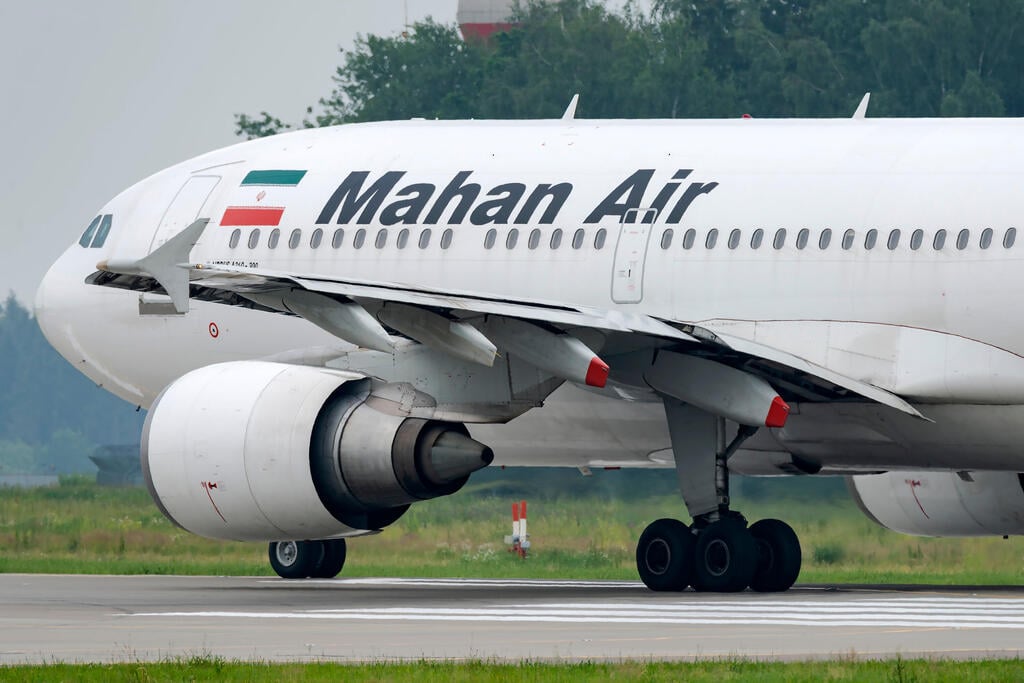
Iranian Mahan Air aircraft. The goal: ground it
(Photo: Shutterstock)
“Let this be a warning to anyone doing business with Iran’s remaining airlines, all of which we sanctioned today: You are at risk of being cut off from the global financial system,” Treasury Secretary Scott Bessent said.
The administration also accused private companies based in Turkey, the United Arab Emirates, Kazakhstan and Malaysia of supplying spare parts and logistical support to Mahan Air.
The Iranian carrier, which operates flights from Tehran to destinations across Asia, Europe and the Middle East, has long been under U.S. sanctions over allegations that it supports the IRGC.
The Treasury Department said the latest sanctions are intended to further restrict Mahan Air’s operations and ultimately ground the airline.