

The United States has sanctioned a London-based Muslim Brotherhood leader accused of raising funds for Hamas and other designated organizations, in a move expected to intensify pressure on the British government to take a tougher stance toward the Islamist movement.
Mahmoud al-Abyari, an Egyptian-Austrian dual national, was barred from entering the United States and had his assets frozen, the White House announced Thursday.
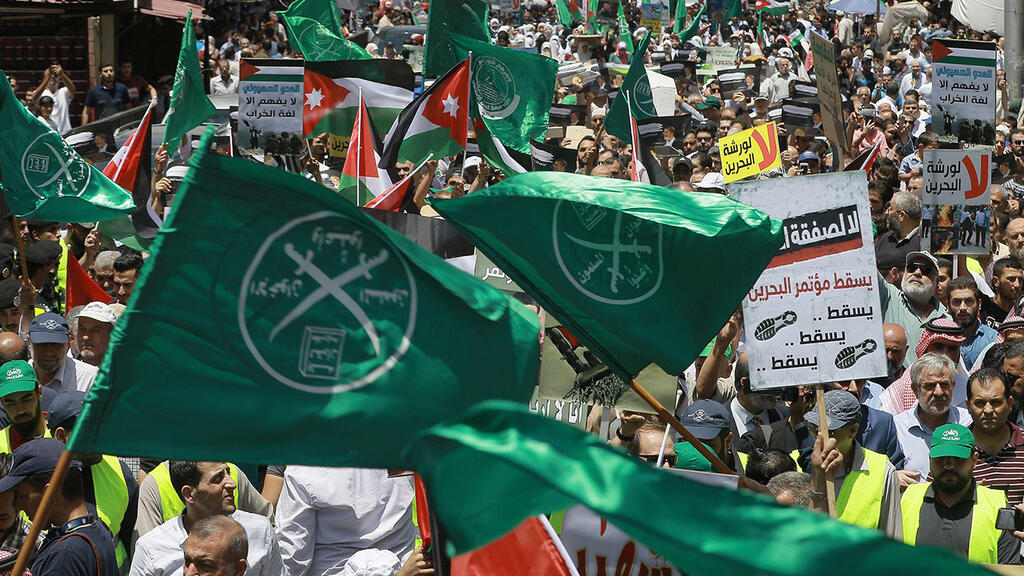
Muslim Brotherhood leader accused of raising funds for Hamas and other designated organizations
(Photo: AFP)
“The Trump Administration will relentlessly pursue terrorists and those who finance them,” U.S. Treasury Secretary Scott Bessent said.
“Whether operating under the guise of charities, businesses, or underground financial networks, those who enable Hamas will be exposed, sanctioned, and held accountable.”
The decision is likely to renew scrutiny of Britain’s approach to the Muslim Brotherhood, which is not banned or designated as a terrorist organization in the United Kingdom.
The movement is outlawed in Jordan and Egypt, where it was founded more than a century ago. The United States has designated Brotherhood chapters in Egypt, Jordan, Lebanon and Sudan as terrorist entities.
Robin Simcox, Britain’s former counter-extremism commissioner, welcomed the sanctions and urged the government to stop treating the Brotherhood as an issue placed on “the too-difficult pile.”
“We cannot just rely on Washington to take action regarding an issue that, first and foremost, is one in our own backyard,” Simcox told The Times.
“I consistently recommended to government it must take a proactive approach to meeting the challenge the Brotherhood poses head on. I hope that now happens.”
Brotherhood’s disputed relationship with Hamas
Hamas is widely regarded as an offshoot of the Muslim Brotherhood. Hamas founder Sheikh Ahmed Yassin established the Brotherhood’s Palestinian branch in Gaza before founding the terror group.
Ibrahim Mounir, then the Brotherhood’s UK-based acting leader, told a 2016 parliamentary inquiry into political Islam that Hamas had “no shared operational or administrative functions” within the movement.
He said the Brotherhood’s position was “unequivocal, unambiguous and unconditional,” adding: “No violence shall be used or approved in the national effort for change.”
The U.S. Treasury identified Abyari as secretary general of the Egyptian Muslim Brotherhood and secretary general of the Muslim Brotherhood General Secretariat.
It accused him of raising funds for sanctioned organizations, including the Turkish charities Filistin Vakfi and Hayat Yolu.
The department alleged that Abyari had “acted or purported to act for or on behalf of, directly or indirectly, the Egyptian Muslim Brotherhood,” which Washington designated as a specially designated global terrorist organization in January.
US targets alleged ‘sham charities’
The United States also sanctioned Indonesia-based Tujah Bulah Global, also known as Seven Spikes Global, and the Gaza-based Madad Palestine Charitable Society.
The Treasury described the organizations as “sham charities” that transferred substantial funding to Hamas’ military wing “even as the terrorist organisation continues to obstruct a peaceful resolution in Gaza.”
U.S. officials alleged that the Muslim Brotherhood and Hamas relied on “charitable facades and underground banking networks to move and disguise funds across jurisdictions.”
The sanctions also targeted Turkey-based El-Kahira for General Trading and three men associated with the company: owner Khuldun Khamis Zakaria Alden and shareholders Zaid Issam Ahmed Al-Jebouri and Abdullah Issam Ahmad Al-Jebouri.
“El-Kahira provided underground banking services, servicing both fiat and cryptocurrencies, to known Sweden-based organised crime groups like Foxtrot Network,” the Treasury said, describing the company as a “Hamas money exchange.”
The United States has previously accused the Foxtrot Network of arms trafficking, contract killings and assisting Iran in attacks against Israeli and Jewish targets in Europe.
The latest measures broaden Washington’s campaign against financial networks it says allow Hamas to move funds through charities, private companies, cryptocurrency services and informal banking systems.
They are also likely to deepen political pressure in Britain, where officials have repeatedly faced calls to reassess the Muslim Brotherhood’s legal status and activities.