


Gaza is increasingly being shaped by three competing centers of power: the IDF, which controls buffer zones, strategic routes and security areas; Hamas, which is trying to preserve its military and governing position; and local militias seeking to establish themselves as an alternative force. The struggle over weapons and security institutions is expected to become one of the central tests of any future arrangement.
Israel is demanding that Hamas be prevented from rebuilding itself as a significant military force, while Hamas refuses to relinquish the main tool that allows it to preserve its influence. The issue has also become the central point of conflict between Hamas and the local militias emerging against it.
Militia leaders told ynet that Hamas would not agree to surrender its weapons. Hussam al-Astal, head of a Khan Younis militia, said: “As I have known for a long time, it is impossible for Hamas to hand over its weapons. They know that if they surrender their weapons today, they will be killed by the people, not by us. And I am telling you, this agreement will not move forward.”
He said the weapons issue was the main obstacle. “Everything else can be discussed, but the weapons are a complicated issue,” he said.
Ghassan al-Duhaini, head of the Abu Shabab militia, also told ynet that Hamas had no intention of giving up its arsenal. “Hamas will not hand over the weapons,” he said. “Those who are here with us will not surrender anything.”
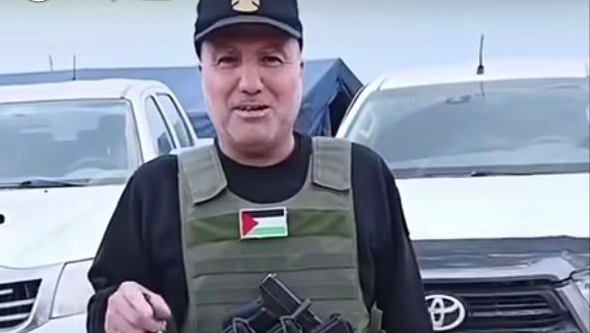
Hussam al-Astal
Al-Duhaini said the future struggle would also involve armed clans. “We will also demand the clans’ weapons,” he said. “All the clans and families that refused to establish contact with Israel served Hamas and concealed weapons for it.”
He argued that if Israel reaches elections without another major confrontation with Hamas, it would be viewed as weakness. “If Abu Yair goes to elections without a war, it will be as though he made peace with Hamas,” he said, using Prime Minister Benjamin Netanyahu’s nickname. “They will say he helped Hamas. That would be the biggest mistake.”
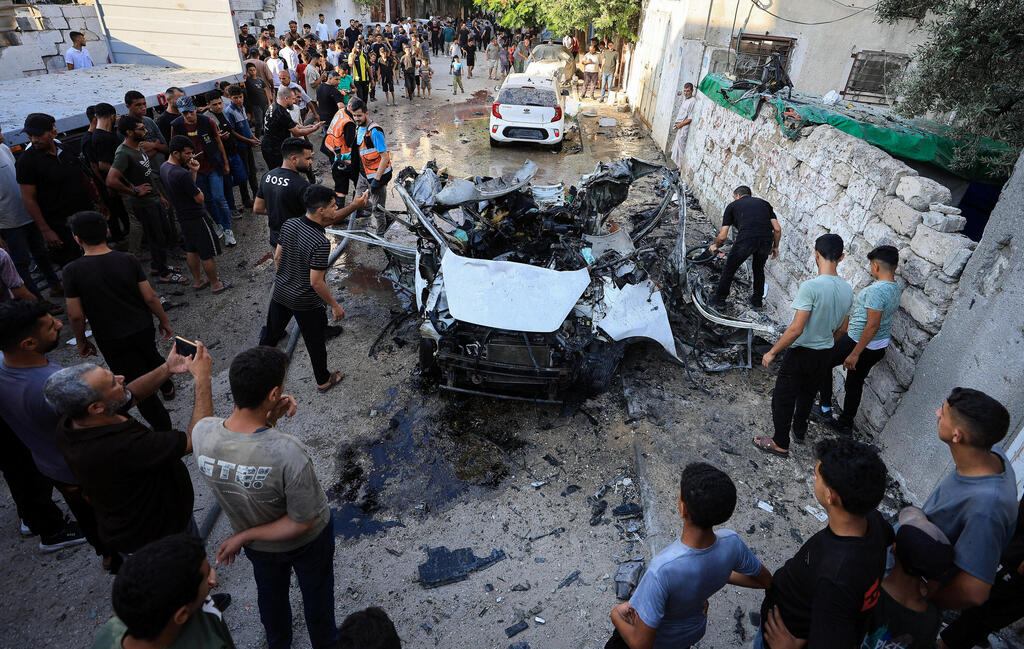
Fighting resumed Monday after approximately 30 hours of relative calm in the Gaza Strip. According to Palestinian reports, two people were killed and several others wounded in an IDF drone strike on a vehicle near al-Rashid Street in southwestern Gaza City.
Artillery fire was also reported in several areas across the Strip. At the same time, Hamas continues to demand that mediators halt the fighting and advance implementation of the second phase of the ceasefire agreement.
A senior Hamas official said the movement and other Palestinian factions “remain committed to what was agreed” and are waiting for a clear and formal response from the mediators, including Nikolay Mladenov, regarding the understandings reached.

Ghassan al-Duhaini
On the ground, however, conditions remain far from a full ceasefire. The IDF continues to maintain control over strategic areas and apply military pressure, while an internal battle intensifies over who will govern Gaza in the aftermath of the war.
One of the central features of the new reality in Gaza is the “yellow line,” the boundary separating areas under IDF control from territory where Palestinian activity continues.
Palestinians claim that the IDF has recently continued shifting the line westward by placing yellow concrete barriers, further restricting residents’ movement.
One such case was reported in the Tuffah neighborhood east of Gaza City, near Salah al-Din Road. Israel says the expansion of areas under its control is part of its effort to pressure Hamas and establish broader security zones for Israeli forces and communities near the Gaza border.