

A new report published overnight Wednesday in the United States is urging the international community to investigate whether Iran’s government used chemical weapons to suppress anti-government protests that erupted in December and led to the deaths of tens of thousands of Iranians.
The report, published by Fox News and authored by the Washington-based think tank Foundation for Defense of Democracies, raises concerns about what it describes as Tehran’s “shadowy chemical weapons program.”
Gallery
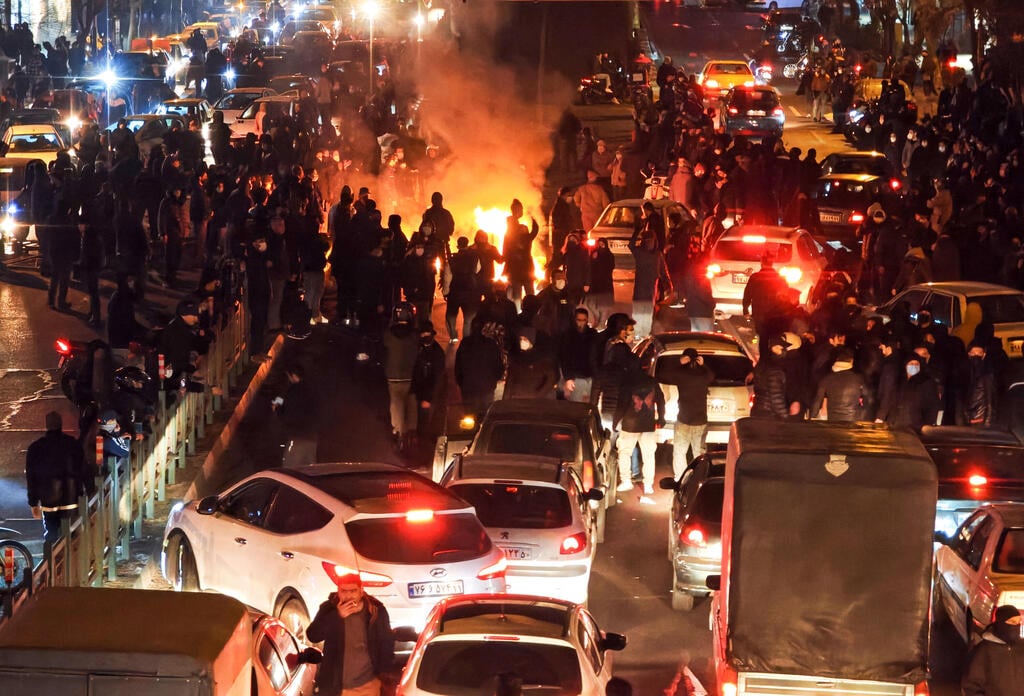
Mass anti-government protests in Tehran, Iran, January 8, 2026
(Photo: Anonymous/Getty Images)
The group has long opposed Iran’s government and the 2015 nuclear agreement. In the report, author Andrea Stricker said U.S. policymakers have devoted far less attention to Iran’s alleged chemical weapons activities than to its nuclear program, which has been subject to extensive international monitoring.
“The United States, its allies and the Organization for the Prohibition of Chemical Weapons (OPCW) should investigate credible claims that Iran’s regime used chemical weapons against its own people,” Stricker said, referring to the body that oversees compliance with the Chemical Weapons Convention.
Iran is a signatory to the 1997 Chemical Weapons Convention, which prohibits the development, production, stockpiling and use of chemical weapons, including in retaliation. Any confirmed use would constitute a violation of the treaty.
Stricker also said that if Washington launches a military strike against Iran, it should consider targeting the country’s chemical weapons research and production facilities, arguing that such action would deter further development and use.
The report’s publication comes amid an ongoing U.S. military buildup in the region and a day before another round of talks between Washington and Tehran is set to take place in Geneva.
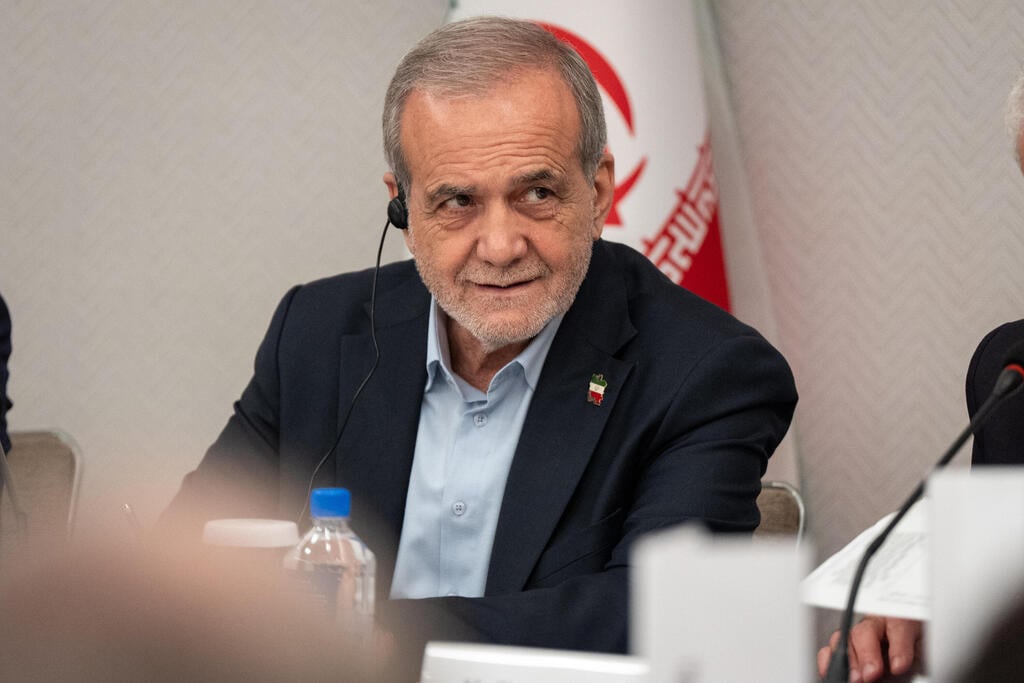
Iranian President Masoud Pezeshkian
(Photo: AP Photo/Angelina Katsanis)
Ahead of the talks, Iranian Foreign Minister Abbas Araghchi said that “A deal is within reach, but only if diplomacy is given priority.” Iranian President Masoud Pezeshkian said Tehran’s approach is based on “support for peace and stability,” adding that regional tension would harm all countries.
In 2024, the United States and Israel accused Iran of failing to meet its obligations under the Chemical Weapons Convention. Tehran rejected the allegations. In a statement at the time, Iran’s UN mission said the claims were baseless and described them as part of “psychological warfare” by Israel. Iran has long maintained that, as a victim of chemical weapons used by Saddam Hussein’s Iraq during the 1980-88 war, it opposes such arms.
The Foundation for Defense of Democracies also called on Israel to ratify the Chemical Weapons Convention. Israel signed the treaty in 1993 but has not formally ratified it. The group said ratification would bolster Israel’s credibility in confronting alleged Iranian violations.
Stricker argued that the international community, led by the United States, must take stronger action to deter Iran from transferring nonconventional weapons to allied groups in the Middle East.
“The only solution to Iran’s persistent WMD threat is for the United States and Israel to undermine the regime’s grip on power,” she wrote. “Until then, the two nations will periodically be forced to play whack-a-mole with Tehran’s capabilities whenever they endanger regional peace.”
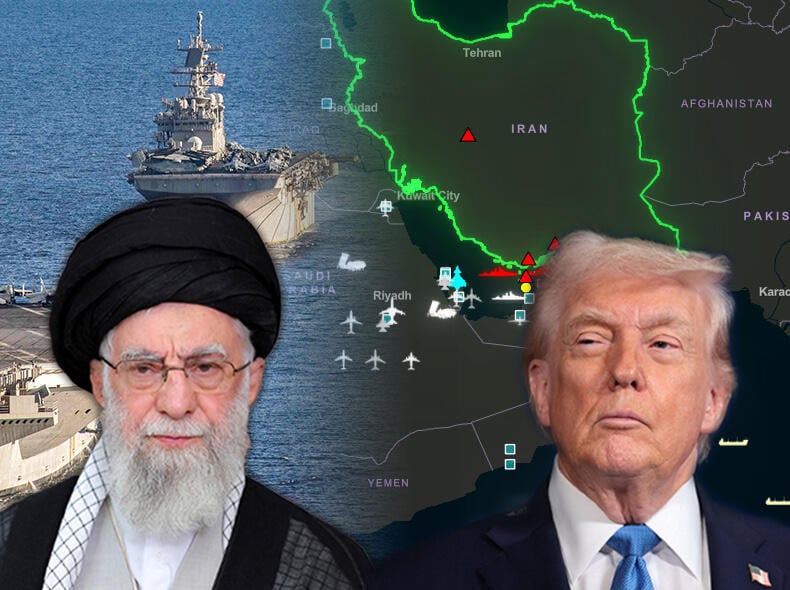
(Photo: REUTERS/Jonathan Ernst, Office of the Iranian Supreme Leader/WANA (West Asia News Agency)/Handout via REUTERS, INSS)
Meanwhile, U.S. President Donald Trump’s administration on Wednesday announced a new round of sanctions targeting more than 30 individuals, companies and vessels accused of facilitating illicit Iranian oil sales and supporting Tehran’s ballistic missile and advanced conventional weapons programs.
The sanctions were imposed by the Treasury Department’s Office of Foreign Assets Control as part of Washington’s “maximum pressure” campaign against Iran.
According to the Treasury Department, the measures target 12 additional vessels allegedly operating as part of Iran’s “shadow fleet,” a network of tankers and front companies that transport Iranian oil and petroleum products to foreign markets while obscuring their origin. U.S. officials say the revenue funds domestic repression, regional proxy groups and weapons development.
Treasury Secretary Scott Bessent said Iran “exploits financial systems to sell illicit oil, launder the proceeds, procure components for its nuclear and conventional weapons programs and support its terrorist proxies.”
The vessels identified in the sanctions are accused of transporting millions of barrels of crude oil, liquefied petroleum gas and petrochemical products to East Asia, South Asia and Turkey in recent years. Some have allegedly been active in Iranian shipping networks since 2020.
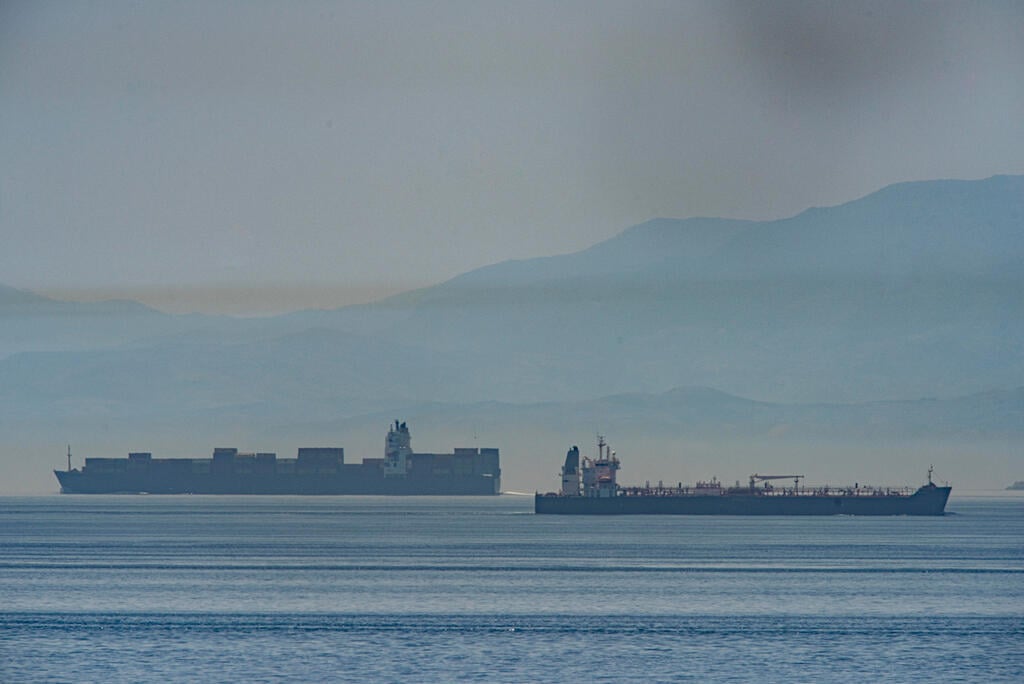
Iranian oil tanker
(Photo: AP)
The sanctions also target companies registered in Panama, the Marshall Islands, Liberia and the British Virgin Islands that are listed as owners or operators of the vessels. Any assets within U.S. jurisdiction are frozen, and U.S. individuals and entities are barred from conducting business with them. Foreign financial institutions that continue significant dealings with designated entities risk secondary sanctions.
In addition, Washington imposed sanctions on nine individuals and companies in Iran, Turkey and the United Arab Emirates accused of helping procure sensitive machinery and chemical materials for Iran’s Revolutionary Guard and Defense Ministry for use in ballistic missile and advanced weapons production.
The Treasury Department said some of the networks operated on behalf of Oje Parvaz Mado Nafar, a company that manufactures drone engines. Turkish firms allegedly served as financial intermediaries in transactions involving sensitive equipment.
Sanctions were also imposed on entities accused of facilitating the procurement of sodium perchlorate, a precursor used to produce ammonium perchlorate, a key component in solid rocket fuel for ballistic missiles.
Four senior officials from Qods Aviation Industries, an arm of Iran’s Defense Ministry that the U.S. says produces and develops drones supplied to Russia and Venezuela, were also designated.
According to the Treasury Department, more than 875 individuals, vessels and aircraft have been sanctioned in 2025 alone as part of the economic campaign against Tehran.
U.S. officials said the goal of the sanctions is not punitive but aimed at changing the behavior of Iran’s government and halting its support for terrorist groups and weapons development programs, which they say take precedence over the welfare of the Iranian people.