


Prime Minister Benjamin Netanyahu departed the United States on Thursday evening, returning to Israel after a brief visit during which he met with President Donald Trump.
“The talks with Trump focused primarily on the negotiations with Iran,” Netanyahu said aboard his plane. “The president believes the Iranians now understand who they are dealing with. I think that under the conditions he is creating, combined with the fact that they surely understand they made a mistake the last time by not reaching a deal, conditions could emerge for achieving a good agreement.”
Gallery
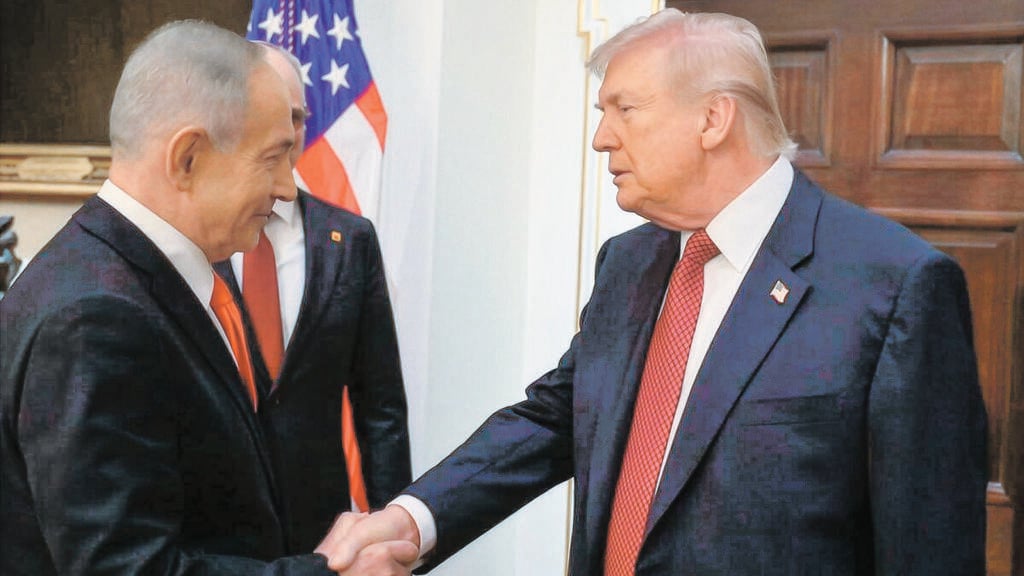
US President Donald Trump and Prime Minister Benjamin Netanyahu during their meeting at the White House
(Photo: Avi Ohayon/GPO)
At the same time, Netanyahu made clear he remains skeptical. “I won’t hide from you that I expressed general skepticism about the quality of any agreement with Iran,” he said. “If an agreement is reached, it must include the elements that are important to us, to the State of Israel, and in my view to the entire international community — not only the nuclear issue, but also ballistic missiles and Iran’s proxies in the region.”
“It was an excellent conversation,” Netanyahu concluded, adding that it also addressed Gaza and other general issues.
Officials in Netanyahu’s entourage described the visit as a success, saying he presented Trump with updated intelligence on Iran’s nuclear and missile programs. The information had previously been shown to Trump’s envoy, Steve Witkoff. However, people close to Netanyahu suspect Witkoff — who played a central role in the recent hostage deal — of representing “Qatari interests.”
Preparing the military option
Ahead of the meeting, Qatar’s emir called Trump to ensure that Netanyahu would “not incite a war with Iran.” Netanyahu does not want to be perceived in the United States as pushing Trump toward war, particularly after Israel has lost support among younger Americans and faced criticism within pro-Trump MAGA circles. Still, Israeli officials said it was important for Trump to hear Netanyahu’s position directly.
Trump chose to hold the meeting in the Cabinet Room rather than the Oval Office, a detail Israeli officials said was significant given the military implications. For now, both Washington and Tehran appear to be buying time. Trump wants to be seen as committed to negotiations and not dragged into war by Netanyahu. Shortly after Netanyahu’s motorcade left the White House, Trump posted that he had “insisted” on continuing diplomacy.
Israeli officials, however, doubt that the United States will ignore developments in Iran, including images circulating there of coffins bearing the names and photos of U.S. admirals and the American flag, among them Central Command chief Gen. Brad Cooper. Iranian leaders may be attempting to intimidate, officials said, but they underestimate Trump.
They also cited Trump’s pledge to the Iranian people that help is on the way. Ultimately, U.S. officials are expected to hold Iran accountable, but more time is needed to exhaust diplomatic efforts. In the meantime, preparations continue.
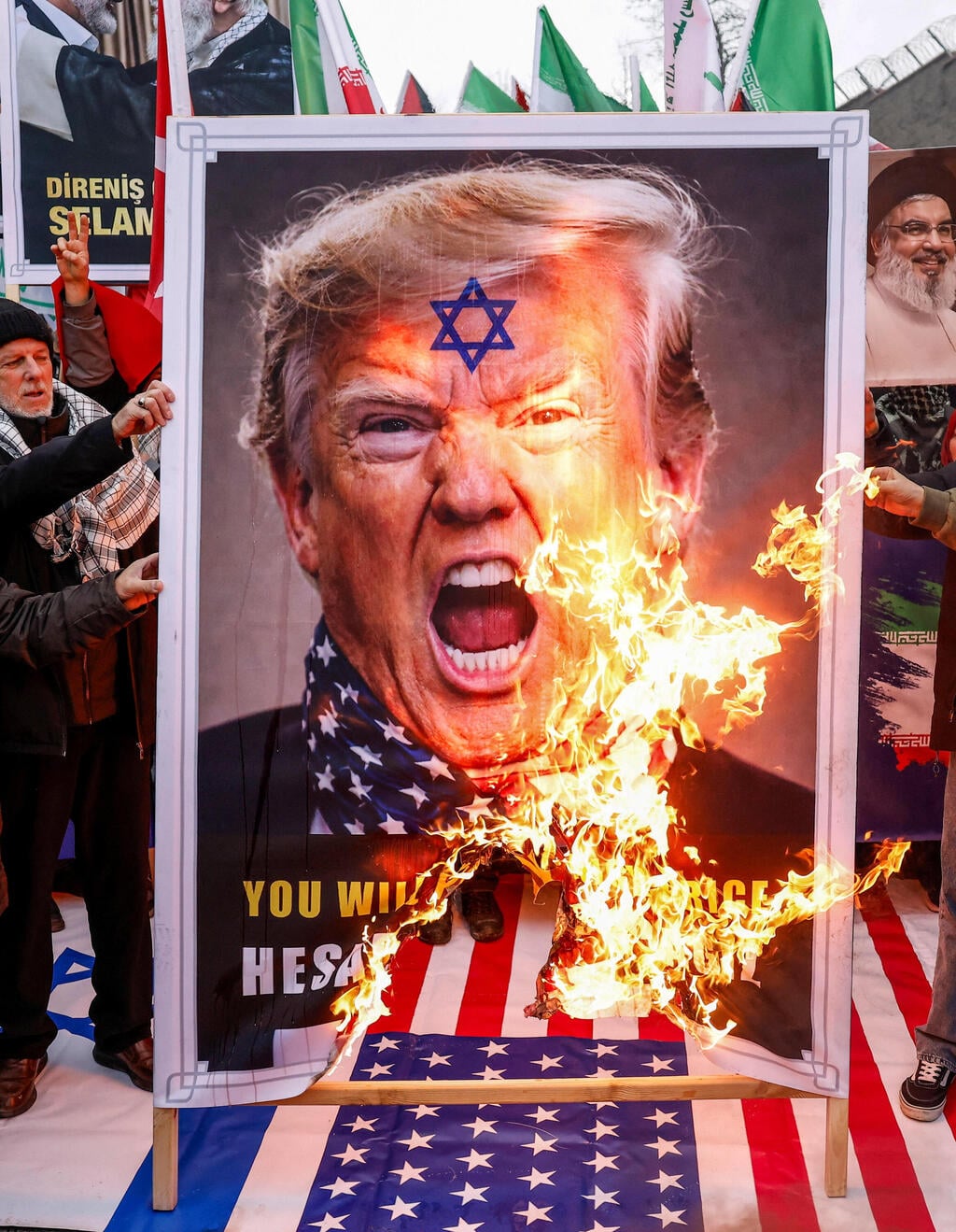
Scenes in Iran: burning Trump’s photo with a Star of David
(Photo: REUTERS/Kemal Aslan)
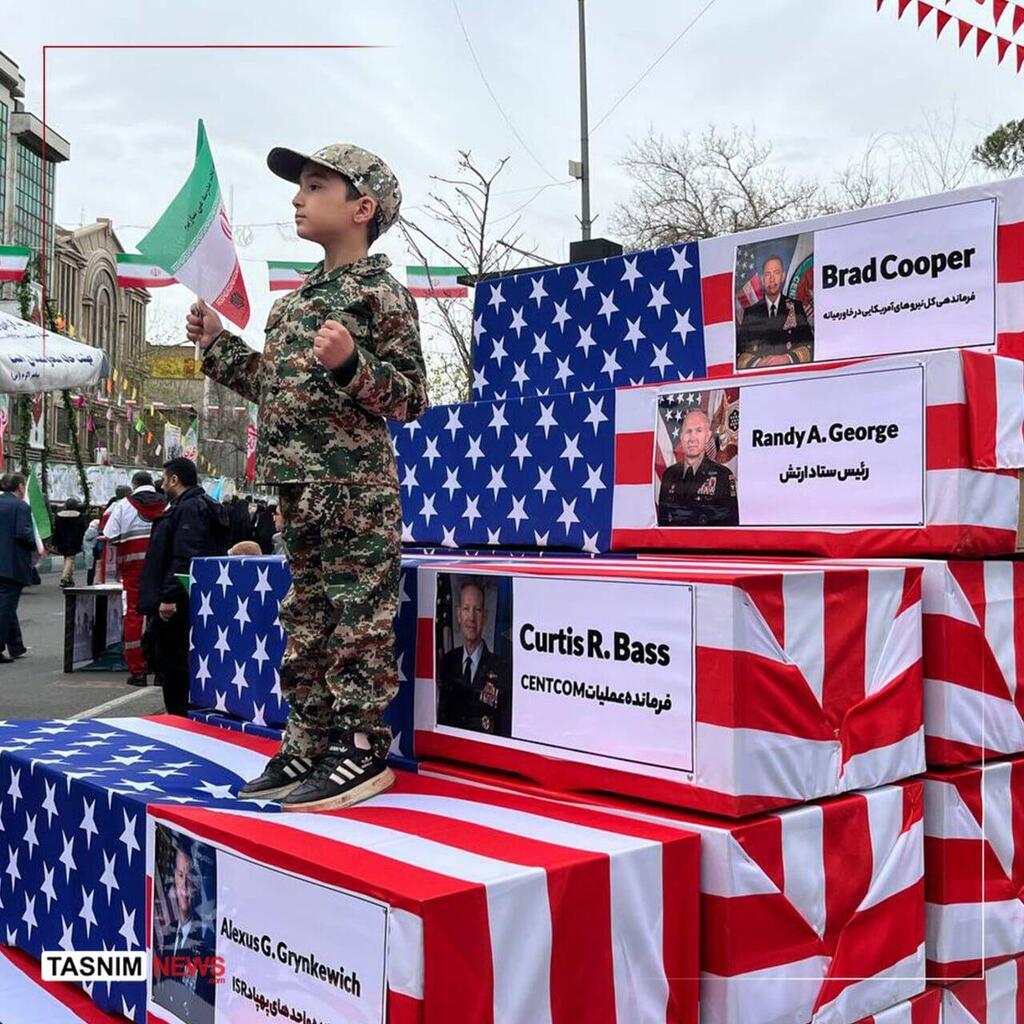
The 'coffins' in Tehran
Trump also kept a relatively low media profile during the visit, in contrast to previous Netanyahu trips. Even his social media post appeared prepared in advance, using language suggesting that Netanyahu had not persuaded him to abandon diplomacy. The message to Qatar, Israeli officials said, was clear: Trump was not buying Netanyahu’s tactics.
At the same time, the United States has moved forward with deploying a second aircraft carrier to the Middle East. The USS George H.W. Bush is en route to the region. Israeli officials said the public messaging does not contradict what was discussed behind closed doors.
Defense Secretary Pete Hegseth attended the meeting, underscoring that military scenarios were on the table. While it is unclear whether maps and aerial photographs were presented, officials said the conversation addressed the possibility of war, missile defense, joint U.S.-Israeli operations and what could be achieved in a military confrontation with Iran.
Skepticism about a deal
Despite Netanyahu’s trip, Israeli assessments remain unchanged. Trump is giving negotiations with Iran a chance and hopes that the substantial U.S. military buildup will pressure Tehran into backing down.
In Jerusalem, however, officials do not believe a deal is likely. They argue Iran will not relinquish its missile program or funding for regional proxies, two central pillars of what Israel views as the Iranian threat. Even if an agreement is reached, Israeli officials doubt Tehran would fully comply.
Israel is pressing the United States to pursue stringent conditions: zero uranium enrichment on Iranian soil, no enriched uranium in the country, full International Atomic Energy Agency oversight, limits on ballistic missile ranges to 300 kilometers, and an end to funding for the Houthis and Hezbollah, among other measures.
Iran’s supreme leader, Ayatollah Ali Khamenei, would never accept such terms, Israeli officials said, describing them as tantamount to surrender.
That, they argue, is part of the preparation for a military option. Trump could tell the world he did everything possible to reach a deal, but Iran remained intransigent and rejected U.S. proposals, leaving it to face consequences.
At the same time, Israeli officials do not rule out the possibility that counterpressure on Trump — including from Witkoff, Qatar, Turkey and Egypt — could influence the outcome. In that scenario, Trump might reach a compromise deal addressing only some issues, potentially focusing solely on the nuclear file.
The concern in Jerusalem is that at the last minute, Trump could settle for a nuclear-only agreement, leaving other aspects of Iran’s threat intact.
If that happens, Netanyahu would face a dilemma. He would be unlikely to publicly confront Trump as he did President Barack Obama over the 2015 nuclear deal. Nor could he easily appeal to Congress after alienating many Democratic lawmakers. His political base in Washington rests largely with Republicans, and even that support is not uniform.
What comes next?
For now, Israeli officials say Trump’s intentions remain aligned with Israel’s security. He has a track record of actions viewed in Jerusalem as beneficial.
At the same time, Trump has asked Netanyahu not to surprise him regarding Iran, which Israeli officials interpret as a request that Israel refrain from launching a preemptive strike that could drag the region into war.
Another factor is timing. Trump is set to host what has been described as a “peace gathering” in Washington on Feb. 19, the first meeting of the Gaza Board of Peace. A war with Iran now would undermine his efforts in Gaza and complicate his image as a peacemaker.
In the meantime, both sides are expected to intensify preparations, defensive and offensive, in case conflict breaks out. Officials familiar with the matter assess that “nothing will happen in the immediate future.”