

Just six weeks after giving birth to her first child, Noa, 31, a resident of Tel Aviv's Montefiore neighborhood, is already afraid to take her daughter out for an evening stroll. She lives in a luxury building with security guards and pays high maintenance fees, but says even the building's security measures can no longer give her a sense of safety. In the mornings, she encounters discarded syringes in the garden beneath her home, while in the evenings, she says, numerous homeless people roam the neighborhood.
About a month ago, for example, a homeless woman entered Noa's building, knocked on residents' doors and shouted. In another incident, she says, a man carrying a saw attempted to break into apartments.
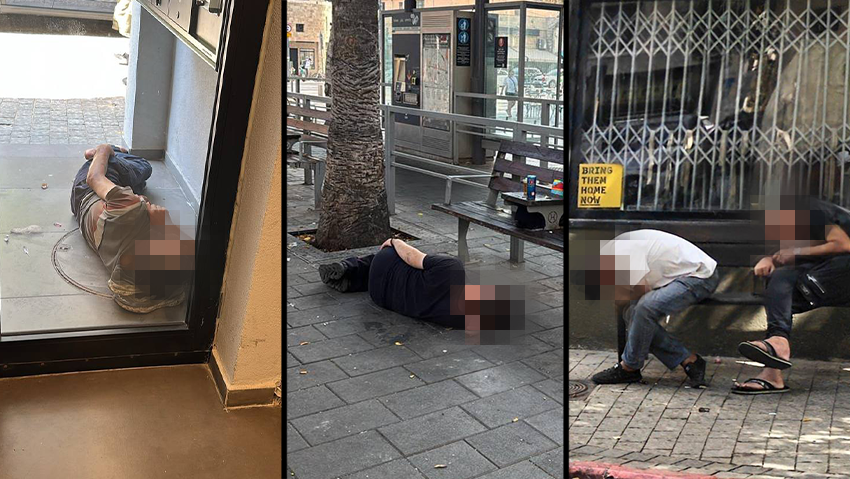
Homeless people take over a luxury apartment building in Tel Aviv's Montefiore neighborhood


"We have security guards in the building, and I'm supposed to feel extra protected, but it doesn't feel safe anymore," she says. "I now have a six-week-old baby, and there are lots of small children in the building. It's terribly stressful. I'm not going downstairs in the evening with the stroller and my daughter for a walk. It feels like Harlem here."
For years, homelessness and public drug use have been associated with the area around Tel Aviv's old Central Bus Station and several neighborhoods in the city's south, which have suffered from severe neglect and what residents describe as an inadequate police presence. Now, however, residents of other neighborhoods say they are experiencing similar conditions. From Dizengoff Square to Montefiore, Jaffa's Noga district and the streets surrounding Rothschild Boulevard, residents describe sanitation problems and a growing sense of insecurity.
Noa has lived in Tel Aviv for a decade, but says the past year has been unlike anything she previously experienced.
"I feel things are getting worse," she says. "Rothschild used to be pleasant, but that's really not the case anymore. I would never walk around my neighborhood alone in the evening. I'd ask my husband to accompany me or take the car."
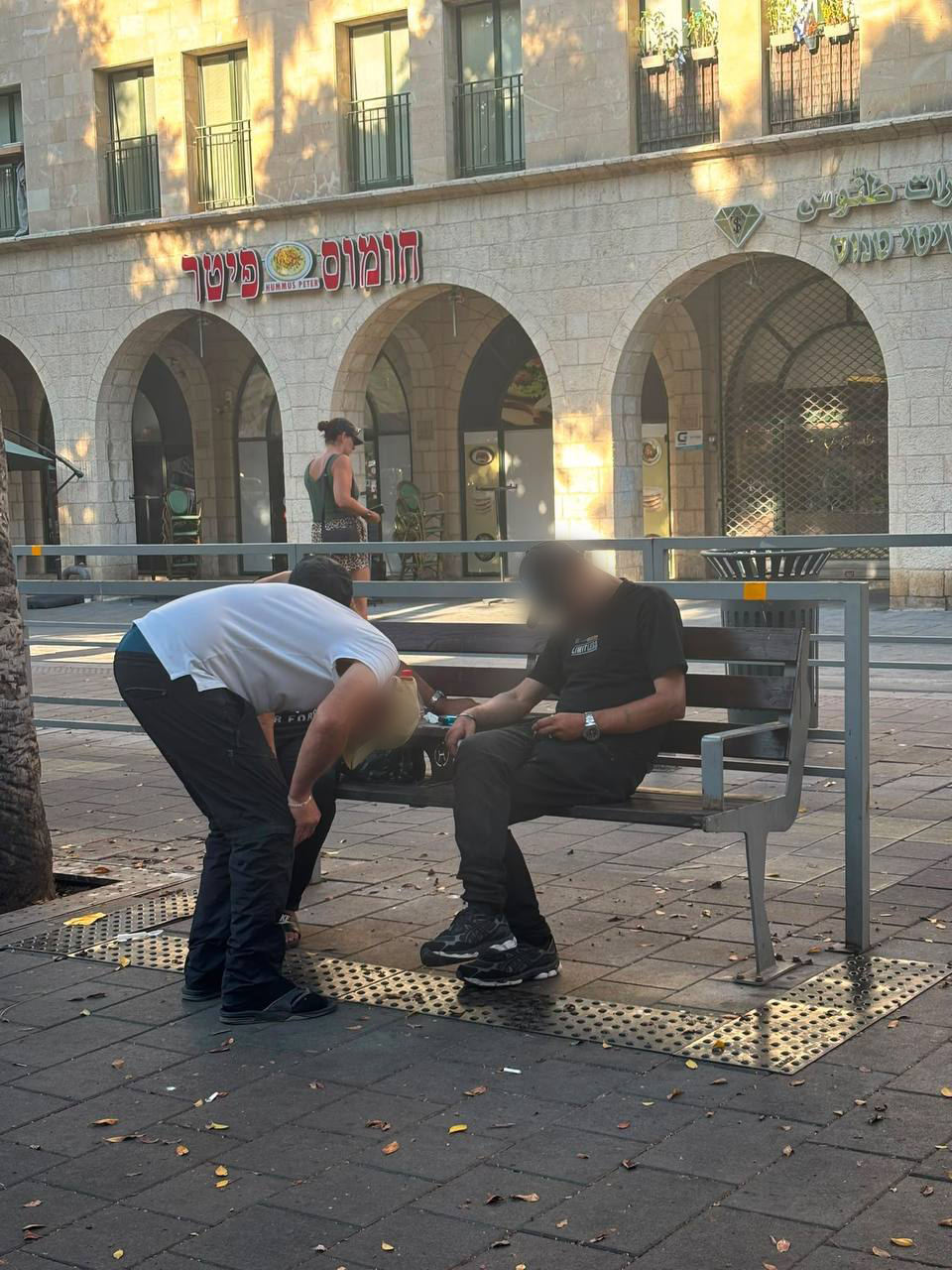
(Photo: Shosh Merhav)
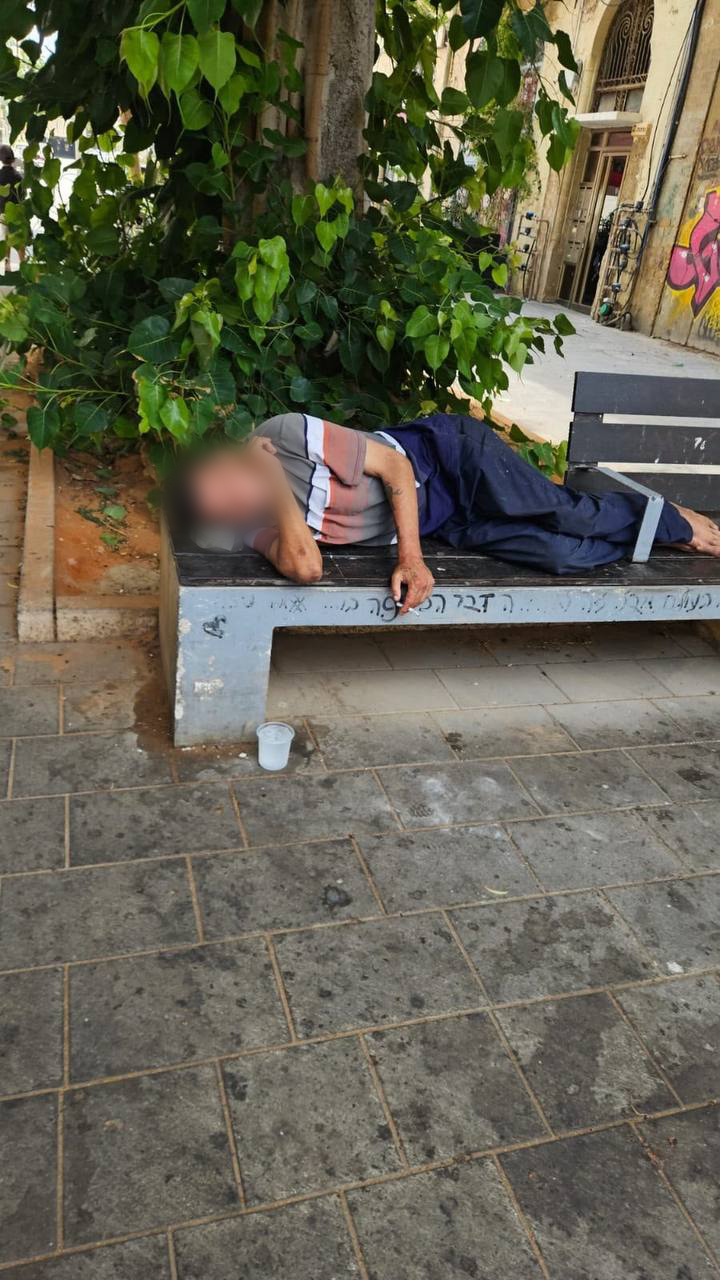
(Photo: Shosh Merhav)
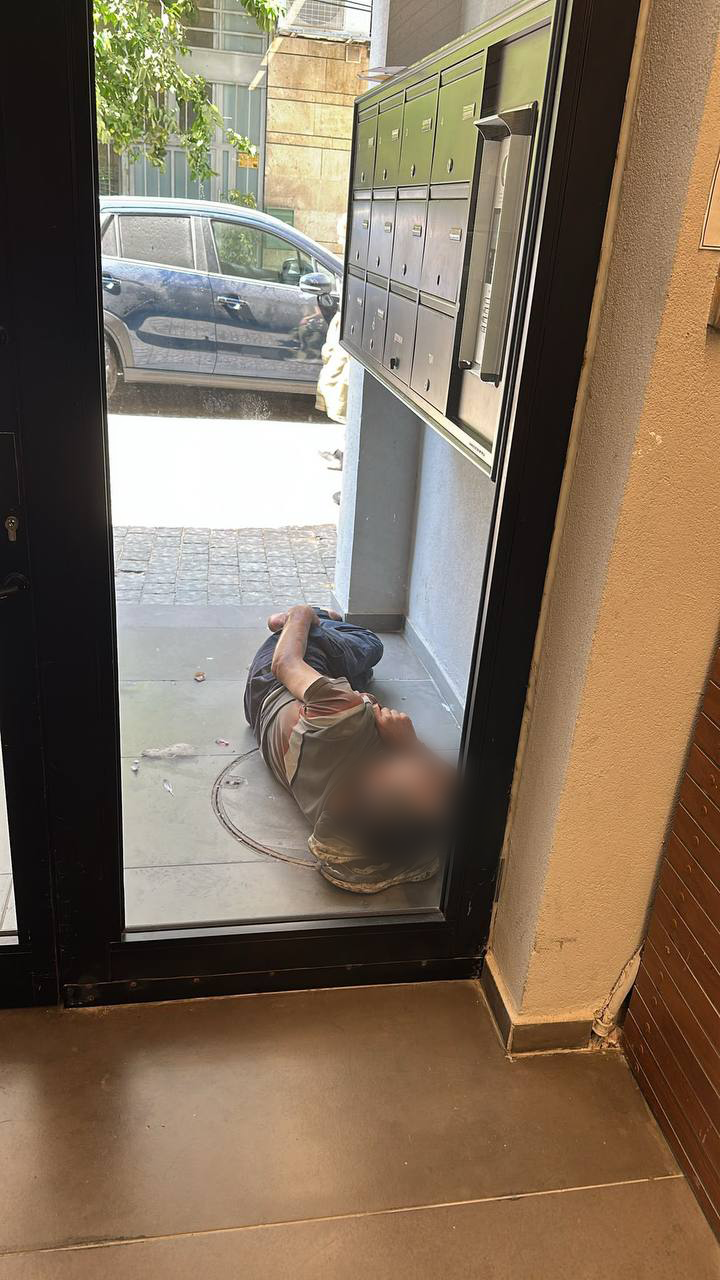
(Photo: Shosh Merhav)
According to Noa, the scenes are not confined to the area immediately surrounding her building.
"Yesterday morning, I went to see a doctor in central Tel Aviv, and on the way I saw an unbelievable number of homeless people and drug addicts," she says. "Near the Gindi mall, people are lying on the ground. It's become a real scourge. It feels like New York after COVID. I don't remember ever experiencing anything like this in any apartment I've lived in around the city."
She also believes the municipality's response is inadequate. "I never see municipal patrol vehicles in my area, and even when we call the municipal hotline, it takes them a long time to arrive."
Her conclusion is bleak. "I feel like I'm getting signs that you can't live in Tel Aviv with children, as if the city is driving us out," she says.
‘You can't describe the smells’
In Jaffa's Noga district, Adi, who has lived in the neighborhood for five years, describes a situation that she says has become particularly difficult over the past year. She believes part of the problem is connected to a homeless shelter in Jaffa that, according to her, operates only during the evening and nighttime hours, leaving those who stay there without a place to go during the day.
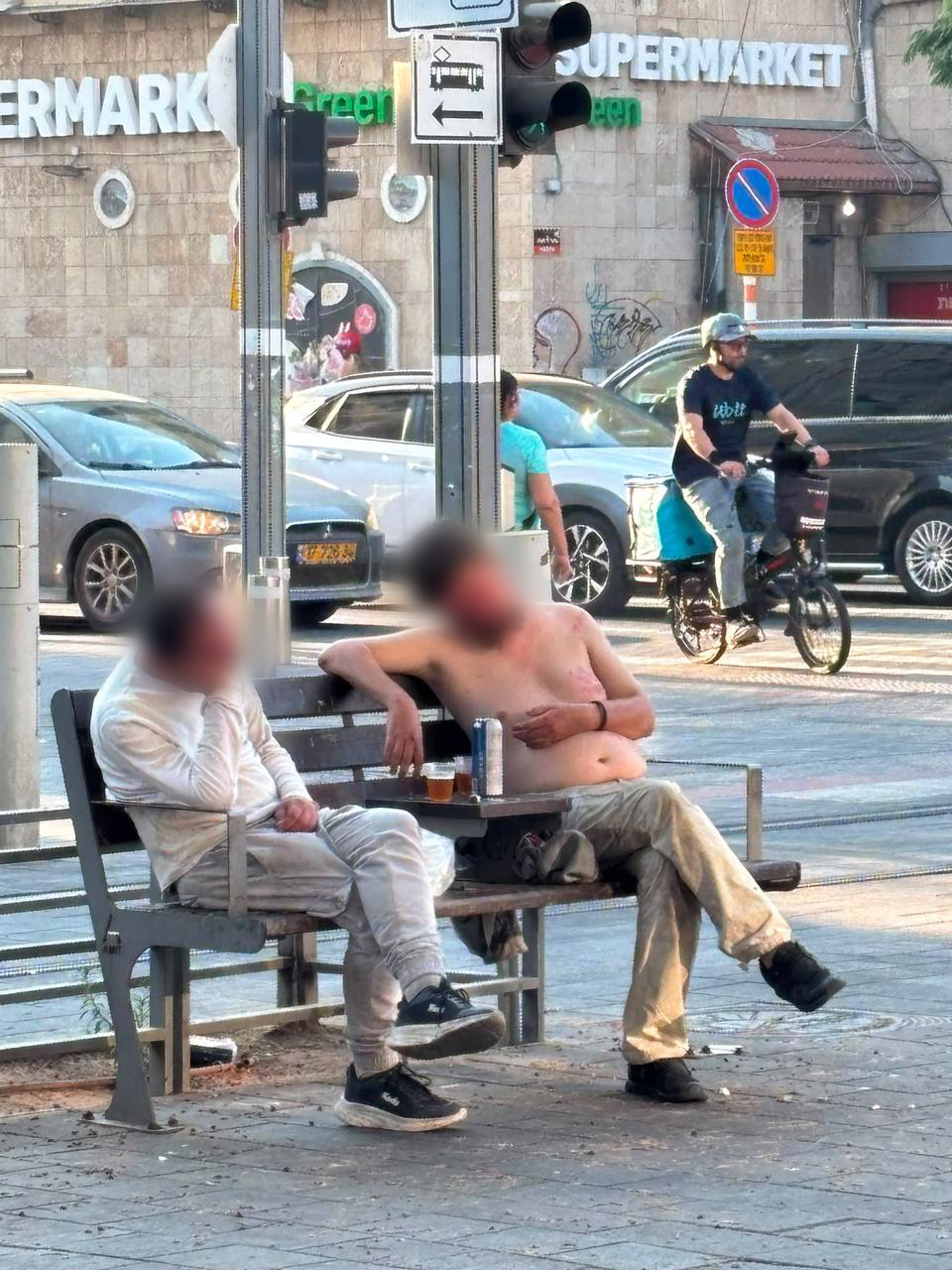
"In the morning, they leave the shelter and wander around the neighborhood. That means they have to be somewhere during the day," she explains. "And that somewhere is our stairwells, the Salame light rail station, wherever they manage to sit down. These are human beings, not rats on a construction site. They have nowhere to relieve themselves during the day, so they simply do it in the middle of the street or in the stairwells of the buildings we live in."
In one incident, residents of her building had to call the municipal 106 hotline after a homeless person fell asleep at the entrance and blocked access to the building.
"People have relieved themselves at the entrance to our building. You can't describe the smells," she says. "It's a problem that's getting worse and worse. I've lived here for five years, and over the past year it's become an absolute catastrophe. Even walking from my home to the car, you can see two guys with syringes in their hands, one on the ground and another on a bench. And that's within just two meters."
(Photo: Shosh Merhav)
(Photo: Shosh Merhav)
Adi also describes shouting, harassment of people sitting at cafés and attempted car break-ins, which she says have become part of life in the neighborhood.
"The streets are dirty, they stink, and they're unsafe," she says. "I don't go out alone in the evening anymore."
But rather than simply demanding that homeless people be removed from the neighborhood, Adi emphasizes that any solution must also address their distress. According to her, the municipality has deployed patrol officers who circulate through the area, but their presence does not change the situation. It merely moves people from one location to another.
"If five guys are sitting on Jerusalem Boulevard using drugs, they move to another pedestrian street, and 15 minutes later they'll be moved back to Jerusalem Boulevard, and it goes on and on," she says. "They're playing cat and mouse with them instead of finding a solution. A humane solution for both the residents and the homeless people."
She says her appeals to municipal officials have gone unanswered. "I've approached various people at the municipality, and they simply ignore me. If it's convenient not to deal with something, they don't deal with it. No response. It's insulting. At least respond."
Adi also criticizes the municipality's priorities. "The municipality treats Noga as an upscale neighborhood. If all of Tzahala were full of homeless people, I'd understand the property tax rates and the way we're treated, but this isn't Tzahala. This is Jaffa. Jaffa doesn't get resources from the municipality. Period."
‘The change began after the war’
Longtime residents of central Tel Aviv, particularly around Dizengoff Square, also describe a noticeable change. Yuval Ben Gal, 30, a fitness studio owner who lives on Sirkin Street, says she encountered several unusual incidents near her home over the past week.
"On Saturday morning at 11, I was coming back from walking my dog when I saw a drug addict trying to dismantle an electric bicycle outside the building," she recalls. "The next day, on my way to the bus, I saw homeless people lying everywhere. All my friends are talking about it."
Homeless people on Dizengoff Street
According to Ben Gal, Dizengoff Square itself has also become a focal point for public drug use. "Drug addicts inject themselves there on Friday evenings," she says.
In another incident, she describes a woman standing in the area, shouting and displaying signs offering passersby sexual acts involving herself and a dog in exchange for payment. According to Ben Gal, municipal inspectors arrived and took the dog, although she does not know how the incident was ultimately handled.
Ben Gal says homeless people also regularly sleep outside her studio. To her, the situation represents a significant change from previous years.
"Something has changed over the past year. It was never like this, and I've lived here for seven years," she says.
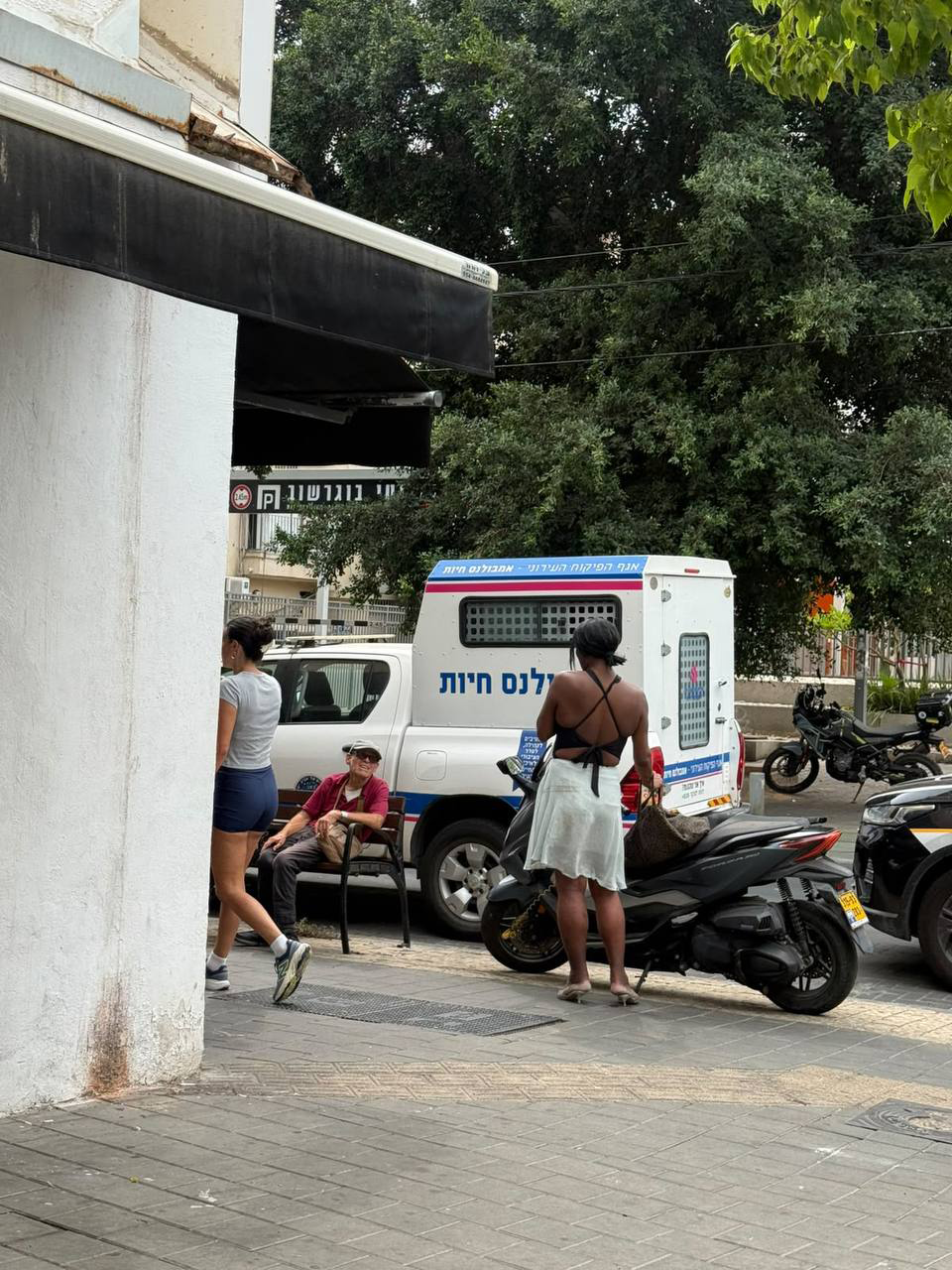
Naama, who grew up near Dizengoff Square and still lives in the area, describes a similar feeling. She says some of the neighborhood's problems have been familiar to her since childhood, including a location on Bograshov Street that she claims is used for prostitution. But in recent years, she has noticed another shift. "Since the war, there's really been a change. I see more drug addicts at night," she says.
Tel Aviv, it should be noted, is hardly unique in this respect. Homeless people are drawn to major cities such as Tel Aviv and New York primarily because of easier access to essential resources, welfare services and opportunities for survival that are harder to find in smaller communities. Above all, metropolitan areas offer extensive networks of shelters, soup kitchens and aid organizations that provide for basic daily needs.
In addition, high population density and the constant movement of pedestrians and tourists significantly increase opportunities to ask for money or collect bottles and other recyclable items, which can provide an important source of income. Drugs are also more readily accessible.
Major cities also tend to have developed public transportation systems, allowing people to move around without a car. Their busy urban environments provide a degree of anonymity, enabling people experiencing homelessness to blend into the cityscape and avoid some of the stigma and social scrutiny more common in small, close-knit communities.
Responses
The Tel Aviv-Yafo Municipality said: "Personal safety in public spaces and the enforcement of criminal offenses, including drug offenses, are first and foremost the responsibility of the Israel Police. At the same time, the municipality works continuously to reduce public nuisances, increase its presence on the ground and provide assistance to residents and people experiencing homelessness.
"In recent months, a dedicated unit for people living on the streets has been established within the municipal Sela division, in cooperation with the Social Services Administration. The unit conducts proactive patrols, responds to residents' complaints and promotes treatment and rehabilitation services. In 2025, the municipal homeless services unit assisted 1,263 people experiencing homelessness. At the same time, there was an increase of approximately 300% in referrals for involuntary psychiatric evaluations in cases where these were deemed necessary.
"Contrary to the claim that no assistance is available during the daytime, a new day center for homeless people began operating in June at the Gagon shelter in Jaffa, alongside the shelter's regular activities. Regarding residents' complaints, the municipality is working to improve response availability, increase its presence on the ground and provide targeted treatment at locations that generate repeated complaints.
"The municipality will continue working with law enforcement and welfare agencies to reduce public nuisances, strengthen residents' sense of personal safety and expand services for people experiencing homelessness and distress."
According to Tel Aviv-Yafo Municipality figures, 1,825 complaints relating to homelessness were received through the municipal 106 hotline in 2026 from northern Jaffa, Montefiore and the southern part of the Old North.
In the Old North, 941 complaints were recorded, with the main issues including violence involving homeless people and encroachment on public property. An additional 187 complaints concerned drug use and related nuisances, while 653 involved noise and disturbances in public spaces.
In the area around the Noga Theater, 47 service requests have been opened since the beginning of the year. The municipality said all of them had been handled and closed.