

Marcel Ophuls, the acclaimed Jewish documentary filmmaker and Oscar winner, has died at the age of 97. His death was confirmed Monday by his grandson, who said Ophuls died peacefully on Saturday.
Ophuls, a German-French Jew who escaped the Nazis as a child, dedicated his career to exposing the horrors of war and global conflicts. His landmark 1969 film "The Sorrow and the Pity" uncovered the extent of the Vichy regime’s collaboration with Nazi Germany during World War II. The documentary was initially banned from French television for over a decade. His 1988 film "Hotel Terminus: The Life and Times of Klaus Barbie," about the Nazi war criminal known as the Butcher of Lyon, earned him an Academy Award for Best Documentary.
Gallery
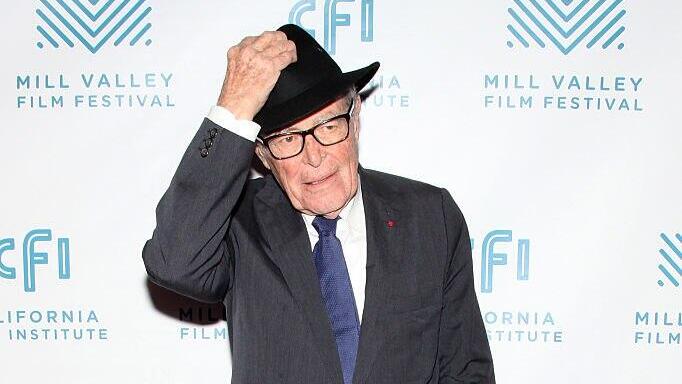
Marcel Ophuls, the acclaimed Jewish documentary filmmaker and Oscar winner
(Photo: Kelly Sullivan/FilmMagic/ Gettyimages)
Born in Frankfurt in 1927 to renowned German actress Hildegard Wall and legendary Jewish director Max Ophuls, Marcel fled Nazi Germany with his family to France in 1933, and again fled in 1940 when the Nazis invaded. The family crossed the Pyrenees into Spain and eventually reached the United States in 1941. Ophuls later studied in Los Angeles and served in a U.S. Army theater unit in Japan.
He began his film career as an assistant to directors Julien Duvivier and Anatole Litvak in France. He directed his first documentary in 1967, a 32-hour series on the Munich Conference. Commissioned by French public television to create a film about the Nazi occupation of France, Ophuls instead produced "The Sorrow and the Pity," a four-and-a-half-hour work that challenged national myths of resistance. It was barred from broadcast, with the station’s director later admitting it “destroyed myths the French people still needed.”
Get the Ynetnews app on your smartphone: Google Play: https://bit.ly/4eJ37pE | Apple App Store: https://bit.ly/3ZL7iNv
Throughout his career, Ophuls returned to the theme of conflict. His works include "A Sense of Loss" (1973) abut Northern Ireland, "Memory of Justice" (1976) on the topic of war crimes, "The Troubles We've Seen" (1994) filmed during the siege of Sarajevo, and "November Days," in which he interviewed East Germans after the fall of communism.
In a 2007 interview with Ynet during a visit to Israel, Ophuls declined to offer political advice. “I’m not a preacher, a judge, or an adviser,” he said. “I’m just a filmmaker trying now and then to make sense of crises—because, dramatically, they’re more interesting than life in Switzerland. Life made me, unwillingly, an expert on 20th-century crises. I would’ve preferred to direct musicals.”
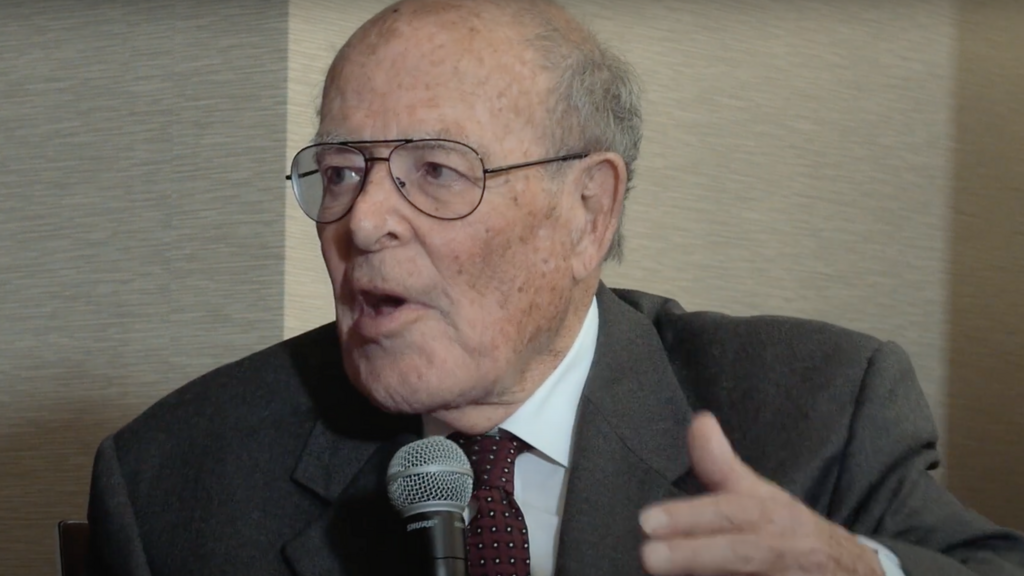
Marcel Ophuls
(Photo: Screenshot YouTube)
Asked about honesty in documentary filmmaking, Ophuls once quoted Jean-Luc Godard: “Objectivity? That’s five minutes for the Jews, five minutes for Hitler.” He added: “For me, it’s two hours for the butchers, two hours for the victims. You don’t have to love humanity to be interested in it. As you grow older, you become a pessimist and misanthrope—but you still care about the world.”
In recent years, Ophuls lived in southern France. He spent several years working on a documentary about the Israeli-Palestinian conflict, tentatively titled "Unpleasant Truths," but it remained unfinished at the time of his death.