

Hundreds of Israeli police officers, including paramilitary border units and special forces, carried out overnight raids between Sunday and Monday on dozens of sites tied to senior figures in two major crime families operating in northern Israel. The operation followed more than a year of covert investigation using an undercover agent known as 'the Prince.' Twenty three suspects were arrested, and later Nidal Abu Latif, one of the brothers who lead a powerful criminal organization, was also taken into custody.
Police said operations like this are meant to lower crime and reduce killings. But many residents in Arab towns and villages across the north say the grip of organized crime remains strong. The groups are accused of running protection rackets, threatening business owners, and taking part in shootings and murders. Hundreds of people have been killed in recent years in clashes between rival organizations. Some victims, residents say, were targeted simply because they were relatives of someone the gunmen could not find.
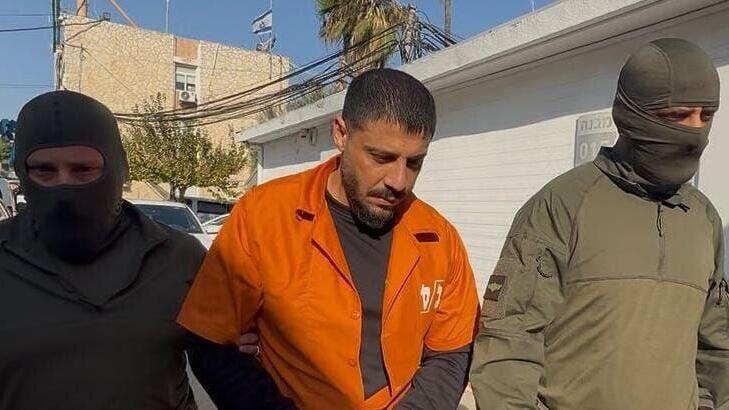
the arrest of Nidal Abu Latif
(Photo: Israel Police)
The conflict began over control of territory and the ability to collect protection money from shops, construction firms and other businesses. As killings escalated, the violence turned into a cycle of revenge attacks. Over time, that cycle expanded, leaving many families living under constant threats.
In the village of Rameh, investigators say the Abu Latif organization is deeply rooted. Police estimate it has more than 200 armed enforcers willing to carry out shootings and extortion. The organization’s leaders, the Abu Latif brothers, have been arrested and charged.
In the nearby community of Jadeidi-Makr, police say a crime group led by Firas Naeimi operates and is considered among the most dangerous in the region. Authorities say it uses threats and extortion and has been linked to shootings, grenade attacks and attempts to seize property. Police searched the homes of its leaders and detained several suspects.
The feuding among crime groups in the Galilee region has led to more than 40 deaths in recent years, according to police estimates. Residents say some families have become targets because gunmen could not reach the people they were seeking. In Nazareth, a group led by Samir Bakri is believed to have about 160 armed members who enforce protection payments and carry out attacks. Bakri has been arrested in the past on suspicion of threats and involvement in shootings, held briefly and then released.
Business owners in Nazareth and surrounding towns say they were forced to shut down because of extortion demands. One said he used to earn roughly 30,000 Israeli shekels a month, about $8,000, before receiving calls demanding a monthly payment of 10,000 shekels, about $2,700. When he refused, he said gunmen fired at his store and threatened to kill him. He paid several times, then closed the business out of fear for his family. Other owners said they live under constant pressure and many have shut their doors. "Nazareth has become dangerous," one said. "At night the roads are almost empty because people are afraid. Today anyone can be killed without even knowing the reason."
The feuding among crime groups in the Galilee region has led to more than 40 deaths in recent years, according to police estimates. Residents say some families have become targets because gunmen could not reach the people they were seeking
Tensions are also high in the Wadi Ara area, a cluster of Arab towns south of Haifa. There, police say a crime organization led by the Hariri family operates under Nasser Hariri, who previously served a prison sentence for extortion and threats. A long running dispute between Hariri’s group and Bakri’s has led to dozens of murders, some of them inside victims’ homes. Investigators say Hariri’s organization is divided into factions, each led by its own commander, and may have close to 300 armed members.
In Shefa-Amr, another northern Arab city, residents describe a feud between two extended families. Over the last three years, 29 people have been killed, they say, mainly because they belong to one family name or the other. A woman whose husband was murdered said he had no connection to the conflict. "It is not easy raising children without a father," she said. "Sometimes they tell me, ‘Mom, we want revenge.’ It is hard to deal with this."
In Umm al-Fahm, a large Arab city farther south, police say a crime organization run by a man known as al-Asmar operates with nearly 120 armed members. He is currently in prison on suspicion of extortion and threats. Police suspect him of involvement in several killings, but say those claims have not been proven in court.
In the city of Harish, police say a crime group linked to the Karaja family has dozens of armed members. Authorities have raided homes connected to the group several times and seized weapons.
In Kafr Qara, residents say armed men connected to rival crime organizations headed by Ali Arbid and Abu Jihad have been fighting for control. The feud has led to 25 killings in recent years, they say, including deaths of people who had nothing to do with the dispute. Arbid was arrested and charged with assault and threats. A local resident described a sense of paralysis. "We cannot leave our homes even to buy bread," he said. "If someone goes out, it can be almost impossible to return safely. These organizations track people with methods stronger than Israel’s domestic security service."
A man described by Ynet as a senior crime figure said the violence will not stop. "These conflicts are brutal, and the killings will continue," he said. "Murder today is revenge. If someone is suspected of hiding a target, he becomes a target himself. It does not matter who they kill, a woman, a child or an elderly person." He said families are pressured to publicly distance themselves from the intended target in order to avoid further attacks. "If they refuse, others will be marked for death," he said.
He dismissed the impact of the undercover operation, saying police have repeatedly used secret agents to build cases and that it often leads to more bloodshed. "We have seen this many times," he said. "It never ends. The killings only rise, including attacks on the families of the agents."