

Ra’am chairman Mansour Abbas is preparing a far-reaching internal overhaul of the Islamist party ahead of the October 27 general election, including independent primaries, new decision-making institutions and the possible addition of a Jewish candidate to its Knesset slate.
The changes represent what appears to be Ra’am’s most significant transformation since its establishment. For the first time, the party is separating its political decision-making from the Islamic Movement and its Shura Council, the religious body that previously played a decisive role in party affairs.
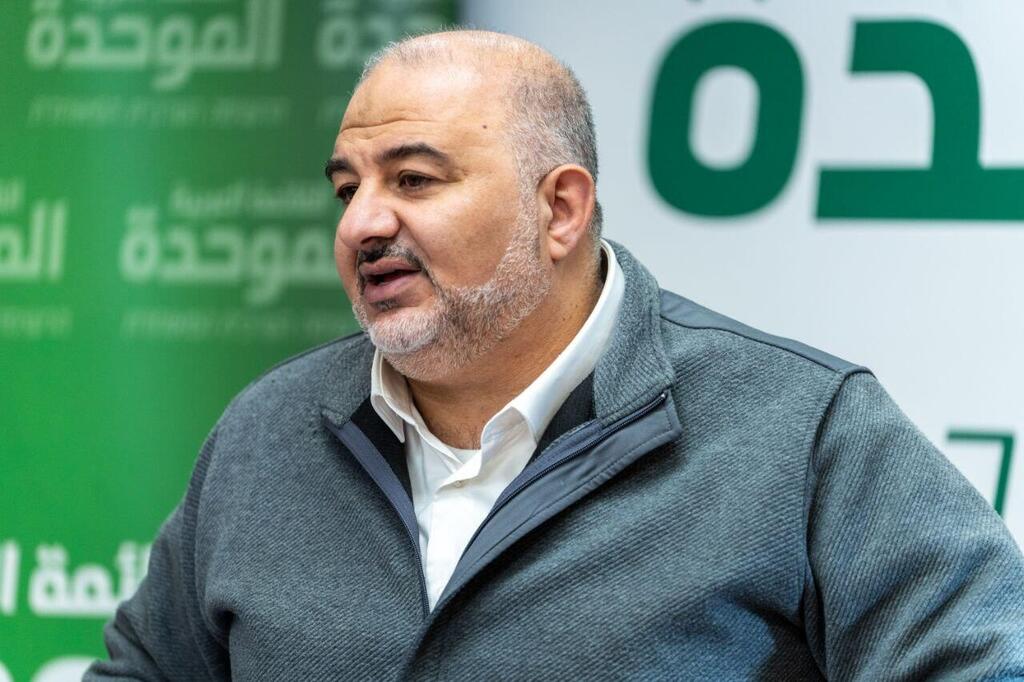
Ra’am will also hold primaries to select its Knesset candidates through an independent party framework.
The possible recruitment of Yesh Atid lawmaker Yoav Segalovitz is another part of Abbas’ effort to broaden the party’s political reach. Segalovitz, who previously served as deputy public security minister, held talks with Abbas about joining Ra’am’s election slate.
According to sources familiar with the discussions, the talks were conducted with the knowledge of Yesh Atid chairman Yair Lapid. Segalovitz has given his agreement in principle, but the final decision rests with Abbas. Some figures within Ra’am oppose the inclusion of a Jewish candidate.
The talks, first reported last week by Nahum Barnea in ynet and its parent newspaper Yedioth Ahronoth, prompted conflicting political reactions.
Figures on the right argued that the move was intended to make Ra’am’s participation in a future coalition more acceptable. In the center-left bloc, it was seen as an effort to distinguish Ra’am from the other Arab parties and establish it as a pragmatic party seeking a role in government.
Abbas sought over the weekend to lower expectations surrounding Segalovitz’s possible inclusion. In a statement published only in Arabic and directed mainly at Ra’am’s supporters, he said it was too early to discuss the addition of new figures.
“Ra’am is currently focused on convening its general conference on August 22, organizing the primaries and completing the establishment of the party’s institutions,” Abbas wrote.
He said any political alliance or addition to the slate would be approved only after its electoral and political value had been examined, and only if it advanced Ra’am’s objectives.
Abbas listed those objectives as replacing the current government, joining a future coalition and advancing action against crime, violence, the demolition of illegally built homes, racism and inequality.
His statement indicated that Segalovitz would be added only as part of a broader political move intended to improve Ra’am’s chances of participating in the next government.
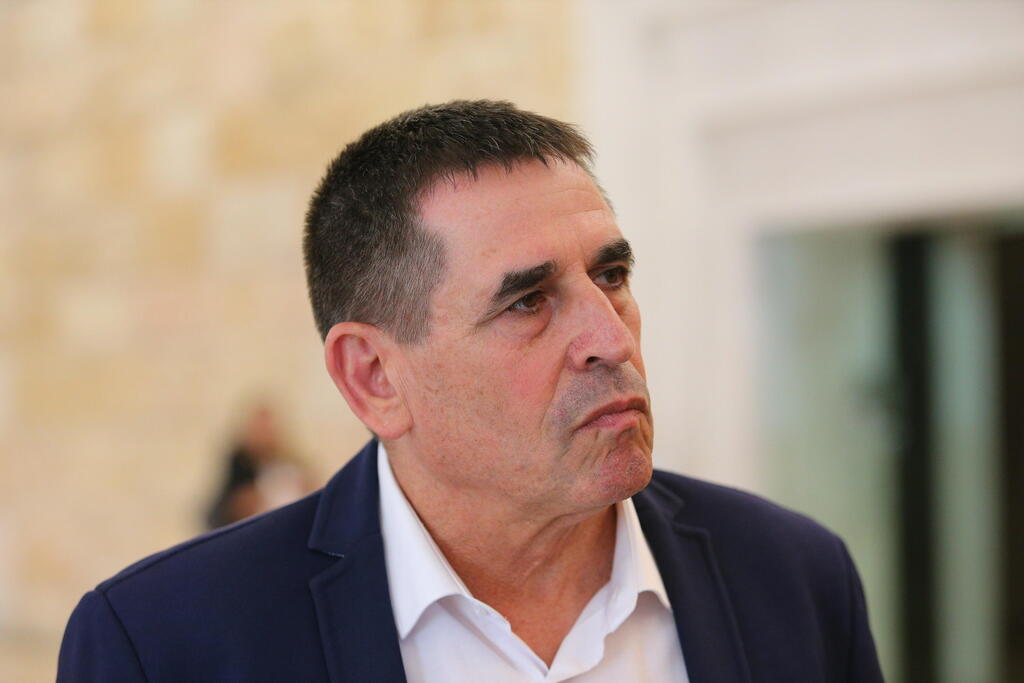
Yesh Atid lawmaker Yoav Segalovitz
(Photo: Alex Kolomoisky)
Speaking to ynet on Sunday, Abbas said Ra’am had conducted internal elections in the past, but that the coming primaries would be the first held under a completely independent party structure.
“I myself participated in several rounds of primaries in the past,” he said. “What is new is that this is happening after the separation from the Shura Council. The party is now rebuilding its institutions and its method of making decisions.”
Under the new structure, Ra’am members will select the party’s candidates without the involvement of the Islamic Movement’s religious institutions.
The changes come as Israel’s Arab parties prepare for the election and debate whether to revive the Joint List, the alliance that previously brought together Ra’am, Hadash, Ta’al and Balad.
At its electoral peak, the Joint List won 15 Knesset seats. Abbas, however, said a renewed four-party alliance was no longer an option.
“The option of a joint list of four parties is off the table,” he said. “There is discussion of a list comprising Hadash, Ta’al and Balad, while Ra’am will run independently.”
Asked whether all four parties needed to run together to maximize Arab representation, Abbas said separate lists could still succeed if they reached understandings and avoided a hostile campaign.
“No,” he said. “If there are understandings between the lists, if there is a fair campaign and the public understands that the goal is to increase representation, Arab society will accept it.”
Abbas said voter turnout would be a central focus of Ra’am’s campaign.
“We always say that people must go out and vote, but the second question is whom they vote for,” he said.
Ra’am’s slate will also be built around geographical representation from the Galilee, the Triangle and the Negev.
“If the head of the list is from the Galilee, the second place will be from the Triangle and the third from the Negev,” Abbas said. “If the chairman is from the Negev, the order will change accordingly.”
He added that women from all three regions would be able to compete for a designated place on the slate.
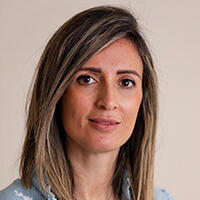
Attorney Hanan Alsana, co-director of Itach-Maaki, Women Lawyers for Social Justice, and a leader of the 50:50 initiative in Arab society, said Abbas’ moves were intended to send a message to both Arab and Jewish voters.
She said Segalovitz’s possible inclusion would signal that Ra’am intends to present a practical program for combating crime, one of the most urgent issues facing Arab communities.
Segalovitz became identified with government efforts to fight crime in Arab society during his term as deputy public security minister.
Alsana said Ra’am’s separation from the Islamic Movement’s institutions and its transition to primaries “signal a strengthening of the party’s independence and an expansion of its internal democracy.”
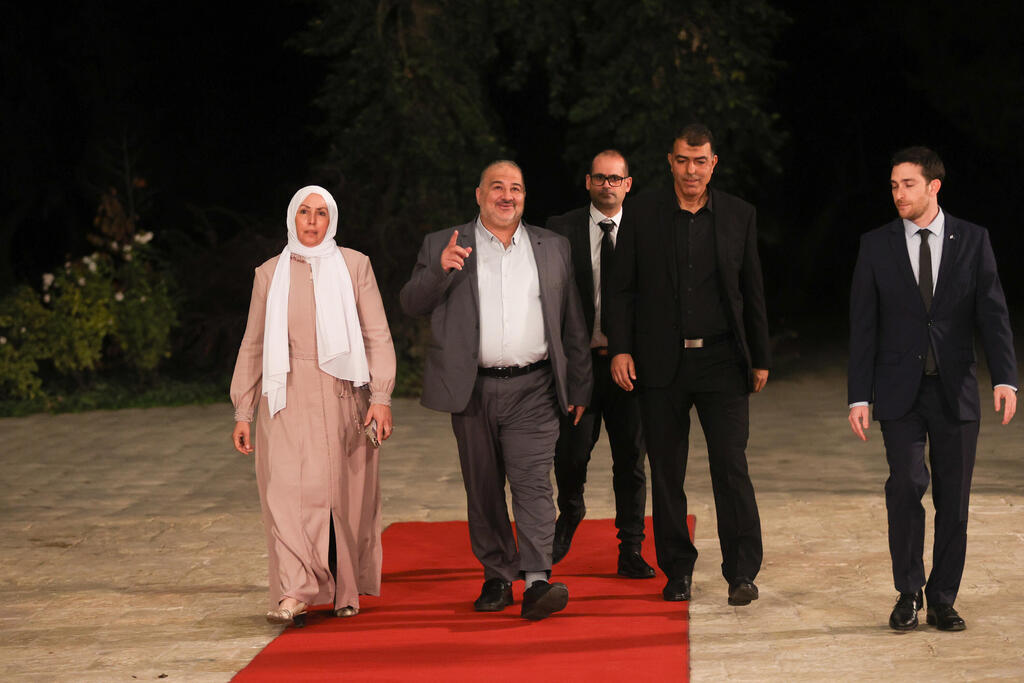
Mansour Abbas (center) and the Ra’am faction during consultations with President Isaac Herzog on recommending a candidate to form the government in 2022
(Photo: Alex Kolomoisky)
“I also welcome the intention to guarantee meaningful representation for women on the list,” she said. “This is not only an issue of representation, but of changing priorities and improving decision-making.”
Political analyst Ihab Jabareen said the changes did not necessarily mean that Ra’am was distancing itself ideologically from the Islamist movement.
“Mansour Abbas is adopting ideas that were previously heard within Hadash as well, but he is using them more boldly,” Jabareen said.
“Hadash understood after October 2000 that, in order to increase its electoral strength, it had to reinforce the Israeli component of the Arab public’s identity. Abbas is taking that approach one step further.”
According to Jabareen, Abbas is seeking to give greater weight to the Israeli identity of Arab citizens without abandoning their Palestinian identity.
Pollster Yousef Makladeh, owner of the Statnet research institute, described Abbas as “one of the most proactive players in the political system.”
“Usually, Benjamin Netanyahu initiates political moves and everyone else reacts,” Makladeh said. “In this case, Abbas is ahead of everyone.”
Makladeh said Ra’am’s gradual distancing from the Islamic Movement began about four years ago, when the party considered including candidates from Israel’s Druze and Christian communities.
Asked whether Arab voters would oppose Segalovitz’s inclusion, Makladeh said the former deputy minister was viewed positively because of his work against crime.
“He is associated with the fight against crime and is therefore perceived as a positive figure,” he said. “The move may enable Ra’am to attract new voters, perhaps even a small number of Jewish votes.”
Makladeh estimated that a joint slate comprising Hadash, Ta’al and Balad could raise voter turnout in Arab society from about 53% to 59%.
Such an alliance could also prevent a repeat of the 2022 election, when votes cast for Balad were lost after the party failed to cross the electoral threshold.
However, Makladeh said Ra’am remained the main beneficiary as long as Hadash, Ta’al and Balad struggled to reach an agreement. Under those circumstances, he estimated that Ra’am could gain about half an additional Knesset seat.
Abbas is therefore preparing Ra’am to run alone, choose its candidates independently and campaign as a party seeking practical influence inside the next government.