

Finance Minister Bezalel Smotrich vowed early Wednesday that Jewish settlements would be established in the Gaza Strip, declaring that Israel would not reverse its settlement expansion in the West Bank or withdraw from territory it controls in Lebanon and Syria.
His remarks came after exit polls by Israel's three major broadcasters — Channel 12, Channel 13 and public broadcaster Kan — projected that his far-right Religious Zionist Party had won six seats in the 120-member Knesset, a stronger showing than some preelection surveys had suggested.
During the campaign, the party had repeatedly struggled in polls to clear the electoral threshold of 3.25% of the national vote, the minimum required to enter parliament.
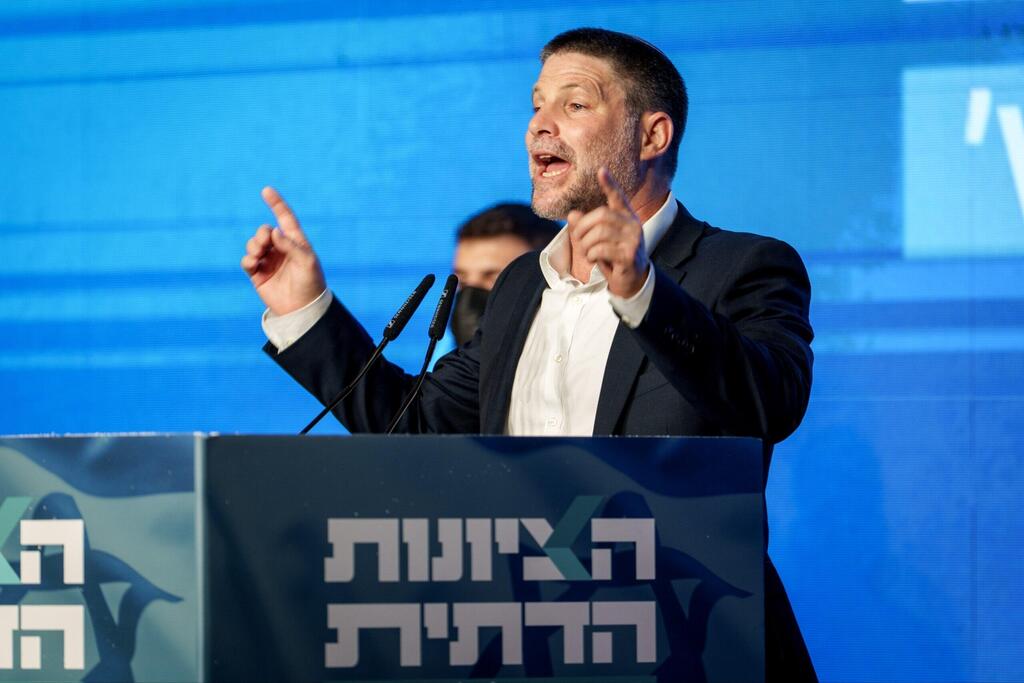
Speaking to supporters at the Religious Zionist Party's election headquarters, Smotrich struck a defiant tone despite initial exit polls showing an advantage for the opposition's pro-change bloc.
"We will not let them celebrate," Smotrich said. "They are celebrating because they think they will be able to reverse our settlement revolution in Judea and Samaria. I am telling them: They will not succeed. Jewish settlements will be established in Gaza."
Judea and Samaria is the biblical name used by Israel for the West Bank, territory captured from Jordan in the 1967 Six-Day War. Most of the international community considers Israeli settlements there illegal under international law, a position Israel disputes.
Israel withdrew its settlers and permanent military installations from Gaza in 2005, dismantling 21 Jewish settlements as part of a unilateral disengagement plan. Reestablishing civilian settlements in the Palestinian territory has since become a central demand of some far-right politicians.
Smotrich also rejected the prospect of Israeli territorial withdrawals from Lebanon and Syria.
"They are celebrating because they think, God forbid, that the State of Israel will retreat from Lebanon and the summit of Mount Hermon," he said. "We will not withdraw."
Mount Hermon straddles the border region between Israel, Lebanon and Syria. Israel has maintained control of additional positions in the area following military operations in Syria, while its forces have also operated inside southern Lebanon.
Smotrich blames wasted right-wing votes
Smotrich also criticized rival right-wing political figures whose parties were projected to fall below the electoral threshold, implicitly targeting former IDF general Ofer Winter.
Winter's Amcha Yisrael party failed to secure enough votes to enter the Knesset, according to the exit polls.

Religious Zionist Party election headquarters
(Photo: Shalev Shalom)
Smotrich did not mention Winter by name but blamed the uncertainty surrounding the election results on political rivals who had refused to unite with established parties.
"Tonight, once again, it has become clear how right we were," Smotrich said. "The Arabs united. And, separately, our brothers on the left united. The only reason there is uncertainty is that irresponsible people threw votes into the trash."
Under Israel's proportional representation system, votes cast for parties that fail to cross the electoral threshold do not translate into parliamentary seats, potentially weakening the broader political bloc to which those parties belong.
"Despite those irresponsible people, our voters demonstrated maturity and responsibility," Smotrich said. "We hope to wake up in the morning to results much better than the exit polls."
He urged right-wing voters and politicians to consolidate under the Religious Zionist Party rather than support smaller parties that might fail to enter parliament.
"I call on all our friends and partners among the Israeli public: There is room for all of you in the Religious Zionist Party," he said. "We have had enough of parties that do not cross the electoral threshold. We are coming back together."
A central figure in West Bank settlement expansion
Smotrich has spent the past four years serving as both finance minister and a minister within the Defense Ministry, a dual role that has given him considerable influence over civilian affairs in the West Bank.
During that period, he spearheaded measures to retroactively legalize numerous previously unauthorized settlement outposts and encouraged the establishment of agricultural farms across the territory.
Those efforts form part of a broader strategy he outlined in 2017, known as his "Decisive Plan," which calls for consolidating Israeli control over the West Bank and rejecting the establishment of an independent Palestinian state.
Smotrich became leader of the Religious Zionist Party in 2019, when it was still known as National Union-Tkuma.
In the previous election, his party ran on a joint ticket with Otzma Yehudit, the far-right party led by Itamar Ben-Gvir.
This time, after polls suggested the Religious Zionist Party might fail to enter the Knesset, Smotrich joined forces with former Likud lawmaker Moshe Feiglin and his Zehut party.
Feiglin, a far-right libertarian politician, was placed second on the joint electoral list.
He served as a Likud lawmaker more than a decade ago, previously challenged Prime Minister Benjamin Netanyahu for the party leadership and later unsuccessfully attempted to bring Zehut into parliament as an independent party.
The alliance with Feiglin was intended to consolidate support among right-wing voters and prevent votes from being lost to parties that failed to meet the electoral threshold.
With six seats projected in the exit polls, the Religious Zionist Party appears to have avoided that outcome, although its final representation will depend on the official vote count.