


A soldier in a squad-commanders course who is serving now with forces encircling the Shati neighborhood on Gaza City’s coast noticed a suspicious figure moving unarmed a few days ago from a window of a building. The trainee hesitated for a few moments — this is a combat zone where civilians are not supposed to be moving around. On the other hand, the last time a Bislah unit faced a similar situation in Gaza it ended tragically, when a soldier fired at three hostages who managed to escape captivity in the Shujaiya neighborhood in December 2023.
Yoav Ziton in Gaza City with Bislach Brigade
(Yoav Zitun, Editing: Coral Kot Markovich)


10 breaths before the trigger
The company commander of that soldier had himself been a trainee in the same unit from which the deadly machine-gun fire was launched in December 2023. This time his subordinate called him over and consulted on how to act. The Bislah fighters waited, confirmed the person was a suspicious civilian and not a hostage, and then opened fire.
Today’s course members were in high school back then, but the Bislah brigade commander, Col. S., briefed them at length on the harrowing lessons of that incident. He told them to take “10 breaths” in such cases, to notify the nearest commander before they squeeze the trigger. In the operating area of Operation Gideon's Chariots II, where the troops are deployed, hostages are present and there are designated restricted-fire zones where shooting is allowed only with permission.
“We do not want a soldier to face that dilemma at a window, so we simply do not put them there,” field commanders told us. “There are few hostages in this sector and Hamas keeps close guard over them. If there must be a decision about using air or artillery strikes, let that be made by senior commanders such as battalion or brigade commanders. Bislah is remembered from the war, from the difficult Shujaiya episode and from the assassination of Sinwar in Rafah.”
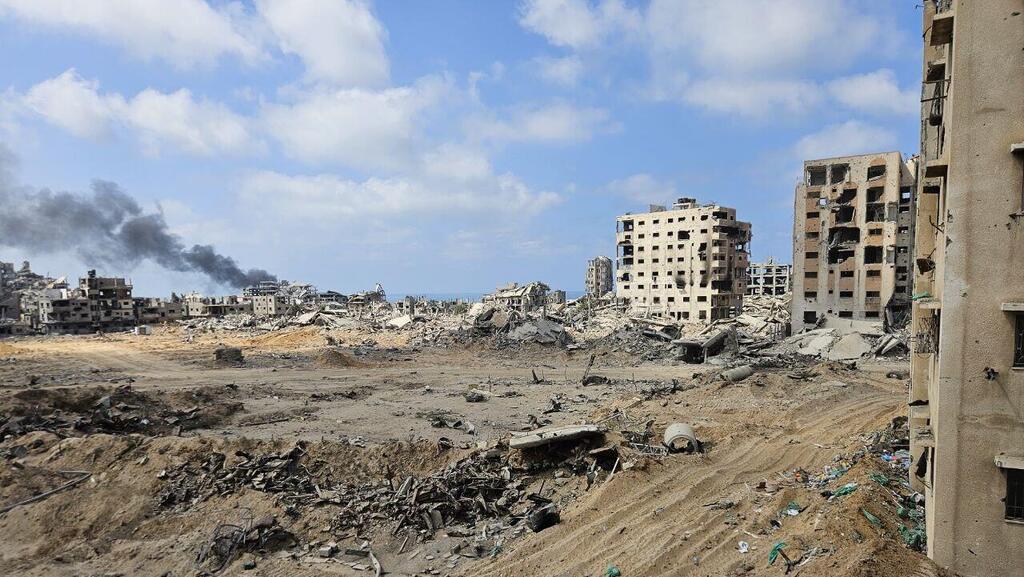
Col. S. enjoys a luxury few brigade commanders get: all his regulars are in a command course, disciplined and serious, so they know any mistake could cost them their place. According to the commanders, this week one officer identified a trainee leaving a building unarmed and immediately removed him from the course to show there is zero tolerance on such sensitive issues.
The big challenge, they say, is to drill sensitivity about the hostages to the limit so the soldier in the window understands this is no time for experimentation. “Here they are fighters, not course cadets trying things out,” they said, adding that every company commander carries a notebook with photos and names of the hostages so the human factor is present in every decision.
From Golani to Givati: a new generation of fighters
The commanders-in-training who arrived in Shati two weeks ago had completed only six weeks of the squad commanders course, which was then interrupted for a defined month. They will be rotated out to another brigade afterward. They come from leading battalions such as Golani, Givati and Kfir, but half of them have no prior combat experience — for many this is their first deployment to the border and into enemy territory. They were sent to the course early, directly from advanced training, without having served as active platoon fighters in their battalions.
Some in the IDF see the war as an opportunity to correct a long-standing distortion in the path to producing field commanders. Meanwhile, clear differences can be seen within the Bislah brigade: reserve fighters are allowed to keep mobile phones while regulars are cut off entirely from the outside world for a month in Gaza.
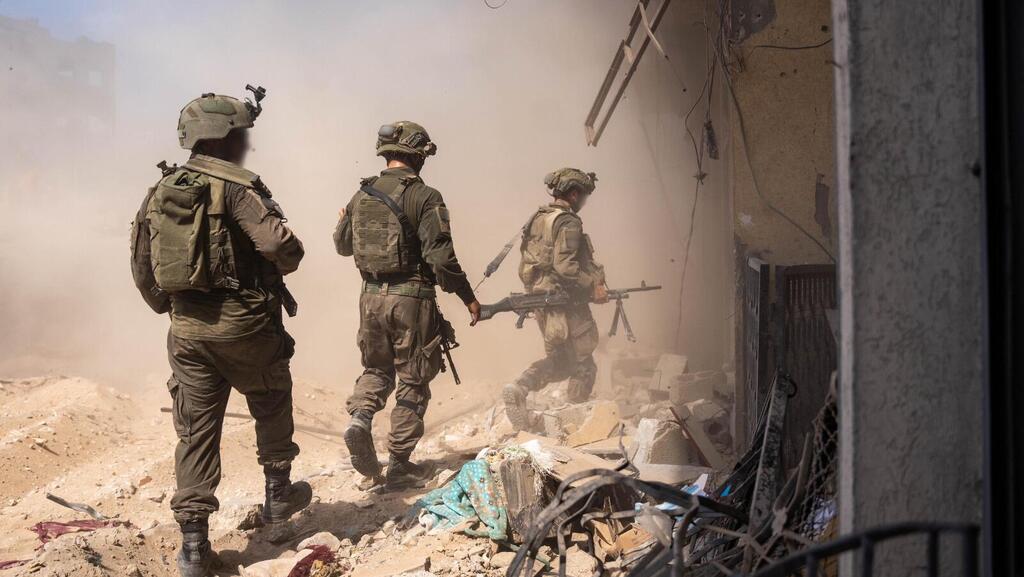
Bislach Brigade soldiers operate in Gaza
(Photo: IDF Spokesperson's Unit)
Home leave is also tough. While other reservists in the Strip get roughly a week on average between tours, Bislah reservists get tighter breaks: eight days on duty followed by four days at home, which in practice shrinks to about two and a half days with family because of long, exhausting convoy trips along the coast road to Zikim and back.
Amid all this there are exceptional personal moments: one company commander finished an operation against Hamas targets late Thursday night and still made it in time to attend his 13-year-old son’s Torah reading. Attendance rates in the unit are not high despite strong motivation. Soldiers understand the burden is borne by fewer people, but this time frustrations are lower than in previous rotations, mainly because there is a prevailing feeling they are part of an essential mission.
Still, alongside commitment there are questions and doubts. Both regulars and reservists increasingly question the purpose of some missions and voice criticism in the field, far more than in earlier phases of the war. For them it is proof that the wear of routine combat in Gaza meets a need for fresh explanations and renewed justification for operations.
The scar from Jabalia, the leadership from Shati
Brigade commander Col. S. welcomes that. In his view, a brave commander does not only rush into fire on orders but is brave enough to ask hard questions of his superiors. Their battalion commander, Lt. Col. A., a Viking-like figure with a familial rapport with troops, hides a scar near his ribs: a Hamas sniper shot him about a year ago in Jabalia. He recovered and returned to command the battalion; with him there are no doubts, only determination.
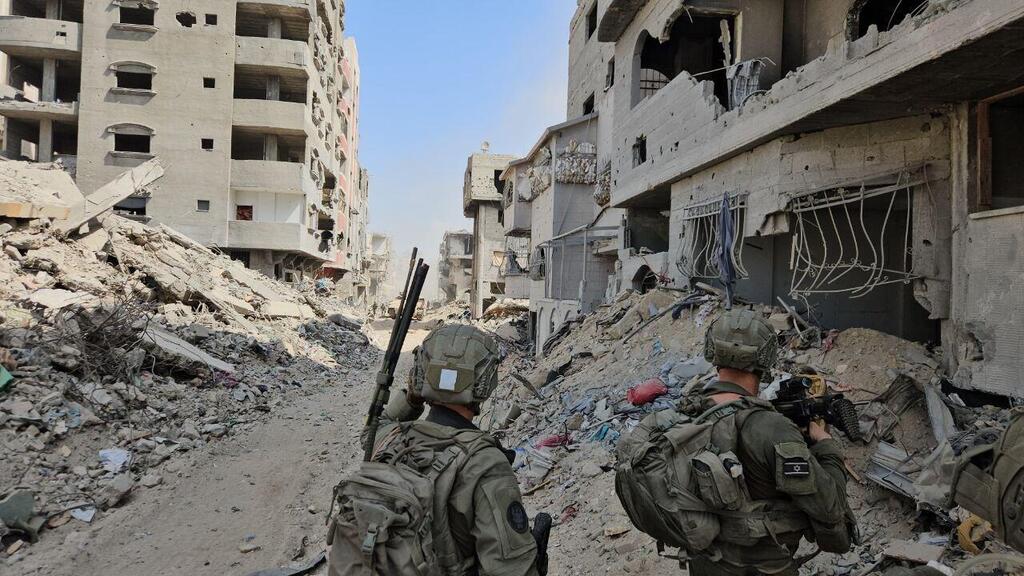
"There are Hamas terrorists below us now.": The forces on the outskirts of Shati
(Photo: Yoav Zitun)
“I have a son in 12th grade, and so that he will not fight here against Hamas on the border in two years, I’m here today in sweat and lice and all the work that must be done,” Lt. Col. A. said at the entrance to Nasser Street, where 300 meters away a civilian bulldozer hired by the IDF is slowly chewing into an eight-story building secured by a tank. “We have Hamas fighters right under us now. The enemy who slaughtered, raped and murdered two years ago is still here, and so we continue what we started then,” he said to the troops on the eve of the Jewish New Year.
Asked about the possibility of freeing hostages during operations, Lt. Col. A. replied firmly: “So far military pressure has led to the release of hostages, in deals or in raids.” He stressed that hostage rescue and the defeat of Hamas are not mutually exclusive, that every street here is enemy fighting space, and that they are working to destroy from top and bottom. So far they have rarely faced direct resistance, but when they attacked buildings many of them exploded, evidence of booby traps and charges.
The battle for Shati: Flattening model 2025
But in Shati the story is different. On the improvised digital aerial map at the operations rooms the neighborhood appears as a rectangle — a camp that in the 1970s was a shabby refugee camp and has since become a densely packed high-rise neighborhood overlooking the sea. The scar Ariel Sharon left is clearly visible from satellite: as a senior IDF officer, in the operation to seize Shati he ordered a center-to-sea breach in a shaving-strip pattern. Since then structures have grown there that look anomalous from the air, like an urban bathtub within a camp that has “beiged.”
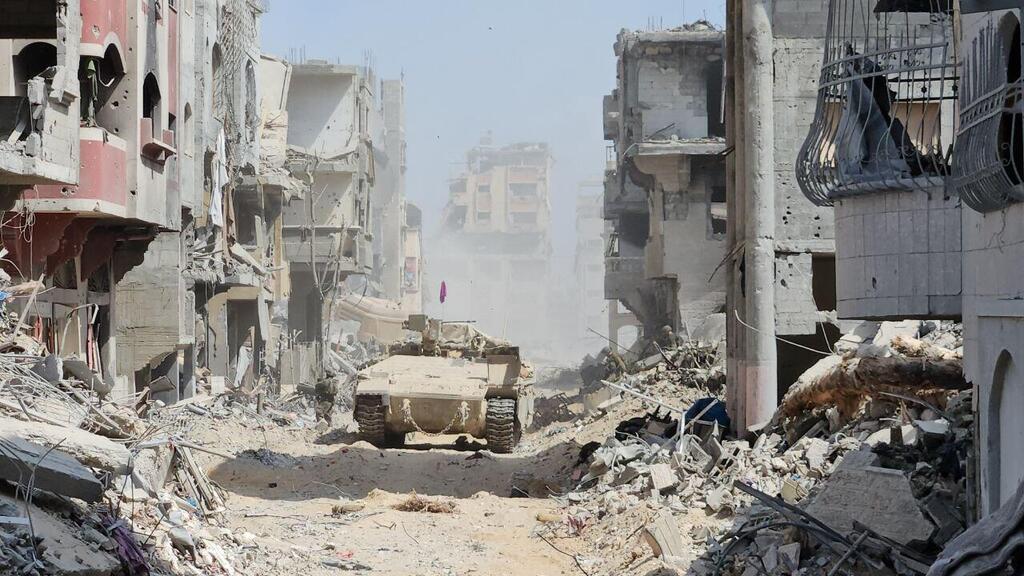
"Shati didn't really feel the strength of the IDF in the first operation'
(Photo: Yoav Zitun)
Sharon’s shaving is set to become the 2025 flattening model: IDF forces will mount an attack on Shati to level it systematically, similar to the first Gideon Chariot's operations in Khan Younis, except the buildings here are tall and the work will be slower. To ensure force protection as Chief of Staff Lt. Gen. Eyal Zamir demands each day, twice the usual manpower will be applied against the Shati battalion: two brigades will lead the assault, act slowly and methodically, and a force surge is meant also to prevent a large number of casualties.
“Shati did not really feel the full weight of the IDF in the first maneuver a year and a half ago, like Rafah, Khan Younis and Shujaiya have felt in recent months,” a commander says. To decide Shati they must flatten it. The neighborhood has regained a level of command and control after a year and a half without the IDF, with a battalion commander who “came back to life” after being declared dead a year earlier, many charges and snipers, making the sniping threat central. Entry here is literally a demolition fight, not necessarily a scene of advanced bomb belts — one tripwire or one initiated charge can make the event complex.
Bislah estimates the flattening of Shati will last about two and a half months, but optimistic timetables have been proven wrong many times in this long war. A new term has been introduced: not only subterrain — tunnels — but also above-ground operations. What was kept quiet at the start of the war is now spoken openly on the record: only flattening buildings will make it hard for Hamas to re-dig tunnels, and without tunnels Hamas loses its main military capability.
“Destroy his buildings, weapon caches and arms depots by tomorrow, and he’ll be sitting downstairs with a hookah and a cigarette the day after,” one senior officer said. “They’ve been down there for two years, not surrendering and not raising hands because many are motivated by extreme religious belief.” Like many in the IDF he confessed remorse over years of containment. He said that if he had again allowed Hezbollah to pitch a tent on Israeli soil at Mount Dov when he commanded the sector, he “would have shaken some tables.”