

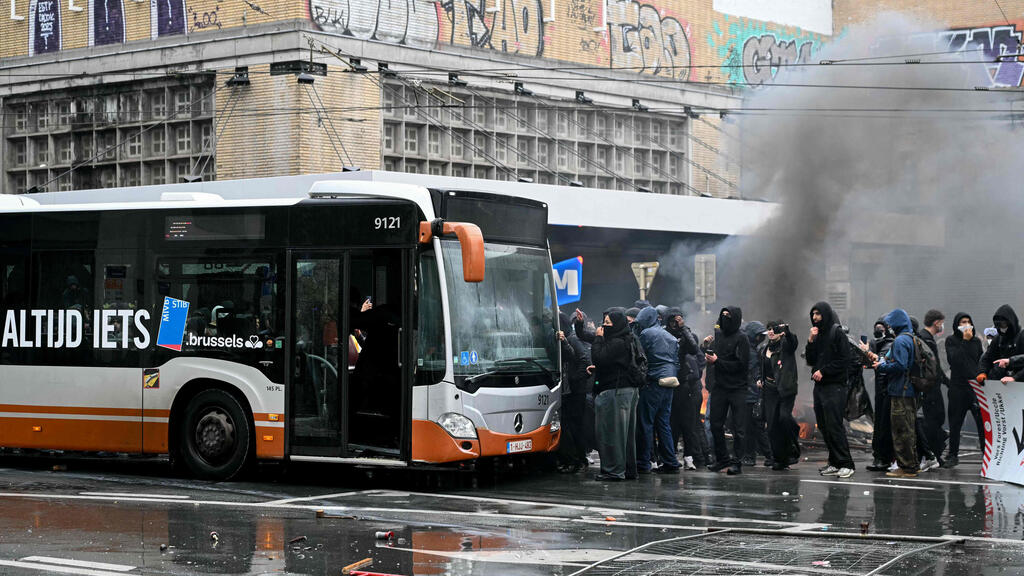
The wave of student protests sweeping France has spread to neighboring Belgium, where tens of thousands of people took to the streets of Brussels on Friday to protest government spending cuts, as separate groups of masked rioters clashed with police, set fires and hurled objects at officers.
Police estimated that around 30,000 people joined the demonstrations in the Belgian capital, including students from the country's French-speaking community who have been protesting education budget cuts, inspired in part by the unrest across the border in France.
Student unrest spreads to Brussels, Belgium
(Video: Reuters)


Violence erupted near Brussels Central Station, where masked youths dressed in black confronted riot police. Groups of rioters threw bricks, glass bottles, barriers, road signs and fireworks at officers, while videos circulating online appeared to show smoke canisters and other explosive devices being hurled toward police lines.
In one video, an officer was seen confiscating a samurai-style sword from a demonstrator. Other footage showed hooded protesters throwing objects into fires as police stood nearby. A Palestinian flag was also visible at the demonstrations.
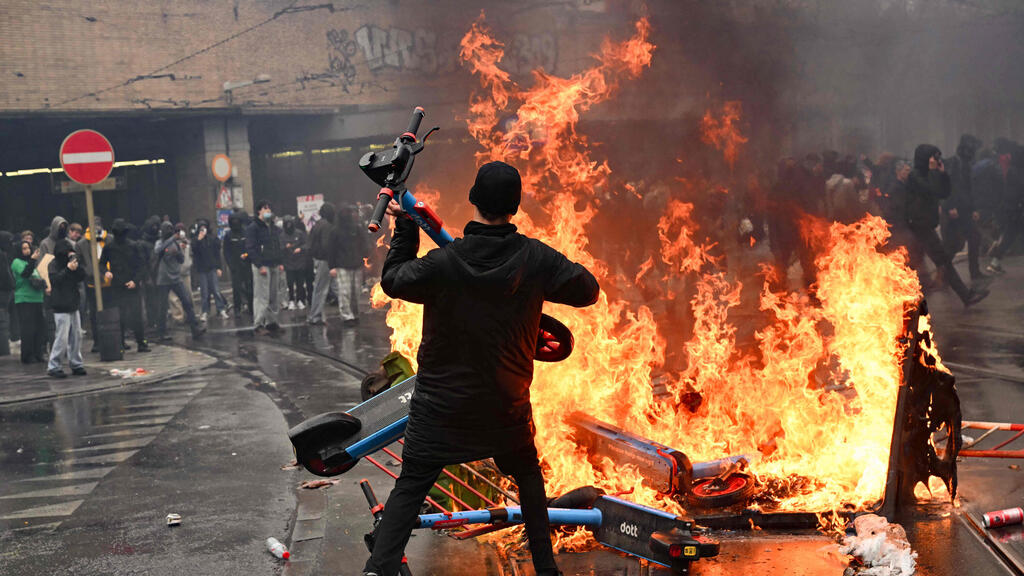
Riot police responded to the disturbances with tear gas, water cannons and baton charges. Authorities stressed that the main trade union demonstration had remained peaceful and said the groups responsible for the violence were not affiliated with the organized march.
The student protesters joined a broader wave of industrial action organized by Belgian trade unions, which are demanding that the government raise taxes on the country's highest earners rather than increase value-added tax or impose cuts to public services, including education and healthcare.
"Things are getting worse at an ever-faster rate; people have had enough. Like the teachers, the pupils can also see that conditions are deteriorating," union representative Luc Toussaint said.
Rising living costs fuel anger
Belgium has experienced repeated strikes in recent months over Prime Minister Bart De Wever's efforts to save 10 billion euros in the coming years to reduce the country's substantial budget deficit.
The proposed austerity measures have intensified public frustration over rising living costs, with demonstrators accusing the government of placing the greatest burden on households already struggling financially.
"Everything just keeps getting more expensive. I don't even dare look at the pump anymore when I fill up my car," one protester told local media.
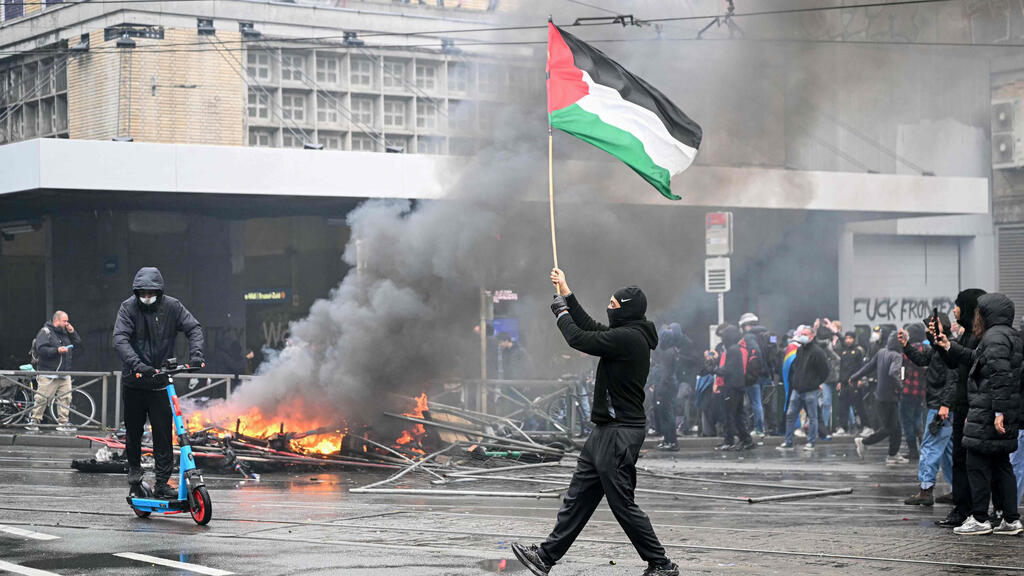
(Photo: NICOLAS TUCAT / AFP)
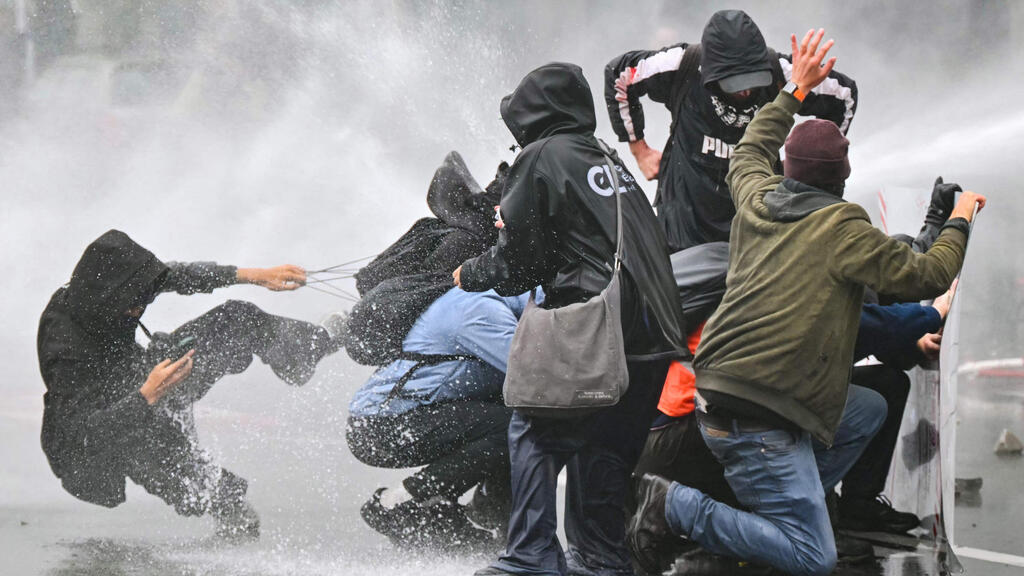
(Photo: NICOLAS TUCAT / AFP)
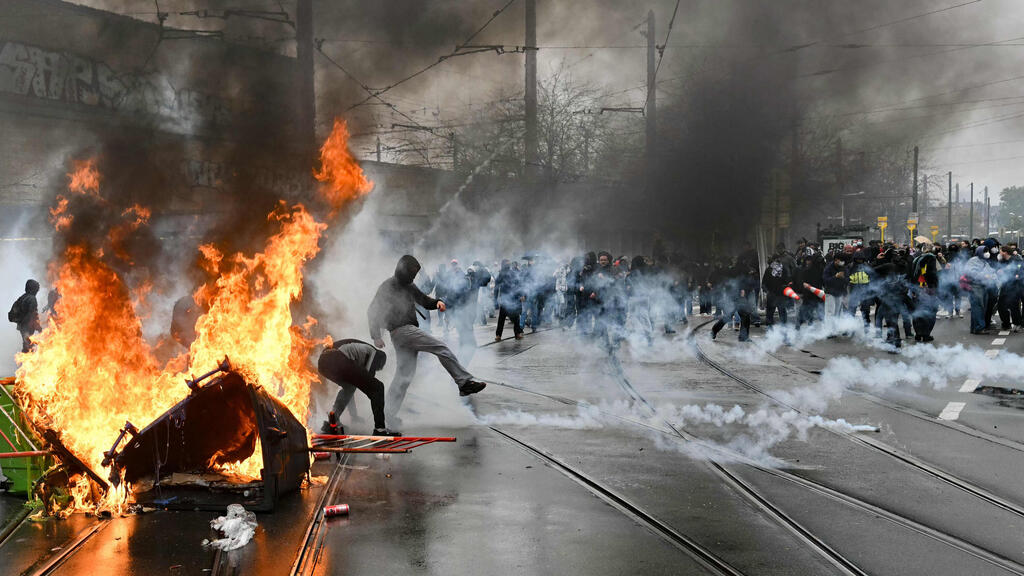
(Photo: NICOLAS TUCAT / AFP)
"Take the money from where it is. I support a tax on billionaires. They always demand more money from people who barely have anything left."
Friday's strike disrupted services across Belgium, including public transportation, schools and air travel. Brussels Airport was forced to cancel around 140 arriving and departing flights after employees of a ground-handling and baggage services company joined the industrial action.
The unrest in Brussels followed days of student demonstrations in the Belgian city of Liège, where clashes with police and incidents of vandalism prompted authorities to restrict public gatherings. More than 200 people were arrested there, and dozens of officers were injured.
France reports nearly 6,900 people detained, most of them minors
Meanwhile, in France, where student protests have shaken cities and towns for nearly two weeks, most students returned to classrooms on Friday, although tensions remained high.
Tens of thousands of demonstrators have taken to the streets across the country since late September, when high school students began blocking entrances to schools in protest against deteriorating conditions in the education system.
The protesters, most of them between 15 and 18 years old, have complained about chronic teacher shortages, overloaded timetables, poorly maintained classrooms and school buildings unable to cope with increasingly high temperatures.
(Photo: NICOLAS TUCAT / AFP)
France's Justice Ministry reported Friday that 6,877 people had been taken into police custody since the unrest began, with minors accounting for 86% of the total.
Although most demonstrations have remained peaceful, some have escalated into violence, with protesters setting fires and vandalizing bus shelters and other public property.
Police have responded with tear gas, batons and stun grenades, prompting human rights organizations to accuse authorities of using excessive force against young demonstrators.
The controversy intensified on Monday when a 15-year-old boy lost his hand after a police-fired stun grenade exploded during a confrontation in the northern city of Lens. The government subsequently suspended the use of the weapon at student protests pending an investigation.
The incident further inflamed anger over police tactics and added pressure on the government to address the students' demands.
French government promises thousands of substitute teachers
In an effort to ease the crisis, French Education Minister Édouard Geffray announced that approximately 3,000 substitute teachers would be deployed in the coming days to cover staff shortages at 114 high schools affected by the protests.
Prime Minister Sébastien Lecornu also pledged to present a comprehensive plan to address the education crisis by the end of October.
Economy Minister Roland Lescure said there was room to accommodate demands for additional school funding in next year's budget, despite the country's financial constraints.
The promises come as France's government faces growing pressure to improve conditions in public schools and address allegations of excessive police force against teenage protesters, while the unrest that began in French classrooms continues to inspire demonstrations beyond the country's borders.