

U.S. President Donald Trump voiced strong optimism throughout his turbulent Gulf tour regarding the prospects for a nuclear agreement with Iran, claiming that Washington and Tehran are "very close" to a deal that would prevent war. However, senior figures in the Islamic Republic—at least publicly—have issued furious statements in the past 24 hours.
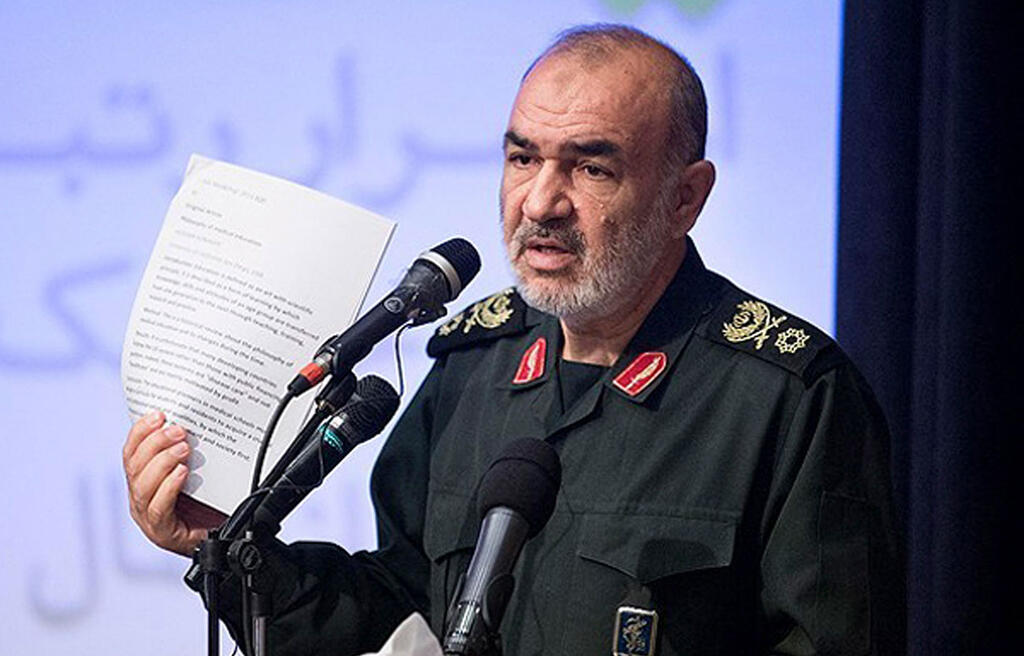
Iranian Revolutionary Guards commander Hossein Salami on Thursday called Trump a “murderer,” referencing the U.S. decision to assassinate Quds Force commander Qasem Soleimani five years ago during Trump’s first term. Speaking at a memorial event marking the anniversary of former Iranian President Ebrahim Raisi’s death in a helicopter crash, Salami accused Trump of conducting “a wide-scale psychological operation against Iran” through his recent remarks and reaffirmed that Iran still regards the U.S. president as “the murderer of Qasem Soleimani.”
Gallery

Iran's Ali Khameini, US President Donald Trump
(Photos: CameraObscura82/Shutterstock, Smolkov Vladislav/Shutterstock, Mohammed Yassin/Reuters, Iranian Leader's Press Office, M Ngan/AFP)
Tehran has previously vowed revenge against U.S. officials responsible for the 2020 Baghdad airport strike that killed Soleimani. Over the years, multiple plots allegedly orchestrated by Iran against Trump and other former officials, such as ex-National Security Advisor John Bolton, have been reported. One such attempt was reportedly foiled just before last year’s U.S. elections. Iran officially denies involvement in these plots.
In his afternoon speech, Salami boasted about Iran’s capabilities, saying the country—whose battered economy is a key driver for its return to talks—is stronger than ever. “Iran stands today stronger than ever, and the U.S. must acknowledge this reality. In recent weeks, we achieved a significant breakthrough in defense technology that will soon be revealed,” he said.
His comments come amid warnings from Israel that the window of opportunity created by a major Israeli strike on Iran’s air defenses in November is closing as negotiations with the U.S. drag on.
Iranian President Masoud Pezeshkian also lashed out at Trump on Wednesday night, after the U.S. leader urged Tehran to “choose a new path,” while simultaneously hinting at a possible military strike and demanding Iran cease support for terrorism.
Assassinated Quds Force commander Qasem Soleimani
(Photo: AP)
“Trump says we are dangerous. Were we the ones who killed 60,000 women and children in one year—or was it you? For 47 years you’ve tried to bring Iran down and failed,” Pezeshkian said. “Trump claims the U.S. drove ISIS out of the region. Was it you, or Iran and Qasem Soleimani? We seek peace, not war, but we will not sell our dignity or ever surrender.”
Iran’s Foreign Ministry echoed this sentiment, issuing a statement Wednesday night condemning Trump’s remarks as “false, misleading and divisive.” The statement accused Israel, “on behalf of the U.S.,” of committing genocide in Palestine and violating the sovereignty of Lebanon, Syria and Yemen. “The misleading statements of the U.S. president cannot, in any way, shake the national solidarity of the Iranian people, inside or outside the country,” the statement read.
Nevertheless, Trump sounded more confident than ever Thursday morning, stating during his visit to Qatar: “I think we’re getting very close to a deal with Iran. Iran has more or less agreed to the terms.” He added that the U.S. is engaged in “very serious negotiations” with the Islamic Republic aimed at achieving “long-term peace.” He again hinted at a military alternative if no deal is reached: “We may be getting this done without having to go that route... there are two ways to do this—the very, very nice way, and the violent way—but I don’t want to go with the second.”
Trump in Qatar: Want a deal with Iran, but it must stop supporting terrorism
(Video: Reuters)


Earlier this week, the U.S. and Iran completed their fourth round of nuclear talks. Both sides issued positive statements afterward about the likelihood of reaching an agreement. These statements followed days of mixed messaging from Washington regarding whether the U.S. would allow Iran to retain enrichment facilities and enrich uranium itself, or demand their complete dismantlement—a condition Tehran has categorically rejected.
On Thursday night, senior Iranian official Ali Shamkhani, one of Supreme Leader Ayatollah Ali Khamenei’s closest advisers, told NBC News that Tehran is prepared to dispose of its stockpile of highly enriched uranium and limit enrichment to non-military levels. He added that Iran is willing to allow international inspectors to monitor its activities and commit not to pursue nuclear weapons—but only if all economic sanctions are lifted.
Get the Ynetnews app on your smartphone: Google Play: https://bit.ly/4eJ37pE | Apple App Store: https://bit.ly/3ZL7iNv
Shamkhani expressed dissatisfaction with Trump’s remarks during his Gulf visit. Responding to Trump’s claim that he extended an “olive branch” to Iran, Shamkhani said it felt more like “a thorny branch.” He also blamed Israeli Prime Minister Benjamin Netanyahu for undermining the negotiations between Washington and Tehran: “If the Americans eliminate the ‘Bibi effect,’ we could reach a deal easily,” he said.
Iranian Foreign Minister Abbas Araghchi, who is leading the talks for Tehran, also commented on the negotiations Thursday evening. “If other actors could destroy our nuclear facilities militarily, they wouldn’t be negotiating with us. Negotiations mean they can’t impose their will on Iran. Iran’s missile and defense capabilities are what give us the strength to negotiate,” he said.