


For years, her voice has been prominent on every platform critical of Israel, especially over the past two years during the war in Gaza. Francesca Albanese, the Italian special rapporteur for the UN Human Rights Council on the Palestinian territories, has become one of the most aggressive and visible faces of Italy’s anti-Israel left.
She rarely misses a chance to level harsh accusations at Israel and to encourage rhetoric that critics say borders on incitement. Israel and the United States, along with many figures in Italy’s Jewish community and politicians on the right, have accused her of antisemitism.
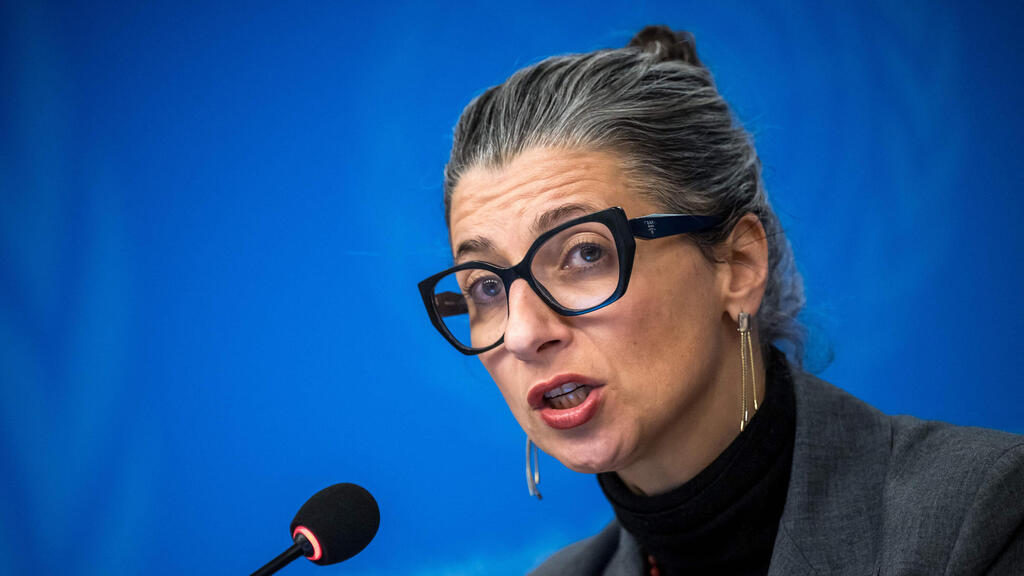
But now, after a string of increasingly extreme statements, even parts of Italy’s political left appear alarmed, and Albanese has become controversial within her own ideological circles. She sparked a political storm in recent days after effectively defending a violent incident in which pro-Palestinian protesters broke into the newsroom of the influential Turin daily La Stampa and vandalized the editorial hall.
The mob sprayed graffiti attacking journalists, scrawled slogans supporting “free Palestine,” and called for the release of an extremist imam who is being deported to Egypt over virulently anti-Israel and antisemitic statements and for praising the October 7 massacre. The protesters accused the newspaper of supporting the decision to arrest and expel him.
Albanese condemned the violence, but in the same breath warned that “what happened is a message to journalists, that they need to start doing their job.” The remark, widely seen as legitimizing the violent raid and as an implicit threat to the press, triggered an uproar. Albanese, who in recent months had enjoyed a wave of admiration across Italy’s left-leaning activist circles, suddenly caused many to question whether the praise had gone too far.
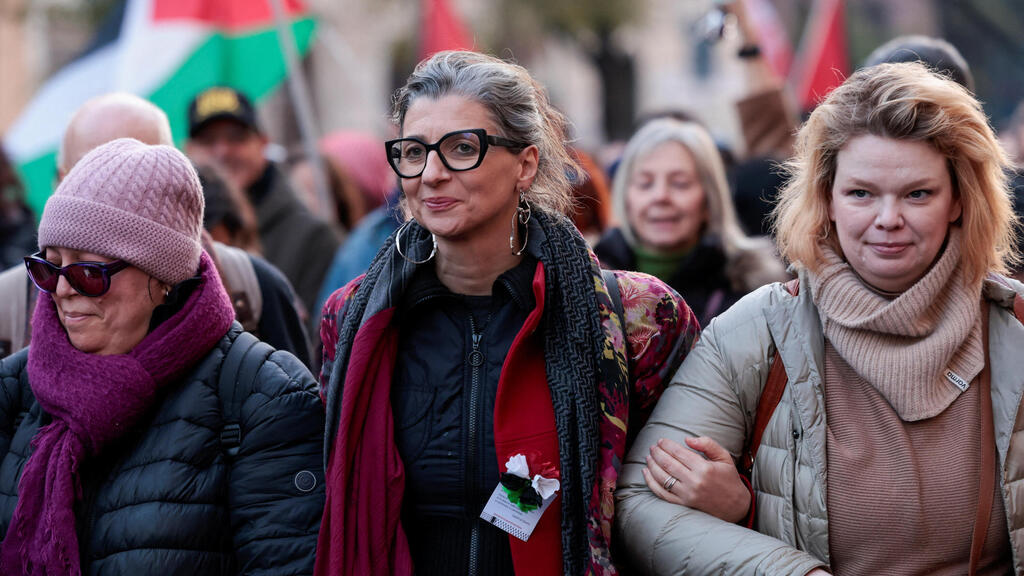
(Photo: Remo Casilli/ Reuters)
Several mayors across Italy, influenced by the enthusiasm of left-wing student and grassroots movements, had recently moved to grant Albanese honorary citizenship or other symbolic awards. Cities including Naples, Reggio Emilia, Bari and Bologna had already scheduled ceremonies to present her with such honors. Now, some are reconsidering after what they view as her “justification of violence against journalists,” a stance that shocked even supporters.
Albanese encouraged crowd’s booing when the hostage release was mentioned
An earlier uproar erupted in October, when the mayor of Reggio Emilia awarded her an honorary city title. Onstage, as the audience applauded her, Albanese publicly confronted the visibly uncomfortable mayor after he called for a halt to what he termed “genocide in Gaza” but also mentioned the need to free Israeli hostages held by Hamas. The crowd booed the mention of the hostages, encouraged by Albanese. Even though he agreed with her views on Israel, his brief reference to the hostages drew her scorn.
As he spoke, Albanese rolled her eyes, grabbed her face and smirked. “The mayor is wrong. Peace does not need conditions,” she said, as the audience booed him. “Promise me you will never say anything like that again,” she demanded. Despite the confrontation, she still received the honorary recognition and glowing headlines.
Only days later she sparked another controversy when she embarrassed Liliana Segre, a highly respected Jewish Auschwitz survivor and one of Italy’s leading moral voices against racism and antisemitism. During a television debate about whether Israel’s actions in Gaza constitute genocide, Albanese laid out her accusation against Israel. A conservative commentator defended Segre’s caution about using the term “genocide,” noting that Segre had said she did not believe the events in Gaza fit that definition. Albanese stormed out of the studio in anger. “A disgraceful scene,” the commentator said afterward.
Mayors pull back
Back to the present: Naples Mayor Gaetano Manfredi said the city must reconsider granting Albanese honorary citizenship, even though the city council approved it in August. Albanese, for her part, has not backed down. In a television interview she again condemned violence but repeated that “the Italian press needs to understand it has not done its job regarding Gaza.”
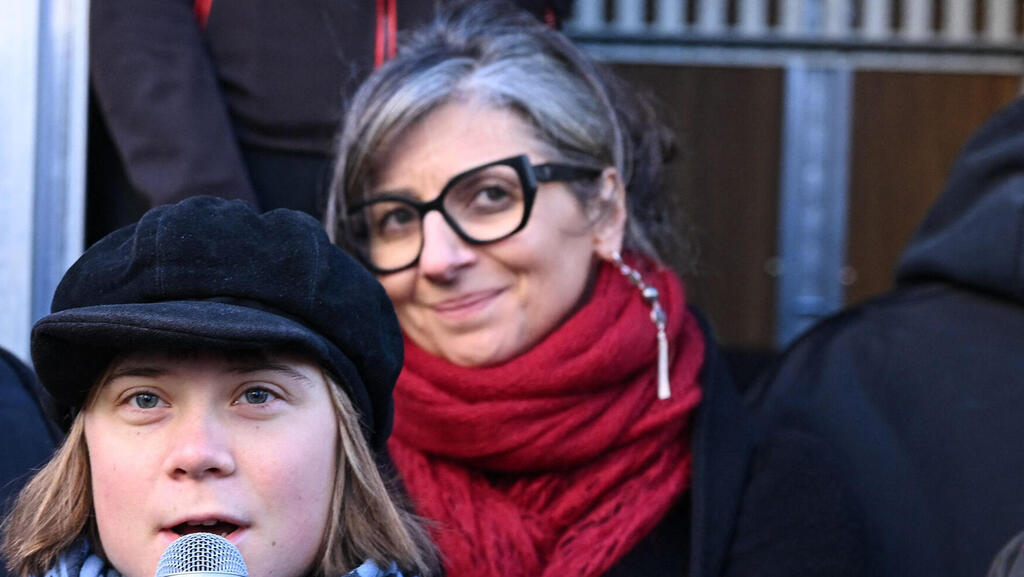
Albanese seen with Greta Thunberg
(Photo: Emanuela Zampa/Getty Images)
It is worth noting that of all European countries, much of Italy’s press has been among the harshest in its coverage of Israel, with headlines and commentary highly critical of Israeli operations in Gaza.
Sara Funaro, the mayor of Florence who also considered honoring Albanese, said: “Florence is a city of bridges and peace, and it will always value those who work toward unity. Albanese has clearly done more to divide than to unite.”
Marco Massari, the mayor of Reggio Emilia—the same mayor Albanese publicly berated two months ago—now says: “We granted her the honor because she is a UN special rapporteur, not because of the positions she expressed.” He added that the title cannot legally be revoked. In Bologna, a major center of virulent anti-Israel protests due to its large student population, officials condemned Albanese’s remarks, saying, “Violence against journalists cannot be justified under any circumstance.”
Albanese, still a star of the Italian left and recently photographed dancing and embracing Greta Thunberg at an anti-Israel rally, is increasingly drawing anger from parties that once aligned with her views. Meanwhile, antisemitic incidents in Italy continue to surge, often masked as “anti-Zionism.” In Rome, several recent attacks targeted Jewish sites, including the vandalizing of a synagogue and graffiti reading “Long live October 7” on residential buildings.