


Gulf states in the current war are contending not only with the threat of missiles and drones from Iran itself, but also with threats from Iran-backed groups, including Hezbollah and Shiite militias operating from Iraq.
On March 16, Kuwaiti authorities announced they broke up a Hezbollah-linked terror cell in the country. According to the reports, the cell included 14 Kuwaiti citizens and two Lebanese nationals and was accused of trying to undermine the country’s stability, sow chaos and disrupt public order.
Hezbollah cell busted in Kuwait
(Video: from social media)


Authorities said weapons, communications equipment, flags of terrorist organizations and drones were found in the possession of the suspects.
Hezbollah issued an official denial of any connection to terror cells or networks inside Kuwait, saying it remained committed to Kuwait’s security and stability and to cooperation between Kuwait and Lebanon.
On March 18, Kuwait’s Interior Ministry announced another round of arrests, this time of 10 people it said belonged to a Hezbollah-linked group and had received training abroad.
The ministry said the suspects had tried to harm national security and warned that it would deal firmly with anyone proven to have been involved in such acts or in cooperation with terrorist organizations.
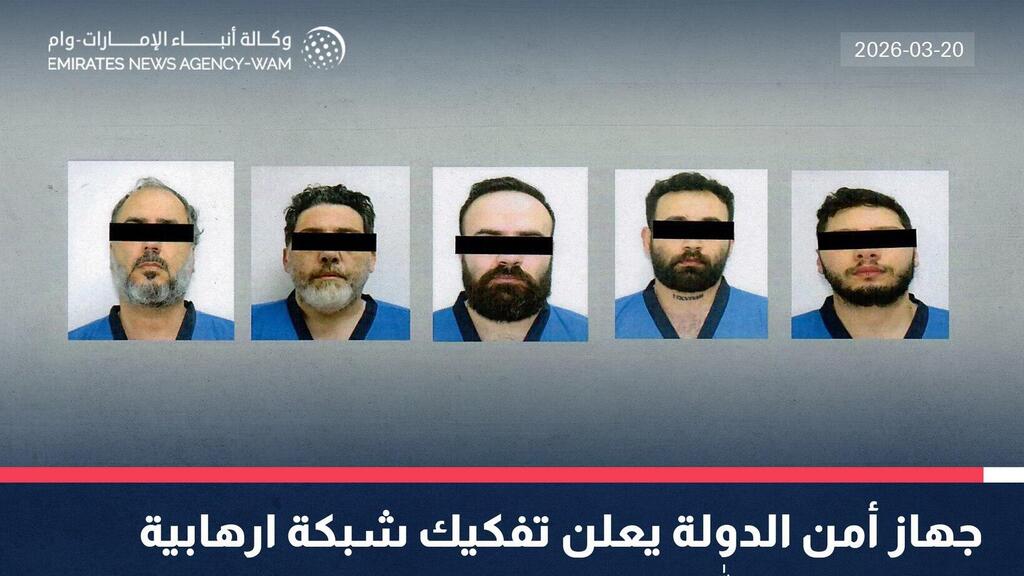
On Friday, the United Arab Emirates joined the allegations, with its security services announcing that they had dismantled a terror network linked to Hezbollah and Iran and arrested its members.
Emirati authorities said any attempt to exploit the national economy or civilian institutions for terrorist or subversive purposes would be met with force, and that no outside interference threatening the country’s security or stability would be tolerated, regardless of its source or cover.
Following the announcement, Lebanon’s Foreign Ministry condemned Hezbollah’s alleged involvement in what it called a plot against the UAE and said it was ready to cooperate fully with the investigation to ensure that those responsible are punished. Lebanese Foreign Minister Youssef Rajji is known as an opponent of Hezbollah.
Hezbollah-linked terror cell broken up in Kuwait
(Photo: from social media)
The Iran-backed terrorist group quickly denied the accusations again and also criticized the Lebanese government’s response.
“We have no presence whatsoever in the UAE or in any other country under any cover, trade name or otherwise,” the group said in a statement. “We consider these accusations part of repeated attempts to smear Hezbollah and distort its image for purposes that have become clear to everyone. We condemn the irresponsible haste with which the Lebanese Foreign Ministry adopted these narratives published by external parties.”
Later Friday, the Lebanese presidency reported that President Joseph Aoun had spoken by phone with UAE President Sheikh Mohammed bin Zayed Al Nahyan. According to the statement, Aoun congratulated him on Eid al-Fitr, condemned the attacks against the UAE and also condemned the actions of “partisan elements” in Lebanon, an apparent reference to Hezbollah.
The statement said bin Zayed thanked Aoun and called for an end to Israeli strikes on Lebanon.
As for pro-Iranian militias, Saudi Foreign Minister Prince Faisal bin Farhan recently spoke about the threat during an emergency meeting of Arab foreign ministers in Riyadh.
He said Iran also supports the Popular Mobilization Forces (PMF) in Iraq, a force that he said attacks not only Iraq’s neighbors but also operates inside Iraq itself.
The PMF is regarded by Iraq’s leadership as part of the country’s legitimate security apparatus, but in practice includes pro-Iranian militias that receive direction from Tehran.