


As efforts advance toward the second phase of a Gaza ceasefire plan led by U.S. President Donald Trump, senior Israeli officials say the transition ultimately serves Israel’s interests, warning that the current stalemate benefits Hamas more than Israel.
The comments came after Trump over the weekend unveiled the international bodies set to oversee Gaza’s future and named the figures expected to take part. In a speech Tuesday marking one year in office, Trump briefly addressed the hostage issue, saying the administration believes it knows where slain hostage Ran Gvili is being held in Gaza. Israel was surprised by Trump’s statement. Israeli officials say they do not know Gvili’s exact location, only the general area.
Trump pushes for phase two of Gaza ceasefire, says US knows where Ran Gvili is held
(Video: White House)


Senior Israeli officials said Phase Two of the ceasefire would require Hamas to disarm and dismantle its military capabilities — a demand they say the terrorist group is unlikely to accept. They said Hamas would be given a deadline to comply, after which Israel would resume military operations.
According to the officials, the current pause allows Hamas to receive aid and funding, rebuild capabilities and strengthen its grip on Gaza’s population. They said the interim period works to Hamas’ advantage, enabling it to consolidate control, collect unexploded Israeli ordnance and plant explosives.
The officials stressed that moving to Phase Two is an Israeli interest regardless of the hostage issue and noted that the phase does not include Gaza’s reconstruction.
They said no final decision has been made on how long Hamas would be given to meet disarmament demands, but estimates center on roughly two months. According to the officials, Trump would prefer a shorter deadline, while some in his circle favor allowing additional time.
The comments followed a decision by Israel’s security cabinet not to reopen the Rafah crossing for now, despite pressure from Washington. Israeli officials outlined conditions for reopening the crossing after Gvili’s return, including ensuring that more people exit Gaza than enter and establishing an Israeli-managed passage through which all movement would be monitored.
Israeli officials also voiced concern over Washington’s decision to include Turkey’s foreign minister and a senior Qatari official in a newly announced advisory body related to Gaza. They said the move was not coordinated with Israel and questioned the body’s role relative to the previously announced Board of Peace.
“The problem,” one senior official said, “is that Israel agreed to transfer responsibility for Gaza to the Americans. When this framework fails — and Hamas refuses to disarm — Israel will again be forced to deal directly with Gaza’s demilitarization.”
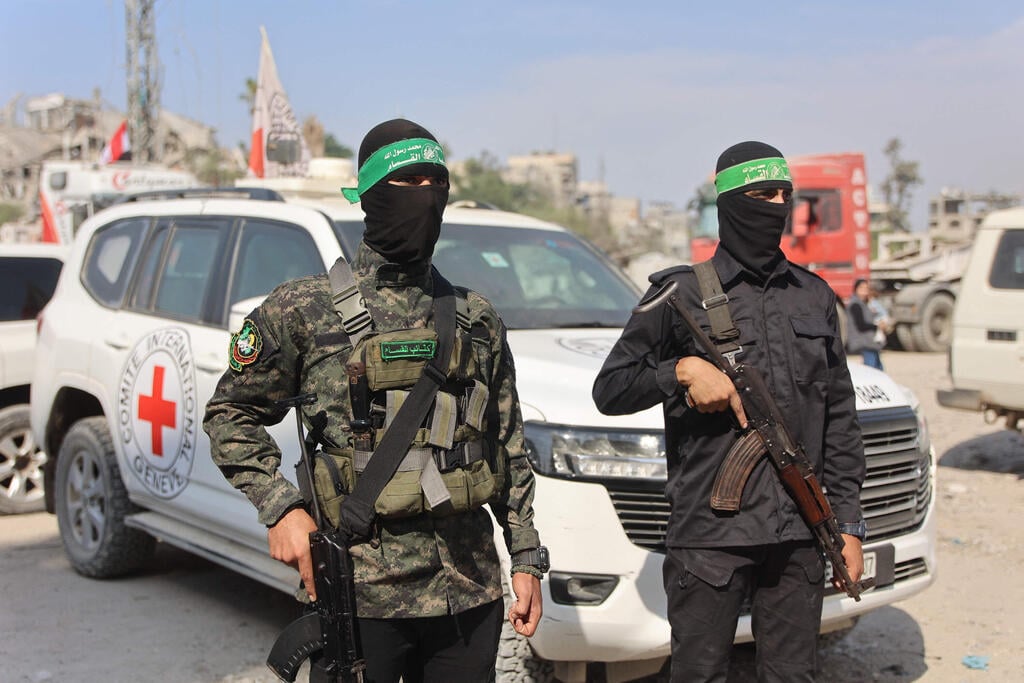
(Photo: Omar AL-QATTAA / AFP)
The officials said the inclusion of Turkey and Qatar appeared linked to U.S. frustration over Israel’s refusal to open Rafah before the hostage’s return. They said neither country is expected to deploy forces in Gaza.
Meanwhile, the Saudi-owned newspaper Asharq Al-Awsat reported that senior Hamas commanders are preparing to leave Gaza as part of the move toward Phase Two. The report cited three Hamas sources and said the departures would take place after arrangements are finalized regarding Gaza’s future governance.
Palestinian sources said the emerging framework would allow a technocratic administration to enter Gaza only alongside the departure of certain Hamas figures, chief among them Izz al-Din Haddad, head of Hamas’ military wing. It remains unclear whether Haddad would leave voluntarily.
The report said some Hamas figures from both the political and military wings who survived more than two years of fighting are preparing for a coordinated exit, while others, particularly within the military wing, have refused to leave.
According to the report, some of those expected to depart were recently appointed to leadership roles in Hamas’ Gaza-based political bureau as part of a reorganization led by Ali al-Amoudi, a close associate of Yahya Sinwar, who led the Oct. 7 massacre and was killed by Israeli forces in October 2024.
Sources in Gaza said the departures could be long-term, with senior Hamas figures living abroad for several years, while others may leave temporarily for talks in Egypt on future security arrangements before returning.
Israeli officials reiterated that they do not expect Hamas to disarm voluntarily. “At the end of the process,” one official said, “Israel will have no choice but to enforce demilitarization on its own.”