

“One of the gravest crimes in the state’s history,” blared the headline in ynet's sister outlet Yedioth Ahronoth in 1982, when Herzl Avitan, one of the most violent and notorious figures in Israel’s underworld, was captured in Paris by French police and Israeli officers.
The crime that led to his arrest was murder. Not just any murder, but the unprecedented assassination of a senior Israel Prison Service official, Ronni Nitzan, commander of Ayalon Prison.
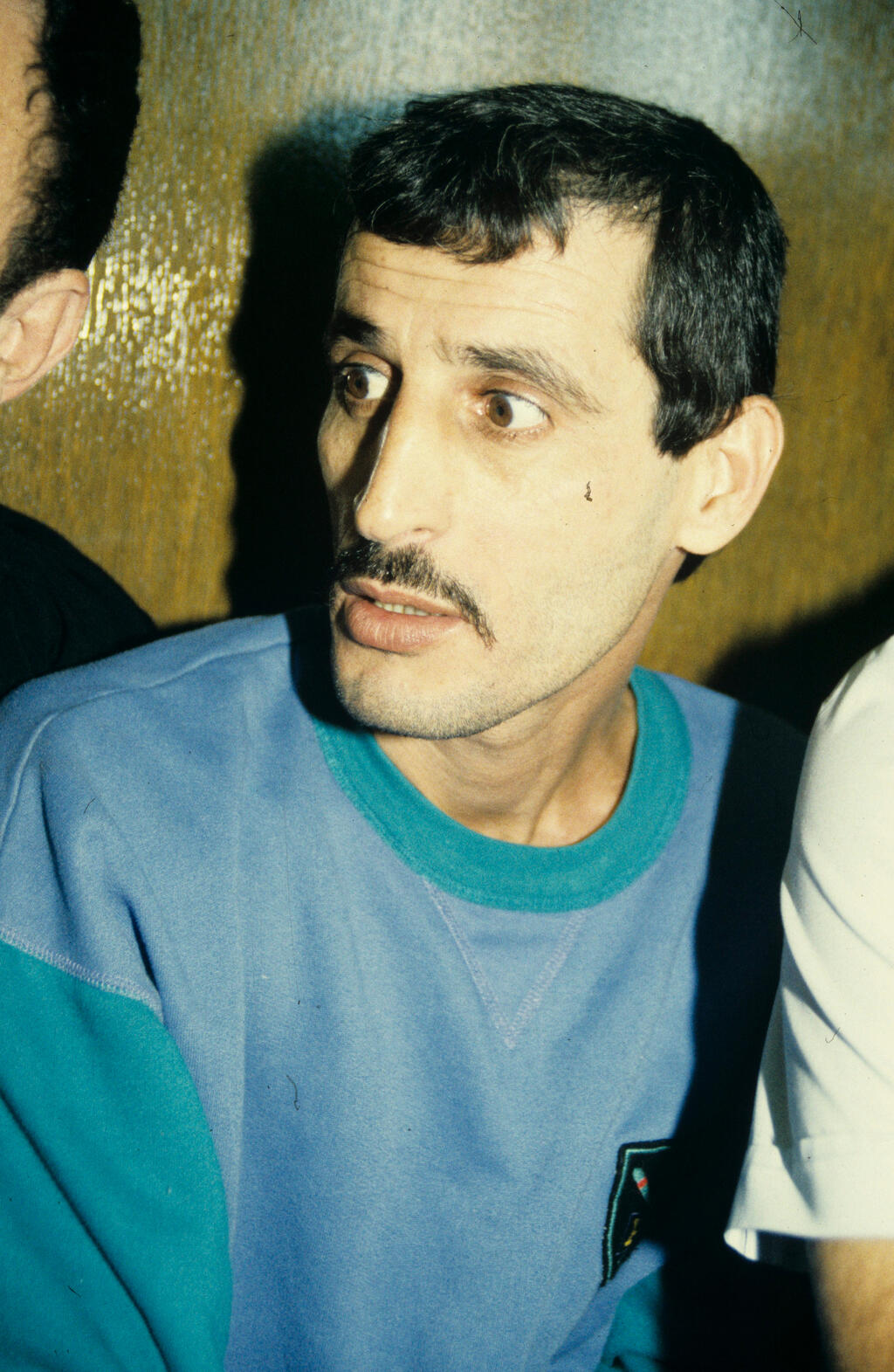
Nitzan was regarded as a tough and dedicated officer who led a crackdown on drug smuggling inside the prison, including invasive searches. His hard line made him a target.
In December 1981, as he left his home in the morning and entered his car, a van pulled up. Two armed men stepped out with Uzi submachine guns and fired 22 bullets. He died at the scene.
The country was stunned. Such a targeted and violent attack on a senior prison official was without precedent in Israel. Police compiled a list of potential suspects, including two escaped inmates: Herzl Avitan and Yaakov Shemesh. Despite extensive searches, neither could be found.
Shemesh had escaped from Abu Kabir detention facility. Avitan, who had been sentenced to 15 years in prison for his role in an armed bank robbery, escaped during a visit to his parents.
About a month after Nitzan’s murder, a violent robbery took place at a jewelry factory in the Ramat Gan Diamond Exchange. The assailants again used an Uzi and killed a security guard before fleeing with diamonds worth $1 million.
Ballistic tests led police to criminal Moshe Cohen, who agreed to turn state’s witness. He told investigators that Avitan had orchestrated Nitzan’s murder and carried out the diamond heist to finance his escape from Israel.
Police began tracking Avitan’s girlfriend, 21-year-old Orit Arviv. Investigators noticed she frequently used a public phone and placed the line under surveillance. Recordings indicated she was speaking with Avitan, who had fled to France using a forged passport, and that she was planning to join him in Paris.
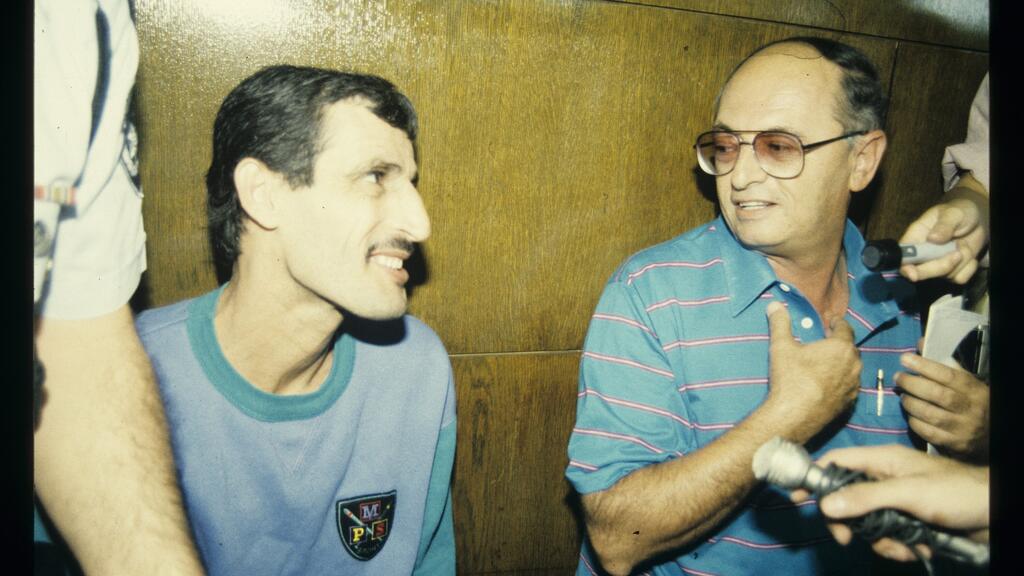
Herzl Avitan (left)
(Photo: Michael Karmer)
Officers followed Arviv as Avitan’s brother drove her to the airport and handed her an envelope. Police allowed her to pass through check-in and board the plane. Only after passengers were seated did officers enter, remove her from the aircraft and search her belongings.
They found cash, a phone number she was to call upon landing and a recent photograph of Avitan, now bearded and drastically altered in appearance.
Israeli authorities quickly relayed the information to French police. Two Israeli officers flew to Paris to assist. The following day, in a special operation by Paris police, Avitan was arrested in an apartment in the French capital.
Initially, he tried to pass himself off as a Moroccan citizen and presented a forged passport. Weeks later, he recalled that he was Jewish and requested kosher food.
After about a year, Avitan was extradited to Israel and tried for the murders of Nitzan and the security guard killed in the diamond robbery. Shemesh, captured in France seven months later, was also extradited. Both were convicted of the two murders and sentenced to two life terms.
Avitan’s violent career did not end there.
In 1985, together with his cellmate Shmaya Angel, he murdered inmate Haim Shushan, stabbing him 131 times. The motive, according to investigators, was their suspicion that Shushan planned to implicate Angel’s wife, Sarah Angel. Both men received additional life sentences.
In 1988, Avitan staged a dramatic escape from Beersheba Prison. He overpowered an inmate and a medic, summoned an ambulance and exited the prison posing as a patient. He drove to Beersheba, seized control of a family home and forced two occupants to accompany him by taxi to his sister’s house in Hod Hasharon. Along the way, he gave a live interview to Army Radio.
When he arrived in Hod Hasharon, undercover police officers disguised as construction workers were waiting. He was arrested again.
Avitan remained in prison until his death from cardiac arrest in 2001.