

Elections are being held in Syria Sunday for parliament for the first time since the overthrow of dictator Bashar al-Assad and his regime in December, amid questions about where the country is heading under Ahmed al-Sharaa (Abu Muhammad al-Julani), a former al-Qaida figure who has received a warm embrace from the West and arouses great suspicion in Israel.
Sunday's vote is not fully democratic either, since broad swaths of the Syrian public are not participating — Druze and Kurdish strongholds are expected, for the time being, to remain without representatives in parliament despite al-Sharaa’s promises of a new, diverse, inclusive Syria.
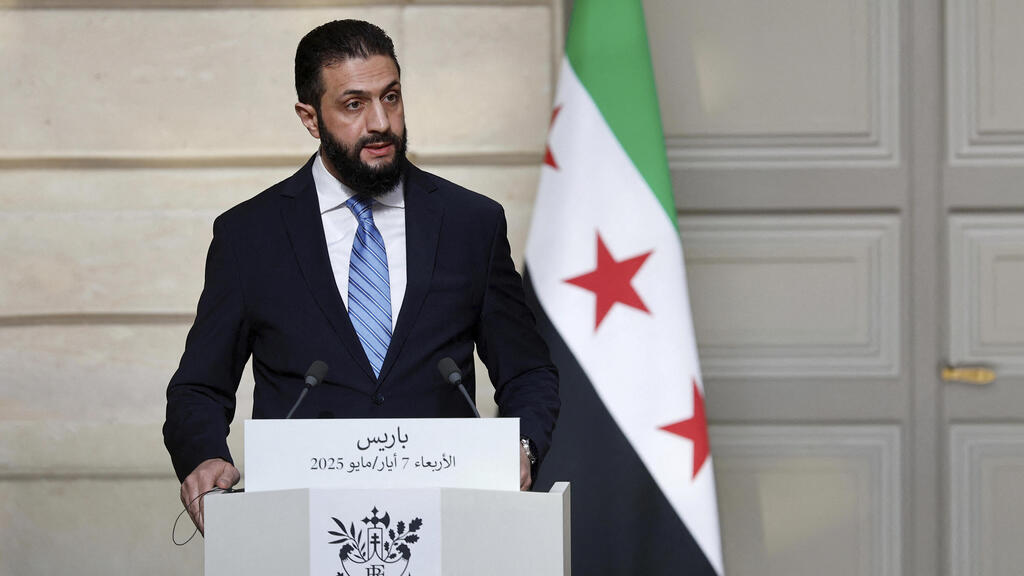
The Assad family ruled Syria for 53 years — first the father Hafez al-Assad and then his son Bashar — and during those five decades elections were held regularly but were viewed as mere theater, with the Ba‘ath party of the Assad household always securing a large majority in the legislature. In those years the only real competition in the electoral process occurred before election day itself, when senior Ba‘ath figures competed among themselves for places on the party list.
After Bashar al-Assad’s ouster, Syria’s new president al-Sharaa promised to lead the country to a different future in which the people’s voice would be given greater weight. But that promise will not be realized in Sunday’s parliamentary elections for the assembly’s 210 seats: the Syrian public as a whole will not be able to vote directly for their legislators. Instead, roughly two-thirds of the seats will be chosen by a group of public representatives appointed in each governorate, and the remaining one-third of the seats will be allocated directly by al-Sharaa.
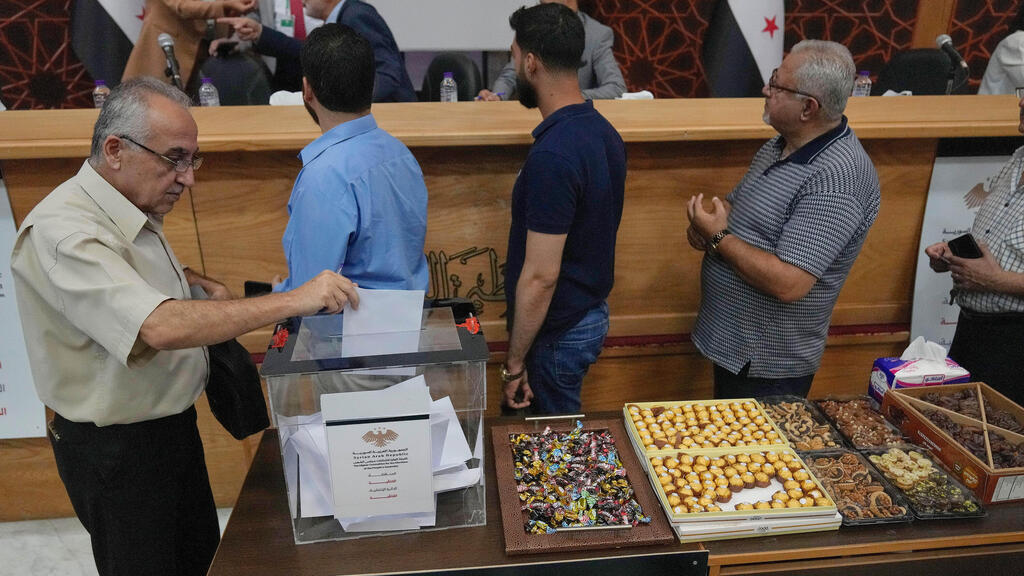
Syrian elections for parliament
(Photo: Hussein Malla/AP)
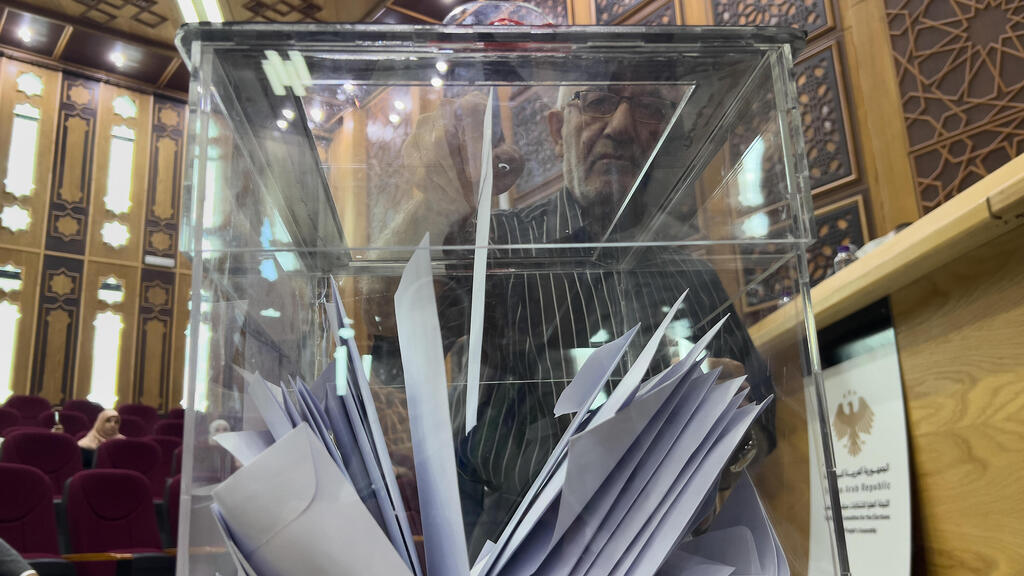
Syrian ballots
(Photo: Hussein Malla/AP)
Under the temporary electoral system set by al-Sharaa’s regime, Syria is divided into 60 governorates (districts), and each governorate is allocated a number of seats corresponding to its population — the larger the population, the more seats. In total, representatives of the governorates are supposed to elect members to fill 140 of the parliamentary seats, but in practice they will elect only 121 on Sunday: the authorities postponed elections in the Sweida governorate, the Druze stronghold where two waves of bloody unrest this year left thousands dead and injured, and in areas of northeast Syria controlled by Kurdish forces. Elections in those 10 governorates have been postponed indefinitely because of tensions between local forces and the central government in Damascus, and the 19 seats allocated to them will remain empty for now.
In the vote that opened at 9:00 a.m. local time and closes at 5:00 p.m. a total of 1,578 candidates are running — all as independents. After Assad’s removal, al-Sharaa’s interim authorities announced the dissolution of all existing political parties in Syria, many of which had been closely tied to the deposed regime; since then, no new system for party registration has been established, so the candidates have no party affiliations.
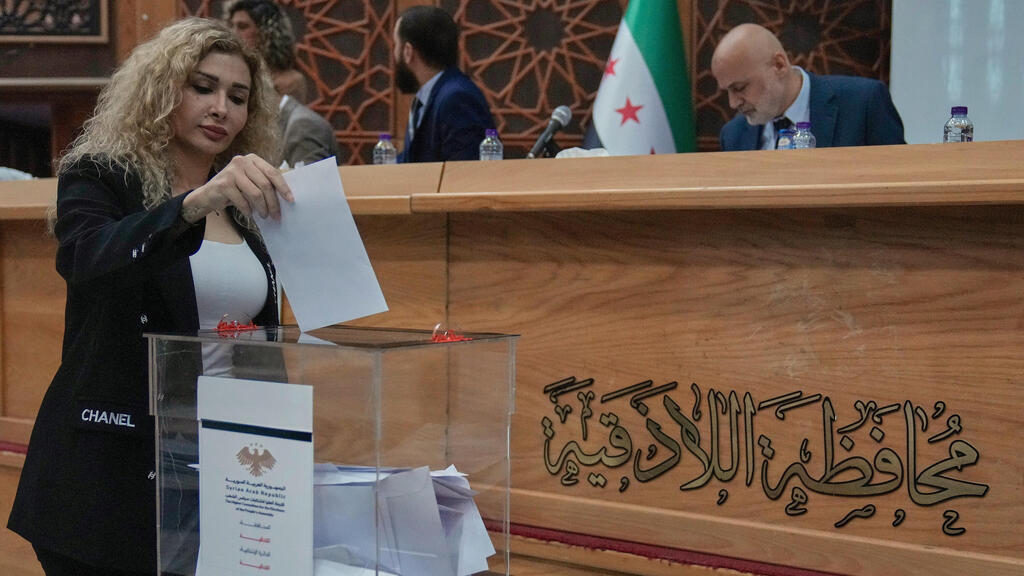
About 14% of the 1,578 candidates are women
(Photo: Hussein Malla/AP)
The decision to hold indirect, and therefore not fully democratic, elections has of course been criticized. On one hand, some stress that the justifications of al-Sharaa’s government are legitimate, particularly those relating to the legacy of the 14-year civil war: millions of Syrians still live as refugees inside the country or abroad, many have lost their official documents, and in fact nobody can say precisely how many Syrians currently live inside Syria — a population census and a voter registry will take time to prepare.
On the other hand, many argue that al-Sharaa’s government could have done more to enhance the directness and credibility of the vote. They point out, among other things, that no clear criteria were presented for how the public representatives who are participating in the vote were chosen to select the next parliament’s members. In addition, there are no quotas set for representation of women or religious and ethnic minorities. Women are supposed to make up 20% of the public representatives in the vote, but that does not guarantee the same share among those actually elected to the new parliament.
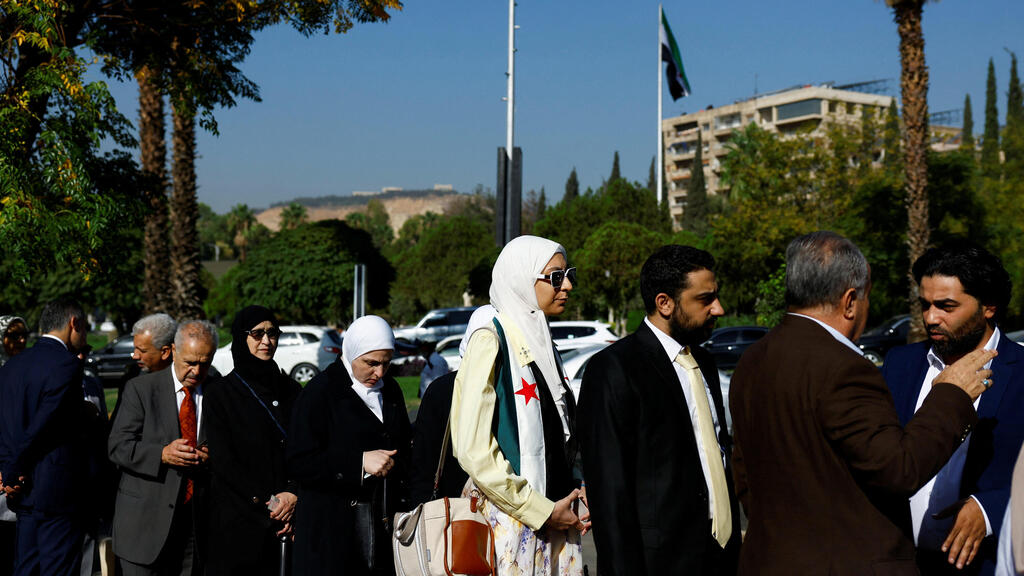
Syira holds elections
( Photo: Yamam al Shaar/Reuters)
Overall, about 14% of the 1,578 candidates are women, but while in some governorates their share reaches 30%–40%, in others there are no female candidates at all. Beyond that, the fact that elections are not being held Sunday in Sweida and in Kurdish-controlled areas raises questions about the representation of communities that are not part of the Sunni Arab majority.
The new parliament, which will take office after al-Sharaa appoints the additional 70 deputies, will serve for 30 months, during which time the government is supposed to prepare the ground for the next elections so that those elections will be fully direct.
Commentators say that, although today’s vote is not completely direct, it constitutes a historic milestone, and its results will be seen as a barometer of how serious the new government is about its intentions to build in Syria an inclusive state that recognizes and protects the rights of its diverse populations