


U.S. State Department spokesperson Tammy Bruce said in a briefing to reporters Tuesday evening that Israel and Hamas "agreed on a ceasefire framework that includes establishing a humanitarian corridor in the Gaza Strip." According to her, US Secretary of State Marco Rubio emphasized the need for such a corridor and that "the humanitarian situation in Gaza is the central issue we are dealing with."
U.S. State Department spokesperson Tammy Bruce says Steve Witkoff is on his way to the region, signifying a breakthrough
(Video: Department of State)


Bruce also said in the same briefing that Steve Witkoff, U.S. President Donald Trump's special Mideast envoy, is on his way to the region "now." In Israel, they have said in recent weeks, and even more so since the start of the talks in Doha a little over two weeks ago, that Witkoff's arrival in Doha is considered " the most important indication of progress in the negotiations."
According to Israeli assessments, the main remaining point of contention is the scope and depth of the IDF's withdrawal from areas seized during the recent Operation Gideon's Chariots and Operation Strength and Sword. Still, Israeli officials describe the dispute as "resolvable."
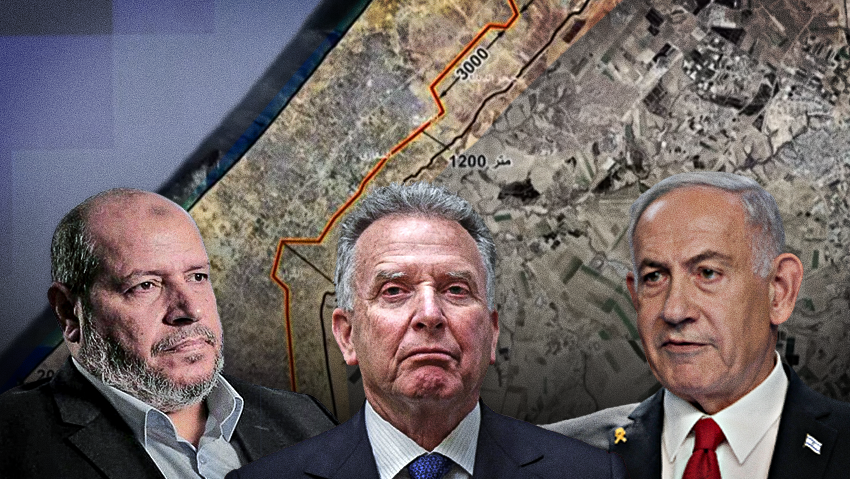
Given the progress made in indirect talks held in Doha and Cairo, sources close to the negotiations believe that only limited flexibility from both sides could have led to an agreement on the deal’s framework within a day.
A senior Israeli official familiar with the talks confirmed earlier on Tuesday that Hamas had not yet responded to the latest proposal delivered by the mediators last Thursday. Talks in Doha, which began over two weeks ago, are still ongoing.
Nearly a week has passed since Hamas received the updated ceasefire and hostage exchange offer and, according to reports, the delay was primarily due to internal deliberations among Hamas leadership in Gaza.
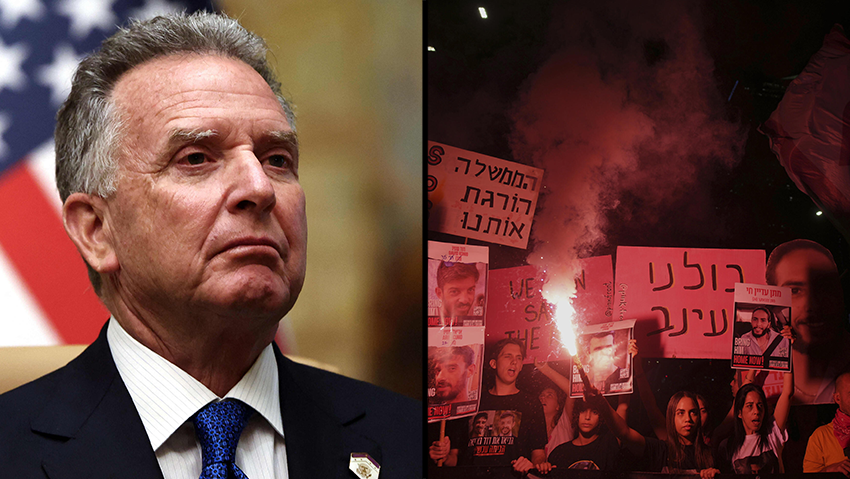
Steve Witkoff is on his way to the region, protesters call to bring the hostages home
(Photo: Evelyn Hockstein/Pool/Reuters, Ohad Zwigenberg/AP)
Two sources with direct knowledge of the negotiations told CNN that the U.S. has pressured Israel to relinquish control over the "Morag Corridor"—a strategic strip separating Rafah from Khan Younis. In turn, Washington has now issued a message to Hamas: Our patience is running thin—respond soon.
The talks progressed after Prime Minister Benjamin Netanyahu reportedly agreed to concessions regarding the IDF’s presence in the corridor, paving the way for potential agreement.
According to those sources, senior Hamas official Khalil al-Hayya, who is leading the talks from Doha, has expressed private support for the mediators’ latest proposal but is still waiting for approval from the group’s leadership inside Gaza.
Meanwhile, in what some interpret as a warning to Hamas, one of the same sources told CNN that U.S. assurances to Hamas and the mediators are now “at risk.” Chief among those assurances is a U.S. guarantee that Israel would enter negotiations to end the war during the proposed 60-day ceasefire. However, the source cautioned that Washington could withdraw this promise if Hamas does not agree to the deal quickly.
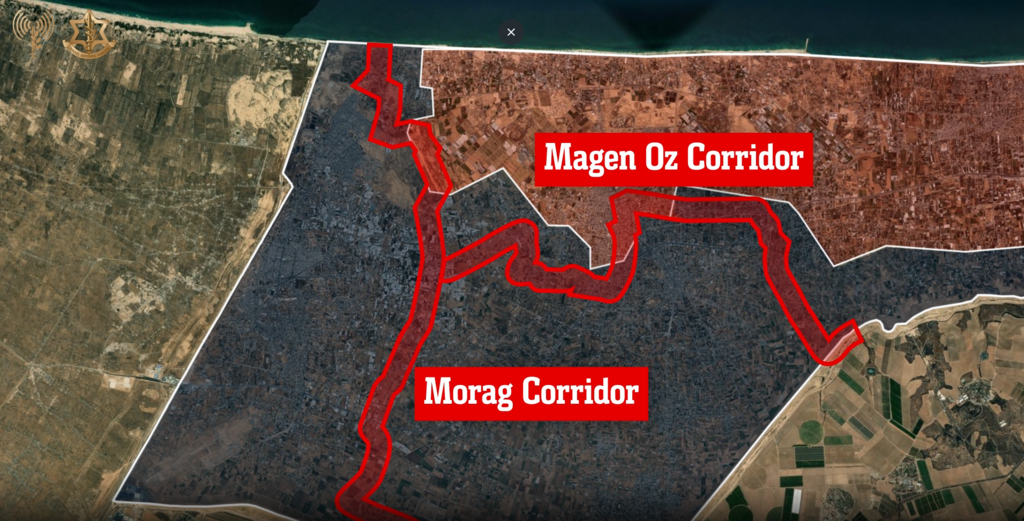
(Photo: IDF Spokesperson's Unit)
“Qatar, Egypt and the United States are applying heavy pressure on Hamas to accept the agreement,” the sources said. “Time is running out. Just look at the rising daily death toll in Gaza and the worsening humanitarian conditions.”
In recent days, reports indicated that a key signal of progress would be the arrival in Qatar of Witkoff. It is unclear whether Witkoff has set a firm deadline for his stay in Doha.
Strategic Affairs Minister Ron Dermer continues to coordinate with Witkoff separately from the Doha track, and it has been reported that Dermer may travel to Qatar to join the envoy.
Get the Ynetnews app on your smartphone: Google Play: https://bit.ly/4eJ37pE | Apple App Store: https://bit.ly/3ZL7iNv
On Monday, sources familiar with the talks accused Hamas of “dragging its feet and trying to maximize its demands,” which they say is hindering a breakthrough. One Israeli source said, “Talks are tough. We’re stuck in the same place. There’s no progress.” Due to what is being described in Jerusalem as Hamas’s stalling tactics, officials there now doubt a deal can be reached this week.
According to the current partial deal framework under discussion, a 60-day ceasefire would include the release of half of the remaining hostages—both living and deceased. Ten living hostages would be freed, eight of them on the first day and two more on day 50. Eighteen bodies of deceased hostages would be returned in three separate phases.
The plan also calls for negotiations during the ceasefire to reach a permanent end to the war and the release of all remaining hostages. Hamas, however, is demanding guarantees that the temporary ceasefire will be extended beyond the 60-day period until a final agreement is reached. The nature and language of those guarantees remain unclear.