

Defense Minister Israel Katz said Tuesday that Israel must expand its domestic weapons production to ensure it can defend itself independently, citing global competition for munitions and occasional disputes with allies during wartime.
Speaking at the ynet and Yedioth Ahronoth Defense High-Tech Conference, held in cooperation with the Israeli Engineers, Architects and Academics Association in Technological Professions, Katz addressed challenges related to arms procurement and Israel’s defense autonomy. “You can never produce everything, invent everything or prepare for everything,” Katz said. “Everyone is competing for resources — from the most basic munitions to the most sophisticated systems. The result is that when you are in a campaign and need tank shells and artillery, you find yourself competing with other actors.”
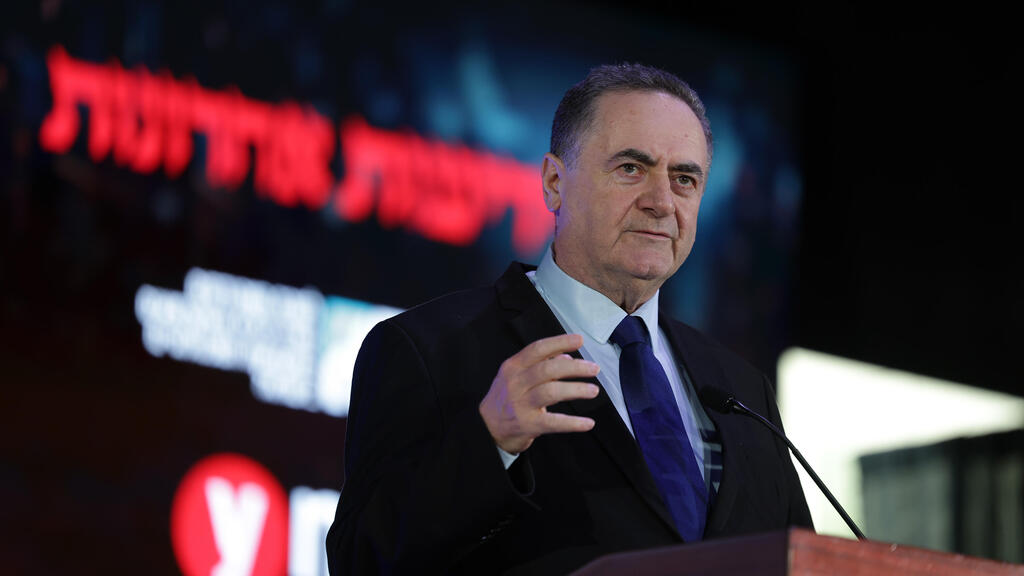
Israel Katz at the Defense High-Tech Conference
(Photo: Abigail Uzi)
Katz described the United States as “a great ally” that has supported Israel during what he called a multi-front conflict, but said there have been moments of disagreement that had an impact. More broadly, he said, even when there is a willingness to assist, countries face constraints in allocating or freezing resources for themselves, other partners and Israel.
He also cited sanctions imposed by other countries on spare parts and components, saying such steps underscore the need for Israel to manufacture as much as possible on its own. “Israel must always be able to defend itself by itself, alone, against any threat,” Katz said.
He announced that the Defense Ministry has decided on a long-term initiative, provisionally named “Shield of Israel,” that would add 350 billion shekels, or about $95 billion, to the defense budget over the next decade. The plan is based on “great faith in the economic strength of the State of Israel,” he said, adding: “There is no security without an economy, and no economy without security.”
Katz also addressed Israel’s defense exports, predicting increased demand in light of recent events and what he described as Israel’s image as a country capable of meeting challenges and winning wars.
He said Israel maintains a liberal export policy that balances safeguarding classified information with marketing capabilities abroad. A basic condition for arms sales, he said, is the signing of security agreements with purchasing countries, which Israel reviews carefully and limits to partners it trusts and respects.
Katz cited Germany as an example, noting the shift in relations as Israel now exports defensive systems to Berlin. “As the son of Holocaust survivors, I don’t need to explain this reversal,” he said, adding that some deals include partnerships and financing arrangements for local production in Israel for both countries.
In recent days, Katz has faced international criticism, including from Britain and Germany, over what critics described as “de facto annexation” approved by the government. European and Arab officials reacted sharply to a series of cabinet decisions to deepen Israeli control in the West Bank, territory Israel captured in the 1967 Mideast war, according to details first reported by Ynet.
On Sunday, the government approved a proposal by Katz, Justice Minister Yariv Levin and Finance Minister Bezalel Smotrich, who also serves as a minister in the Defense Ministry, to begin a land registration process in the West Bank for the first time since 1967.