


Iran has upgraded one of its most powerful bargaining chips: the ability to disrupt traffic through the Strait of Hormuz and, with it, threaten the global economy.
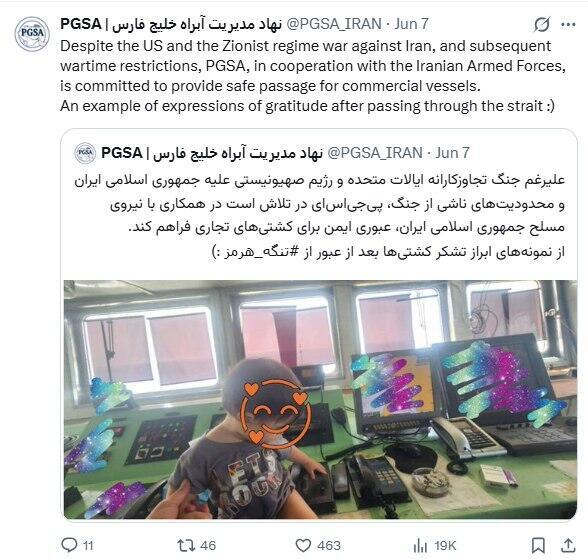
About a month ago, Tehran launched the Persian Gulf Strait Authority, or PGSA, a body it presents as a mechanism for managing maritime traffic through the strategic waterway. Under the system Iran is trying to promote, ships would be required to receive approval before passing through the strait.
Iran’s fake Hormuz authority turns shipping into its newest weapon
(Video: Yaron Berger)


But the Strait of Hormuz is not under Iran’s exclusive sovereignty, and Tehran does not have the authority to condition the right of passage on its own approval.
The launch also included a new account on X, where users were invited to follow updates on the Strait of Hormuz. The account described the PGSA as Iran’s legal and representative body for managing transit and navigation through the strait.
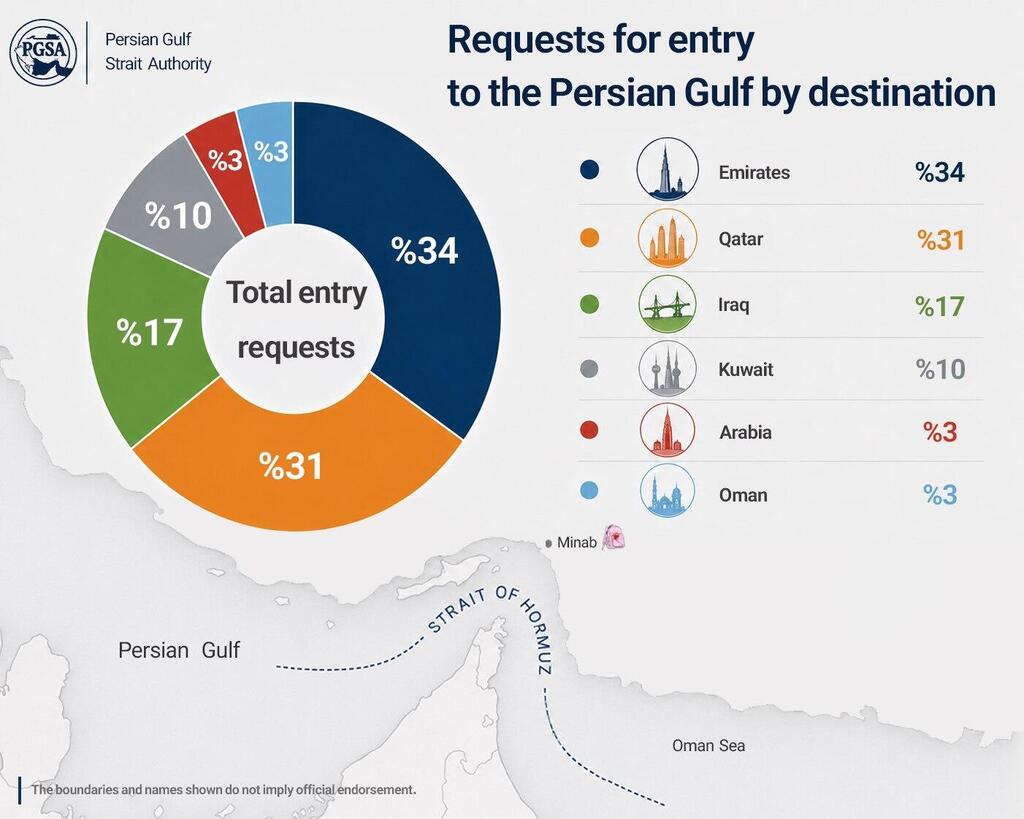
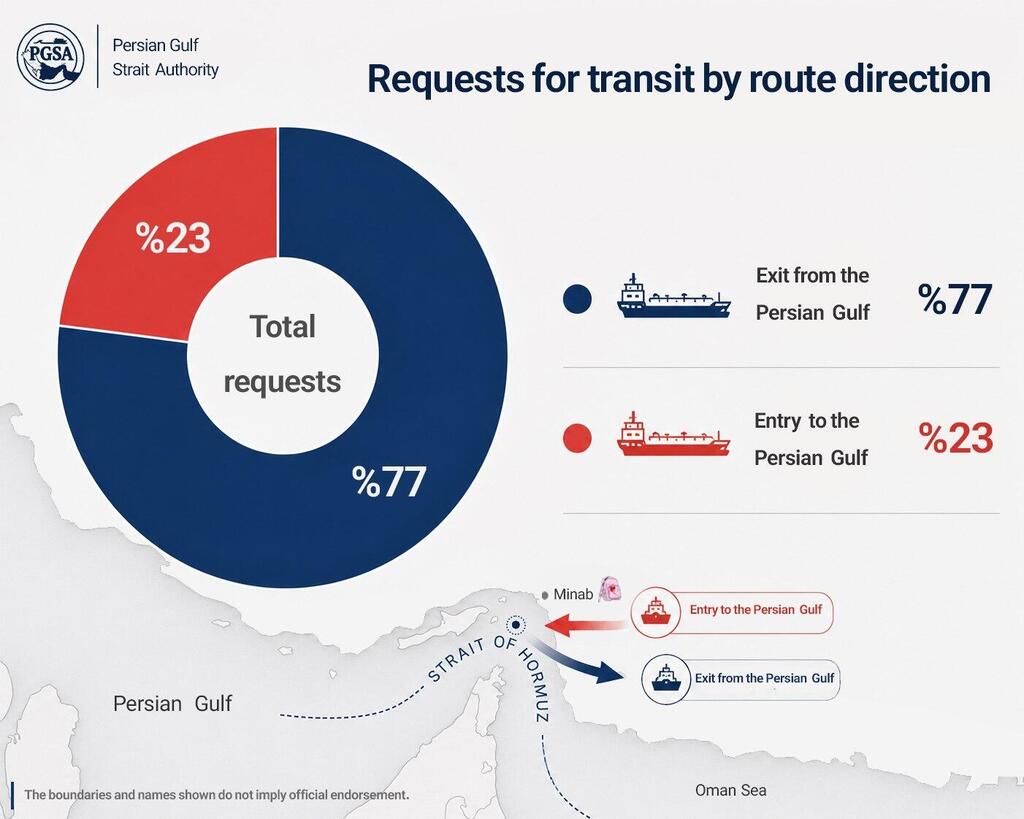
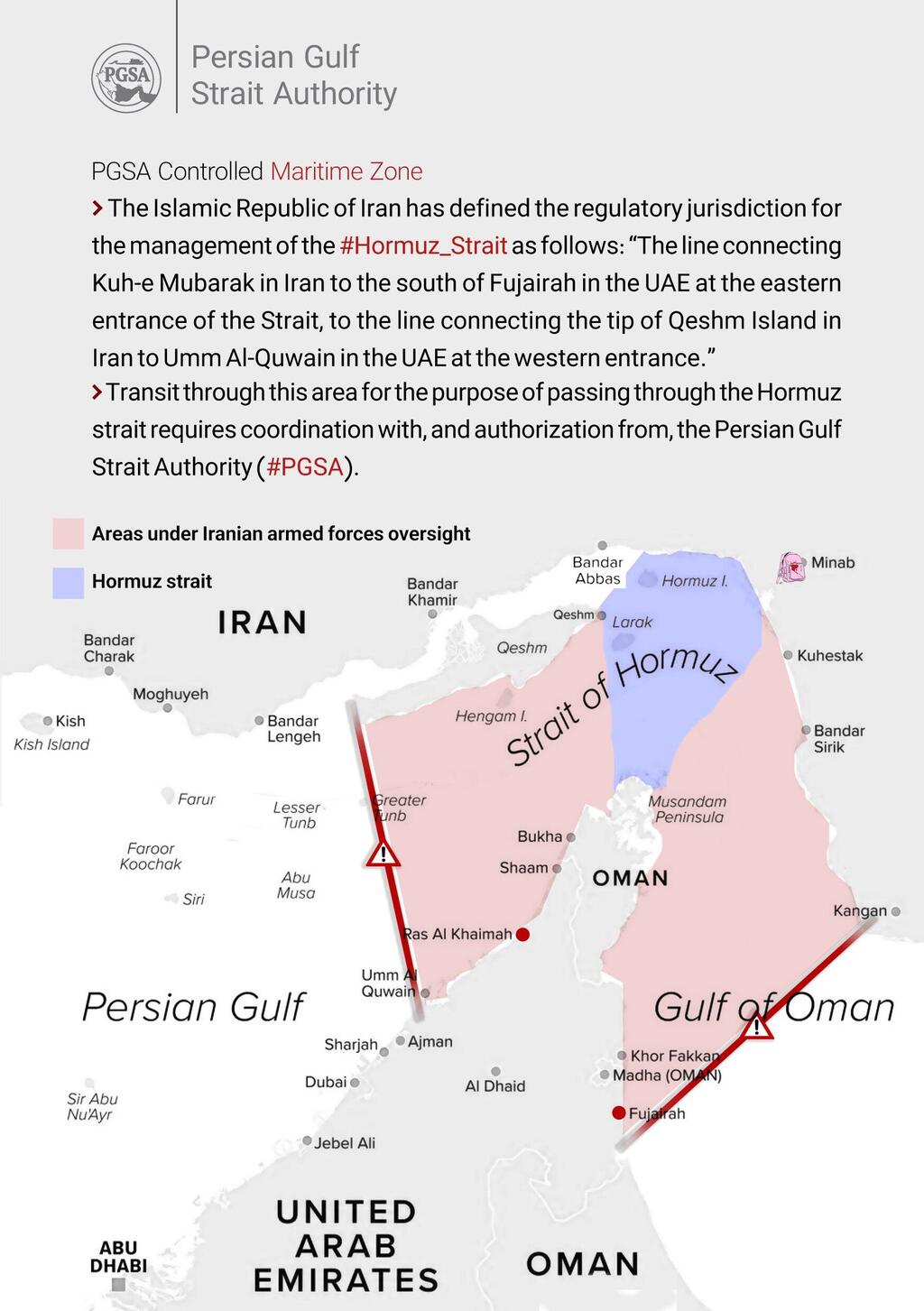
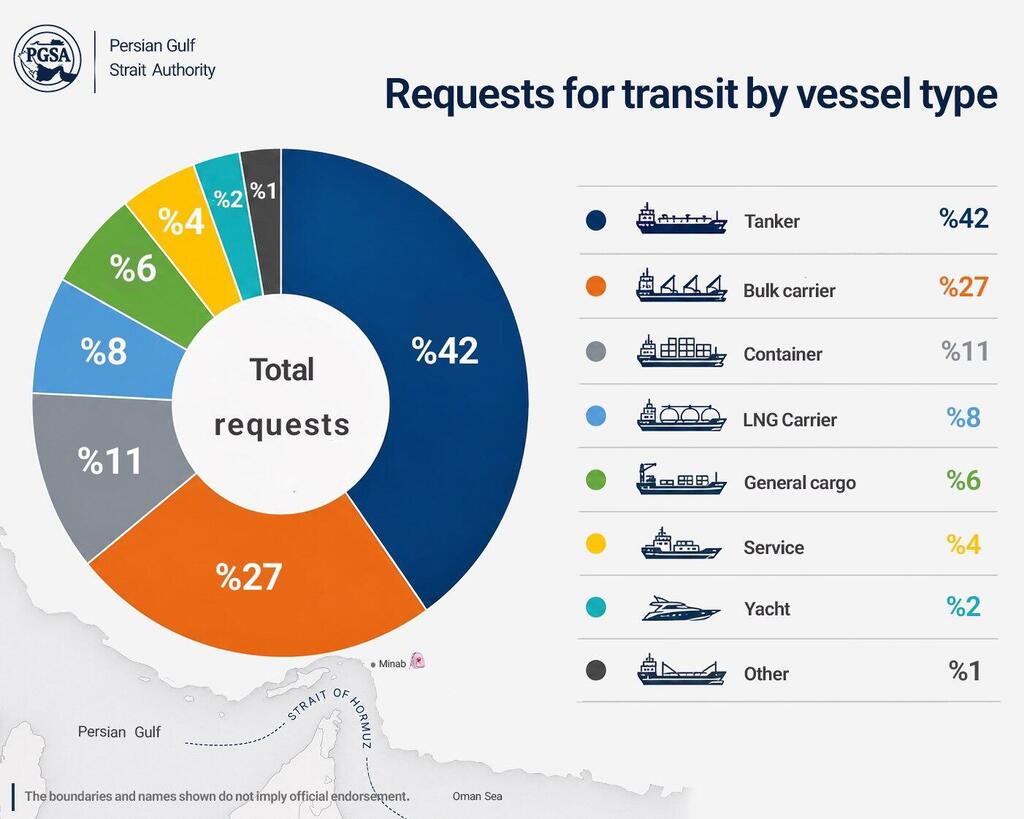
Since it was launched in May, the Iranian authority has published data on transit requests it says it has received, including breakdowns by type of vessel and by country. It has also published a map of the area Tehran claims to oversee. The body has already been added to the U.S. sanctions list.
U.S. officials have described the PGSA as an attempt by Iran’s Revolutionary Guard Corps to profit from state-backed terror by extorting vessels passing through the Strait of Hormuz. They warned that the body violates international law and existing sanctions on Iran, and that any entity cooperating with it could be exposed to sanctions.
Iran, for its part, said the sanctions were evidence of the authority’s effectiveness. Tehran also said it continues granting passage permits to non-hostile vessels in order to ease traffic. Washington maintains that the strait must remain open to passage without fees.
The exact idea behind creating the authority remains unclear, but its activity on X appears designed to resemble the Suez Canal Authority, a legitimate body established about 70 years ago to manage another strategic waterway. Like the Suez Canal Authority, the Iranian body publishes material from its activity, maps, updates and notices related to decisions and meetings, apparently in an effort to build legitimacy.
Despite Iran’s lack of legal authority to operate such a body, the PGSA is already becoming a fact on the ground. Contacts have taken place between Iran and Oman, which sits on the opposite side of the strait, over the future of Hormuz, though no clear arrangements have been reached.
Representatives from Iran and Oman held a first working meeting on the future management of the Strait of Hormuz. Oman said the sides discussed ways to improve coordination on issues related to the strait in a manner that serves both countries’ interests. The United States, meanwhile, continues to insist that the waterway remain open without fees.
Reports last week said Oman told European officials that there may be no return to the prewar situation in the Strait of Hormuz, and that ships passing through the waterway could be required to pay fees. It remains unclear whether this would mean mandatory payments. Omani officials were said to be discussing possible charges for services such as pollution treatment or assistance with vessel navigation.
Recent reports have presented conflicting signals from Oman over the future of the strait and the question of transit fees. For now, however, the Iranian authority is active, and even a single Iranian threat, whether implemented or not, can make shipowners fear passing through the route and avoid it as much as possible.
After the working meeting, Omani Foreign Minister Badr al-Busaidi said Muscat does not support collecting fees in the strait and backs the law of the sea, which protects the right of free passage. At the same time, he said no arrangement would be possible without Iran.
He said any understandings regarding the strait must remain within the framework of international law, and that Oman is committed to the law of the sea. He added that Oman and Iran agree that any arrangement must remain within that framework, and that Muscat does not support imposing fees on ships passing through the strait.
Oman also said it supports implementation of the memorandum of understanding signed between Iran and the United States, and that it would continue efforts to promote calm and understanding. Muscat stressed its commitment to ensuring safe and free navigation through the Strait of Hormuz for all.
Gulf states, according to Oman, agree on the need to reduce escalation and stop attacks by all sides. Oman also said the primary responsibility for ensuring that the strait is free of mine-related dangers lies with Iran.
Iranian state-linked media said earlier that maritime traffic through the Strait of Hormuz has declined following the latest exchange of strikes between Washington and Tehran. Commercial traffic is continuing, but at a lower level, with recent attacks raising serious concern among shipowners over use of the route.