

Downtown Los Angeles in 2026: Two years before the Olympics and just ahead of the city’s World Cup matches, conditions in its famed urban core have reached an unprecedented low. Nearly 40% of office buildings sit vacant, shuttered storefronts stretch across entire blocks, neglect and litter are visible on nearly every corner and the area is grappling with severe crime and homelessness problems.
Nearly 1,000 businesses left downtown in 2024, and the trend continues. The central areas of downtown have consistently recorded the highest number of closures, with neighborhoods including South Park, the Fashion District, Central City and Pico-Union leading in business shutdowns in 2024 and 2025. Many major companies, including Deloitte and KPMG, have downsized their offices or left downtown Los Angeles altogether.
Despite its historic role as the city’s center of government, finance, arts and sports, downtown is in deep crisis.
Itzik Shlomov, a real estate developer born in Tel Aviv who moved to Los Angeles with his family at age 14, was one of the key figures behind the revival of downtown Los Angeles in the early 1990s. He restored many of the area’s beautiful 1920s-era buildings, breathed new life into them and helped fuel the district’s renaissance.
In 1991, Shlomov purchased a building on Spring Street for $1 million and renovated it. Recognizing the area’s potential, he went on to acquire additional properties on Spring Street. At the same time, the city implemented policies encouraging the conversion of aging commercial buildings into residential housing, helping spark a major wave of redevelopment downtown. Today, he watches the area’s rapid decline with concern.
According to Shlomov, the downturn began after the coronavirus pandemic in 2020.
“Before that, downtown was as vibrant as it could be,” he said. “Everyone wanted to live here. Rents were extremely high, but that didn’t stop anyone. After the pandemic, offices closed and people stayed home to work remotely. When employers eventually asked workers to return, only about 50% came back, and many buildings emptied out.
“That created a domino effect. Many upscale restaurants closed, followed by boutiques and galleries, and then the homelessness problem worsened. Homeless people were always here, but today you see them much more.”
‘You can’t run a business when crime is flourishing’
Downtown Los Angeles has long dealt with a homeless population, but before the pandemic most unhoused residents were concentrated in specific areas such as Skid Row. Today, the phenomenon has spread to nearly every street downtown. People can be seen sleeping in store entrances, sitting on sidewalks beside shopping carts carrying all their belongings and, in some cases, appearing intoxicated or under the influence of drugs.
For many business owners, this reality has become part of daily life, creating a sense of instability and insecurity that makes it difficult to operate a business, especially when it is unclear whether the next person walking through the door is a customer or someone intending to rob or attack you.
Many owners say that is one reason businesses have chosen to close. They argue that it is impossible to operate successfully when crime is rampant, customers are afraid to visit and police presence is barely noticeable. Shlomov, who years ago acquired the former Sears building, a 1.8 million-square-foot shopping complex, said he previously proposed using the property to house homeless residents.
“I told city officials, ‘Instead of simply placing them in apartments, you need to rehabilitate them, explain that they have no future if they continue using drugs, provide job training, find them work and help them rebuild their lives,’” he said.
He said Karen Bass, then a mayoral candidate, initially embraced the idea.
“She loved the concept when she was running for office, but once she became mayor it no longer interested her and she neglected it,” Shlomov said. “I asked her what happened. She said, ‘Yes, yes, I’ll look into it again,’ but nothing came of it. She’s not a good mayor. Downtown is facing its current situation because of the people running the city.”
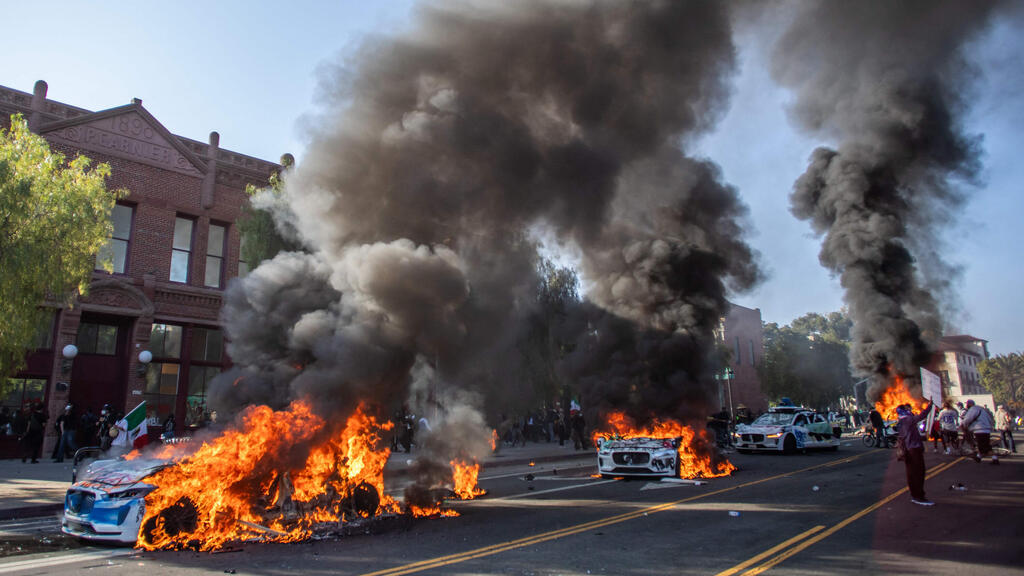
Riots follow arrests of immigrants living in the United States illegally
(Photo Apu Gomes / GETTY IMAGES NORTH AMERICA / AFP)
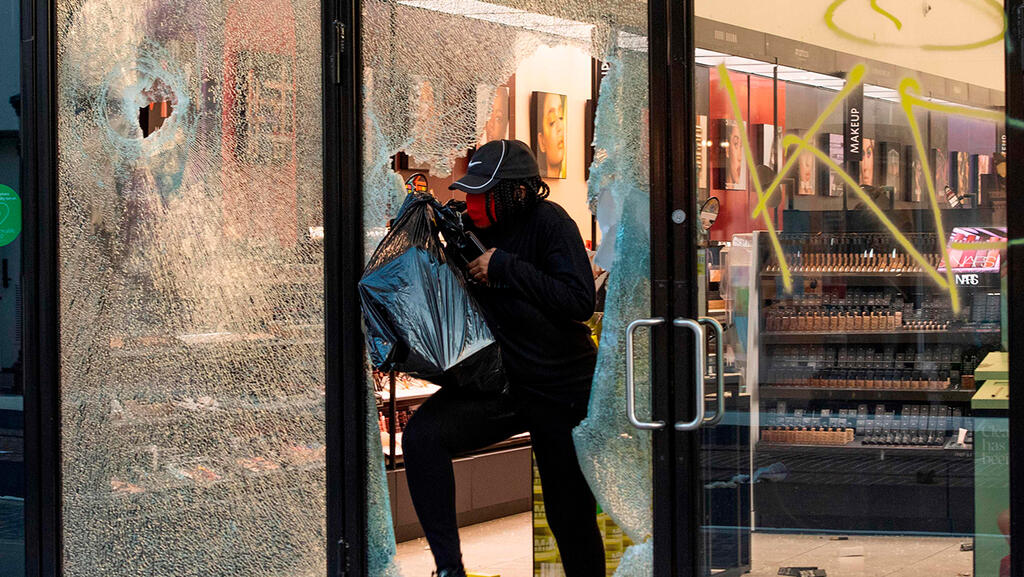
Stores looted following unrest sparked by George Floyd protests
(Photo: AFP)
In addition to rising crime, downtown has periodically experienced large-scale unrest tied to national events.
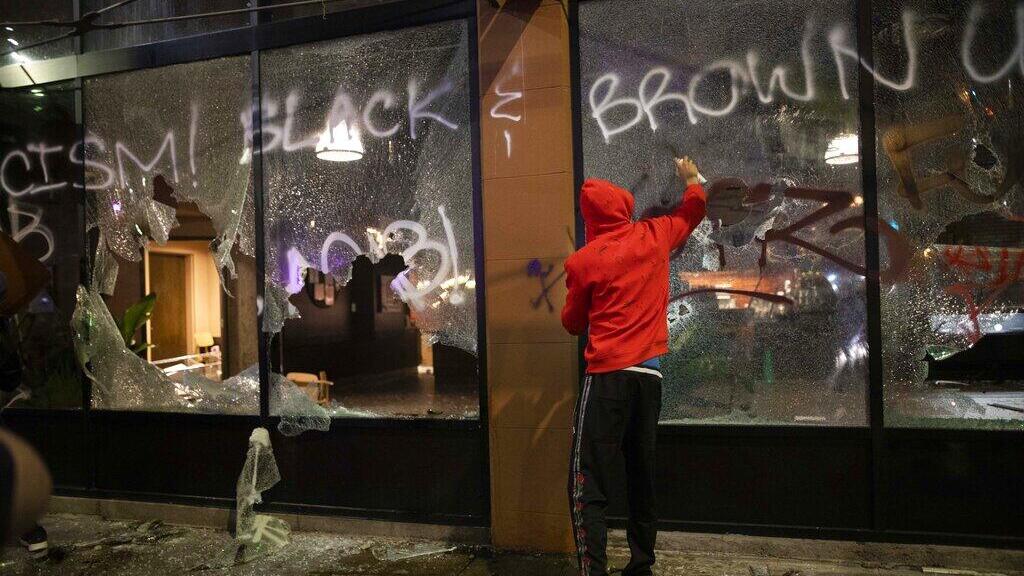
Following the death of George Floyd in 2020, massive demonstrations took place in the area. Dozens of businesses were vandalized and looted. Jewelry and electronics store owners watched helplessly as crowds broke into stores and stole merchandise. Some attempted to protect their property by standing guard with firearms, while others could do little but watch their businesses be destroyed.
Business owners say a similar scene unfolded about a year ago, when Immigration and Customs Enforcement and federal immigration authorities began conducting arrests and deportations of people living in the country illegally. Protesters opposed to President Donald Trump’s immigration policies again took to the streets, and some businesses were looted while buildings were vandalized and vehicles set on fire.
Among the incidents reported was the torching of autonomous Waymo vehicles, causing extensive property damage. Los Angeles police were unable to quickly regain control of the unrest involving thousands of participants. As a result, more businesses packed up and left.
‘Insurance is so expensive it’s not worth having’
As the mayoral election approaches, business owners are once again urging city leaders to address downtown’s problems. They are calling for a stronger police presence and improvements to infrastructure, including parking and public services, in hopes of bringing life back to the area.
They argue that as more businesses leave downtown, those that remain suffer even more because pedestrian traffic continues to decline. Simon Taheri, owner of a gold jewelry store, told Ynet that his business has been burglarized twice in recent years and that thieves escaped with substantial amounts of merchandise.
“Many of my neighbors have already left, and I’m still here,” he said. “Insurance is so expensive that it’s not worth carrying anymore. It’s very sad to see what’s happening here. If the city doesn’t do something to help us, I think I’ll have to close next year.”
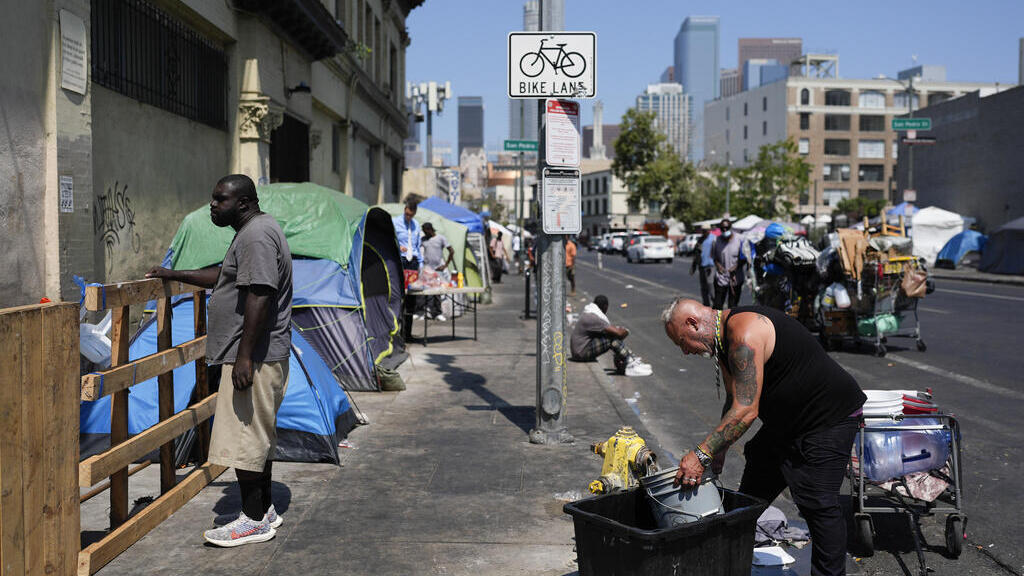
Homeless residents in downtown Los Angeles
(Photo Jae C. Hong / AP)
Large companies are also scaling back their downtown operations and relocating elsewhere in Los Angeles or beyond.
“I can’t blame them,” Taheri said. “If I had the option, I would have left already.” Still, Shlomov remains optimistic.
“Other than the homelessness issue, we’re not in such bad shape,” he said. “People will eventually return to the offices, businesses will come back and so will customers. There’s a lot to see downtown. It will thrive again.”
In a recent Los Angeles Times report on the issue, business leaders called for stronger law enforcement and cleaner sidewalks, particularly as preparations continue for the 2028 Olympics. With the mayoral primary approaching, they are demanding that candidates place downtown’s problems at the top of their agendas.
The article highlighted the case of Jamal Celik, 61, who was sitting outside his gift shop in downtown Los Angeles this month when two men allegedly threatened to kill him unless he handed over the gold chain around his neck. They snatched the chain and fled down South Broadway.
According to Celik, police took 45 minutes to arrive, and he doubts the suspects will ever be caught or that his necklace will be recovered. “This is what downtown has become,” Celik said. “Who would even want to come here?”
Celik opened his garage-sized shop in 2001, selling products ranging from snacks and luggage to sunglasses and stuffed animals to tourists, office workers and local residents. He has watched a once-thriving district become a shadow of its former self under the pressure of rising crime, mounting costs and competition from safer neighborhoods. He said he fears every customer who walks into the store, worrying that anyone could rob him. Since the robbery, he has suffered anxiety attacks.

Los Angeles Mayor Karen Bass with the Olympic flag
(Photo: Damian Dovarganes / AP)
As noted, many buildings and storefronts remain vacant. Roughly 40% of office space in the Financial District is empty, while about 30% of retail space occupied by shops and restaurants sits vacant. Average office attendance across the Los Angeles metropolitan area stands at about 48%, among the lowest rates in the United States.
Paul Kaufman, who has operated a handmade shoe store on South Broadway for 12 years, said conditions continue to deteriorate. Beyond crime and homelessness, business owners are now struggling to attract customers to an area where so many storefronts stand empty. “It’s not a simple problem,” he said. “There’s no single solution.”
Public employees are also working from home
Mayor Bass says revitalizing downtown has been one of her top priorities through direct engagement with residents and business owners, a focus on public safety and investments aimed at encouraging economic growth. Her critics, however, argue that she has not done enough or that city resources have been directed toward the wrong priorities.
Improving public safety remains the top concern for those seeking to revive downtown. In a letter sent to the mayor in April, business groups noted that although downtown is home to only about 2% of the city’s population, it accounts for roughly 9% of major crimes, including robberies, assaults and burglaries.
Business organizations argue that downtown should be a top priority because it serves as a major economic engine, the public face of Los Angeles and home to tens of thousands of residents.
Last month, the mayor and City Council announced a Los Angeles infrastructure plan aimed at building and maintaining roads, sidewalks, ramps and public parks while improving coordination of infrastructure investments.
One of the key steps that advocates believe could help downtown businesses is bringing public-sector employees back to the office.
For years, Los Angeles had one of the largest concentrations of government workers outside Washington. Today, however, many public employees, including city workers, spend much of the week working remotely.
“We have to remember how large and important the government workforce is to the economy,” said Nick Griffin of the DTLA Alliance. “Their absence has hurt us tremendously, especially the small businesses that depend on them.”