

When 19-year-old Moliv Vicente sat last weekend with friends from his pre-army service year, the conversation quickly turned to military life. His friends shared stories from their units. Vicente mostly listened.
“I was just asking questions and listening,” he recalled. He said he would have been happy to contribute — if he were allowed to.
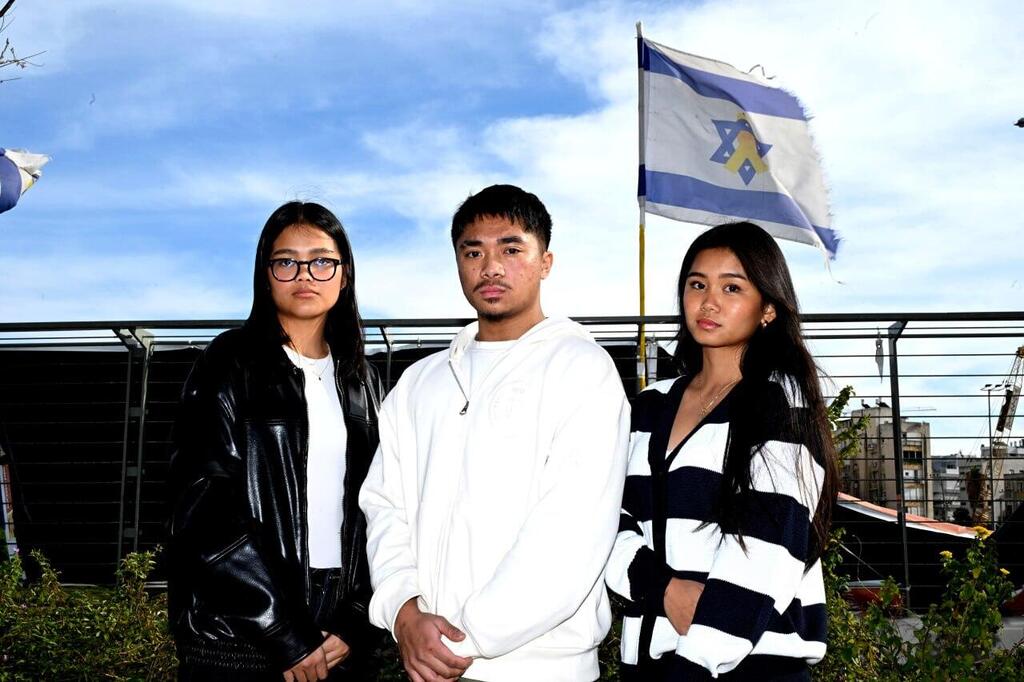
Vicente was born and raised in Israel to migrant worker parents whose visas expired years ago. He grew up speaking Hebrew, passed Israel’s matriculation exams, joined the Scouts movement and completed a year of national service. Now, like most Israelis his age, he wants to enlist in the army. For now, that path remains closed.
Vicente is one of 42 young men and women who recently petitioned the High Court of Justice, asking that they be allowed to enlist in the IDF. The petition argues there is no legal basis for distinguishing between them and other candidates for military service.
Like the other petitioners, Vicente considers himself Israeli in every way except on paper. “The service year gave me even more motivation,” he said. “But I wanted to enlist even before that.”
Raine Arfon, who grew up in the moshav of Mishmar Hashiva and studied in Rishon LeZion, says she is watching friendships from school slowly fade as her peers enlist. She remains at home. Mariel Ayeh Ai, a graduate of Herzliya Gymnasium in Tel Aviv, has begun university studies instead, paying higher tuition because she is not a citizen. She, too, says she is determined to serve if allowed.
All three were born in Israel, educated in the Israeli school system and say they want to build their futures in the country. They say they understand military service well, having grown up alongside friends who enlisted — including from within the migrant worker community.
In the past, the state allowed many children of migrant workers to regularize their status, enabling them to enlist. Some later died in service. In January 2024, Staff Sgt. (res.) Cydrick Garin was killed in Gaza. Garin, the only child of Filipino migrant workers, volunteered for combat service despite not being required to. His mother’s legal status was resolved only after his death, and his father received permanent status months later.
For Vicente, the fragility of his status became clear in 2017, when a girl he knew, Israel-born 11-year-old Yisraela G’mira, was deported with her family. Years later, he was barred from joining his soccer team on a training trip abroad because, without legal status, he would not have been allowed back into Israel.
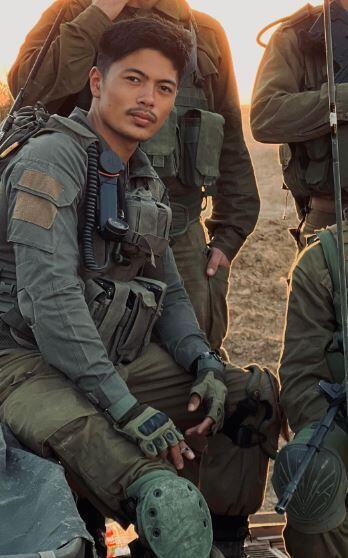
Staff Sgt. (res.) Cydrick Garin
(Photo: IDF)
“That was when I understood how much this limits me,” he said. “I cried to the coach, but there was nothing to do.”
Mariel recalls a wave of arrests in 2019, when dozens of mothers and children were detained. “Until sixth grade everything was fine,” she said. “After that summer, I realized it could happen to me, too.”
Two one-time government decisions, in 2005 and 2010, allowed families with children who had lived in Israel for at least five years and begun school to apply for citizenship. About 5,000 children and their parents received status. Those decisions were explicitly defined as exceptional, leaving children who entered school after 2010 without a similar pathway.
That group now makes up the first generation in years to reach adulthood without any chance to regularize its status. As they approached age 18, fears of detention and deportation intensified.
In November 2024, 122 high school students signed a letter to Interior Minister Moshe Arbel, asking that their status be resolved. “Israel is our homeland, where we have lived all our lives and from which we have never left,” they wrote.
The response they received in January offered little hope. Population and Immigration Authority officials said integration into Israeli society does not confer legal status and warned against turning what they called one-time gestures into permanent immigration policy.
The petitioners reject that reasoning. “The state knew we were here,” Mariel said. “What did they expect — that we would just disappear?”
The petition, filed last month, deliberately avoids addressing citizenship. Instead, it targets the military draft process itself, arguing that Israeli law allows the army to conscript individuals regardless of citizenship status, including permanent residents.
The petition further argues that in the absence of explicit legislation exempting them, the state has no authority to refrain from enforcing compulsory service laws on a specific group.
The High Court has ordered the state to respond by February.
The IDF has not ruled out the possibility of revisiting its recruitment policy and allowing non-citizens to volunteer, citing both the petitioners’ motivation and ongoing manpower challenges. Military officials stress, however, that any change would require political approval.
For Vicente and the others, the goal remains simple. “We want to enlist like every other Israeli,” Mariel said.