

South African authorities are still investigating the mystery of the 153 Palestinian passengers who arrived from Gaza to Johannesburg without proper identification, days after the flight landed. While the probe continues, officials have allowed around 130 of them to remain in the country.
One of the passengers, Louay Abu-Saif, a Gaza resident who emigrated with his wife and children, told Al Jazeera about their mysterious journey: “I feel safe now. That means a lot, especially after coming from Gaza.”
Abu-Saif said his wife had registered the family for the flight after seeing a post on social media. The post reportedly offered priority to families with children, valid travel documents, and Israeli security clearance. Beyond that, he said they had no information about the organizing body or the selection criteria. Even the departure date was unknown to them until 24 hours in advance. “We were told not to pack anything, not to bring bags or suitcases, just the relevant documents,” he said.
Gallery
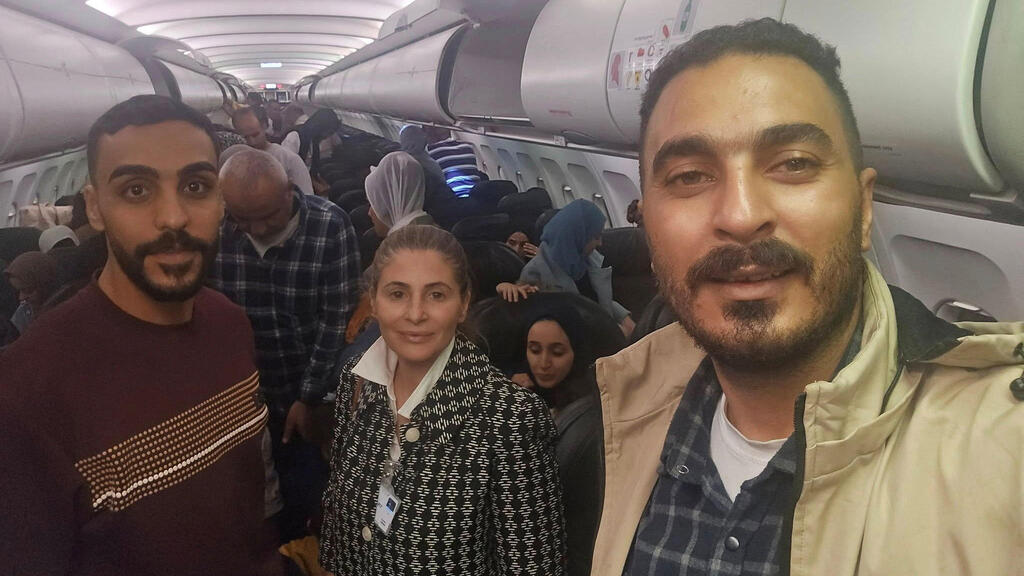
Hanan Jarrar, Palestinian ambassador to South Africa, with the Gazans who arrived in Johannesburg by flight
(Photo: Reuters)
Israel issued an official response Thursday night, stating that the passengers had left Gaza only after securing visas to a third country, with coordination from the organization responsible for the flight.
“These people left the Gaza Strip after COGAT [the Coordinator of Government Activities in the Territories] received agreement from a third country to take them,” said COGAT in a statement to AFP. It did not name the third country or confirm if it was South Africa, which initially delayed the passengers’ entry.
According to Abu-Saif, each family was charged approximately $1,400 to $2,000 per person, including children and infants. Once notified it was time to leave, the families were transported by bus from Rafah to Israel’s Ramon Airport via the Kerem Shalom crossing — beginning their journey to South Africa. He noted that their passports were not stamped upon entry or exit from Israel, but he didn’t give it much thought — until they arrived in Johannesburg and were not allowed to disembark.
Hanan Jarrar, Palestinian ambassador to South Africa, with the Gazans who arrived in Johannesburg by flight
(Photo: Reuters)
“The whole trip was a journey of suffering,” he said. “No organization convinced us to leave Gaza, but [Al-Majd] said they would help us for a week or two after arrival, and then we’d be on our own.” He added that they were unaware of their destination until their second flight departed Nairobi. After flying out of Ramon Airport, the group landed first in Nairobi, Kenya, and then continued to Johannesburg, where they only then learned where they were headed.
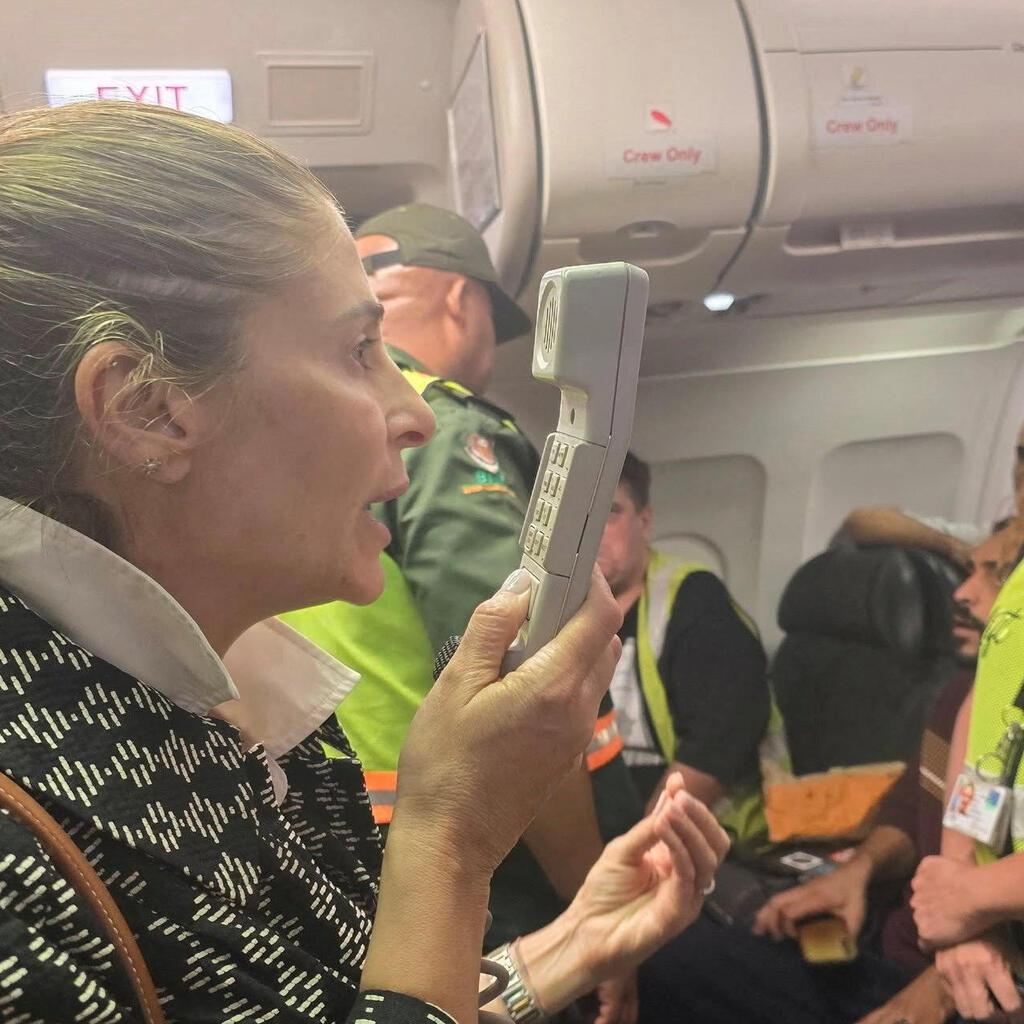
Abu-Saif and his family are among 130 travelers who were ultimately allowed to stay in South Africa. The remaining 23 were redirected to other countries. According to reports, the passengers were held on the tarmac for nearly 12 hours without food or water. The criticism leveled at South African authorities included accusations that the delay on the “boiling hot” plane was directly due to officials’ refusal to let them disembark.
The Palestinian Embassy in South Africa said the flight had been organized by an “unregistered and misleading” organization that exploited Gaza’s humanitarian crisis: “The organization exploited the tragic conditions of our people in Gaza, deceived families, collected money and arranged their travel irresponsibly. When complications arose, it abandoned them.”

outh African President Cyril Ramaphosa
(Photo: AP)
While the embassy didn’t name the group, an Israeli military source confirmed that an organization called Al-Majd was behind the evacuation of over 150 Palestinians from Gaza — effectively verifying Abu-Saif’s account.
South African President Cyril Ramaphosa confirmed that an investigation was underway to determine the origins of the flight: “These are people from Gaza who were transferred here in a mysterious way. Even though they lack the necessary documents, they are from a war-torn country, from a devastated land — and with compassion and empathy, we must accept them.”
Imtiaz Sooliman, founder of the humanitarian group Gift of the Givers, helped facilitate the passengers’ eventual disembarkation. He said this was the second such flight — following an earlier mysterious flight in late October that carried over 170 Palestinians and was also not initially disclosed to authorities.
“The passengers were scared, confused and didn’t know where they were flying to,” Sooliman said. “They were given nothing to eat or drink over two days of travel.”