

More than 10 people have been killed and over 100 arrested amid a wave of anti-government protests across Iran, human rights groups reported on Saturday, as the Islamic Republic marked the anniversary of the death of Qasem Soleimani, the former commander of the Islamic Revolutionary Guard Corps' (IRGC) Quds Force, who was killed in a 2020 U.S. drone strike in Baghdad.
Though the demonstrations have not yet reached a nationwide scale, security forces have moved quickly to suppress them using tear gas and force, as seen in similar crackdowns in previous years. Violent clashes were reported overnight in cities and towns across western Iran, as well as in the capital Tehran.
Anti-government protests on Friday in Mashhad, Iran


According to the Kurdish human rights group Hengaw, at least 133 protesters had been detained as of late Friday, an increase of 77 from the day before. Iran’s state television reported the arrest of several individuals allegedly in possession of improvised firearms and Molotov cocktails. Authorities also confirmed that two security personnel were killed and ten others wounded in the unrest.
The opposition-affiliated news outlet Iran International reported that at least 44 demonstrators had been injured by live fire from security forces. Dozens more were reportedly beaten with batons or attacked by plainclothes agents.
In videos circulated online, protesters could be seen marching through the streets, calling on others to join them. "We don’t need spectators—join us!" they chanted, as calls for broader mobilization spread.
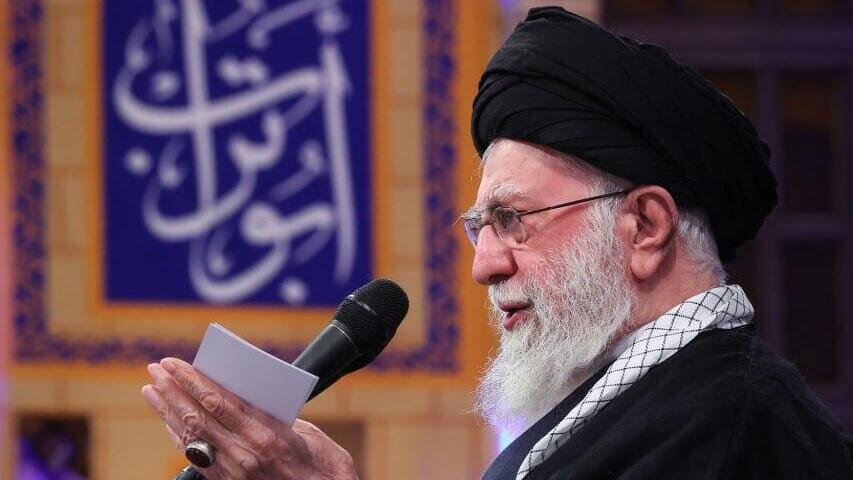
Iran’s Supreme Leader Ayatollah Ali Khamenei addressed the unrest during a speech marking the sixth anniversary of Soleimani’s death. In a bid to differentiate between peaceful demonstrators and what he called “rioters,” Khamenei blamed the West for inciting the protests and accused foreign agents of sowing instability.
“We are willing to talk to protesters, but there’s no use speaking with rioters. They must be confronted,” he said. “A few instigators and mercenaries of the enemy stood behind the merchants, chanting slogans against Islam and against Iran. The protest is justified, but it is different from rioting.”
Khamenei acknowledged the economic grievances driving many demonstrators, particularly merchants impacted by the plunging value of the Iranian rial and currency market volatility.
Anti-government demonstrations spreading across Iran
(Video: Iran International)
“The complaints of the merchants are valid,” he said. “The merchants are among the most loyal groups in the country to the Islamic system and the Islamic Revolution. We know the market well. When a merchant looks at the state of the country, the depreciation of the national currency and the instability of the exchange rate, and says, ‘I can’t run my business,’ he is telling the truth. This is a real problem.”
Still, Khamenei insisted that external enemies, particularly Western powers, were exploiting legitimate concerns to fuel unrest. “The enemy’s hand is involved as well, and that’s what I wanted to clarify. We must understand how the enemy operates—it is ruthless and seizes every opportunity. It saw an opening here and tried to exploit it,” he added.
“What matters is not to remain indifferent to the enemy’s propaganda. When a person feels that the enemy is trying to impose something on the country, on its leaders, on the government and on the people, they must stand against the enemy with all their strength and confront it. We will not surrender to the enemy.”
Anti-government protesters torch a police station in Azna, Iran
(Video: Iran International)
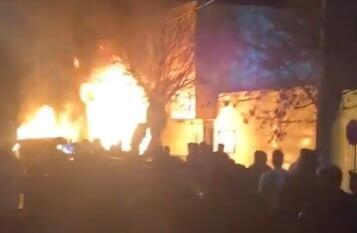
Anti-government protesters torch a police station in Azna, Iran
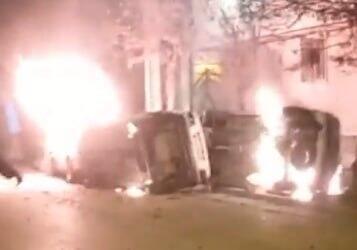
Anti-government protesters torch cars outside a police station in Azna, Iran
The Iranian government has adopted a dual messaging strategy, expressing openness to dialogue with peaceful demonstrators while simultaneously using harsh tactics to break up protests. The approach mirrors previous cycles of unrest in the country, where economic crises have repeatedly sparked widespread dissent.
The ongoing demonstrations are the largest Iran has seen since the mass protests of late 2022, sparked by the death of Mahsa Amini in police custody and widely known as the “Hijab Protests.” While this week’s unrest has not yet reached the same scale, it represents the most serious domestic challenge the regime has faced in the past three years.
The protests began last Sunday, when merchants in shopping centers near Tehran’s Grand Bazaar shuttered their stalls, complaining they could no longer earn enough to cover expenses. The Iranian rial has plunged to a historic low against the U.S. dollar, and inflation has surged once again. Concerned about their futures, students quickly joined in, and the protest began to spread, putting Iran’s leadership at risk of yet another wave of repression.
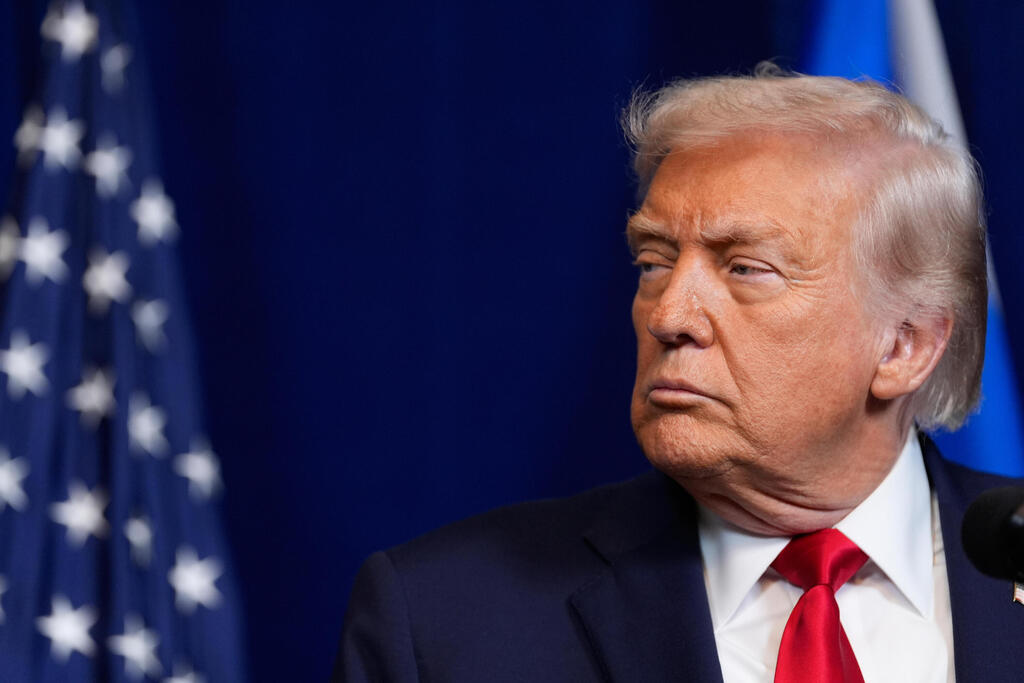
US President Donald Trump
(Photo: AP Photo/Alex Brandon)
U.S. President Donald Trump entered the fray on Friday, posting on his Truth Social platform: “If Iran shots [sic] and violently kills peaceful protesters, which is their custom, the United States of America will come to their rescue.” He added, “We are locked and loaded and ready to go,” though he did not specify how the U.S. might assist the demonstrators.
The threat of military action adds to mounting pressure on Tehran, which is grappling with one of its most severe crises in decades as its economy contracts under sanctions and its government struggles to provide basic services like water and electricity.
In a statement marking the anniversary of Soleimani’s death, the IRGC said: “The U.S. president, who murdered Soleimani, is still trying to force Iran into submission by fostering instability and insecurity. After the assassination of Soleimani and the 12-day war, Iran has remained vigilant and foiled the plans of American leaders and their mercenaries. Now, Trump is gripped by frustration and is threatening the Iranian nation and government out of despair.”
Years of economic mismanagement and a deepening crisis
On paper, Iran lacks the usual hallmarks of a country in currency freefall: it is rich in oil, has a well-educated population and holds substantial foreign currency reserves. But its economic distress is rooted in politics, primarily the regime’s refusal to scale back its nuclear program.
Anti-government protests in Lordegan, Iran
Political analysts told The Wall Street Journal that recovery would require a compromise that eases Western sanctions and gives Tehran a path out of the crisis. But negotiations between Iran and Washington over limiting uranium enrichment have completely stalled since the 12-day war between Iran and Israel in June. Without a nuclear deal, Iran is likely to face continued waves of protest, and so far, there is little indication the regime is willing to retreat from its ambitions.
Iran’s economy has suffered for years under mismanagement. The IRGC controls vast sectors of the economy and state budget. Widespread cronyism, access to cheap loans and preferential foreign currency rates have stifled entrepreneurship, leaving many young Iranians disillusioned. Despite high levels of academic education, one in four young people is unemployed. Environmental challenges, especially worsening water shortages, and growing anger among women over dress code laws have added to public frustration.
Yet it was the fallout from the war with Israel that triggered the rial’s sharp collapse and the regime’s current crisis. Since the war, the currency has lost about 60% of its value against the dollar, while inflation has soared.
Anti-government protesters and security forces clash in Hamadan, northwestern Iran
(Video: Iran International)
According to the World Bank, food inflation reached 64% in October, second only to South Sudan globally. In Shiraz, one resident told the Journal that the price of a 10-kilogram sack of imported rice rose by 15% in a single week, with merchants warning of another 6% increase on the way.
Tehran is struggling to halt the slide. International sanctions have long restricted Iran’s ability to trade or conduct cross-border banking transactions. In many cases, it cannot access foreign currency reserves held abroad. Despite having the world’s fourth-largest oil reserves and second-largest gas reserves, much of Iran’s energy exports are blocked under U.S. embargoes.
Many importers have simply stopped operating. Tehran’s main bazaar has remained largely closed since Sunday, with merchants saying the crashing currency causes losses on every sale. As protests intensified, the government ordered a temporary closure of schools and universities, citing cold weather, a move widely seen as an attempt to suppress unrest but one that also deepens the public sense of crisis.
The regime now faces a stark dilemma. Under Supreme Leader Khamenei, it remains adamant in refusing to abandon uranium enrichment. Many Iranians see a direct link between their declining quality of life and the government’s nuclear ambitions. An October 2024 poll found that 78% blame Iran’s foreign policy for its economic woes, and about 47% support halting uranium enrichment to avoid another war.