

Iran is seeking to keep nuclear negotiations alive with Washington despite escalating tensions and U.S. military deployments in the region, a senior Iranian official said Sunday.
Speaking to Reuters, the official said another round of indirect talks is planned for early March. However, he acknowledged that the sides remain divided over the scope and mechanism of sanctions relief in exchange for limits on Tehran’s nuclear program.
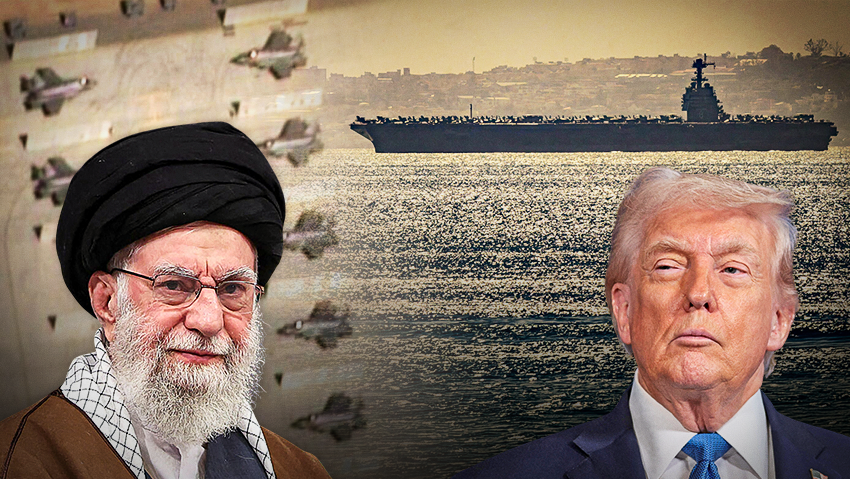
According to the official, under a potential agreement, Iran would be prepared to “seriously consider” removing highly enriched uranium from its territory, diluting it, or establishing a regional uranium enrichment consortium. The consortium idea was previously raised in talks in early June last year, days before the outbreak of the 12-day war.
At the same time, the official stressed that Iran continues to insist on its right to enrich uranium. “In return, our right to enrich uranium for civilian purposes must be recognized,” he said.
“The talks are ongoing and the possibility of reaching an interim agreement exists,” the official added, noting that the sides must agree on a “reasonable timeline” for lifting sanctions.
Iran’s ballistic missile arsenal


Following the last round of talks, held last week in Geneva, Iranian officials said there had been agreement on “guiding principles” and described the atmosphere as positive. They also said drafts would be exchanged. A day later, however, reports said Iran did not accept U.S. “red lines,” alongside multiple reports of a potential U.S. strike.
On Thursday, U.S. President Donald Trump issued Iran an ultimatum of “10 to 15 days.” Meanwhile, the United States has continued preparations for possible military action against the Islamic Republic, both at sea and on land. The aircraft carrier USS Gerald R. Ford is now in the Mediterranean, and new footage published Saturday showed it approaching Israel’s shores.
U.S. Secretary of State Marco Rubio is expected to arrive in Israel late Saturday or Sunday and is currently scheduled to meet Prime Minister Benjamin Netanyahu.
In an apparent effort to advance diplomacy, Iranian officials have emphasized that a diplomatic solution would bring “economic benefits” to both Tehran and Washington.
“Under the economic package under discussion, significant investment opportunities in Iran’s oil industry were offered to the United States,” the senior official told Reuters. He said Iran would not relinquish control over its oil and resources but added that “the United States can be a business partner of Iran. American companies can always participate as contractors in our oil and gas fields.”
US military deployments in the Middle East:
The Wall Street Journal and CNN recently reported that, in an attempt to entice Trump, Iranian officials have floated potential economic deals that would grant Americans access to develop Iran’s natural resources, including oil, gas and rare minerals.
It remains unclear whether talks will resume, as the sides are reportedly at an impasse over core issues, from uranium enrichment to ballistic missiles and sanctions relief.
“Iran and the United States are rapidly sliding toward military confrontation,” officials on both sides and diplomats in the Gulf and Europe told Reuters. Hopes for a diplomatic solution to the dispute over Tehran’s nuclear program are “fading,” they said.
Two Israeli officials told Reuters they believe the gaps between Washington and Tehran are “not bridgeable.” In addition, according to a source familiar with the Geneva talks, when Omani mediators delivered an envelope from the American side containing proposals related to missiles, Iranian Foreign Minister Abbas Araghchi refused to open it.
Within the Trump administration, there appears to be no consensus on a strike. Reuters reported that some of Trump’s advisers have recommended against military action.
Trump’s special envoy, Steve Witkoff, told Fox News overnight that the president is “curious” why Iran has not yielded despite the significant U.S. military buildup in the Middle East.
Pro-regime protests in Iran
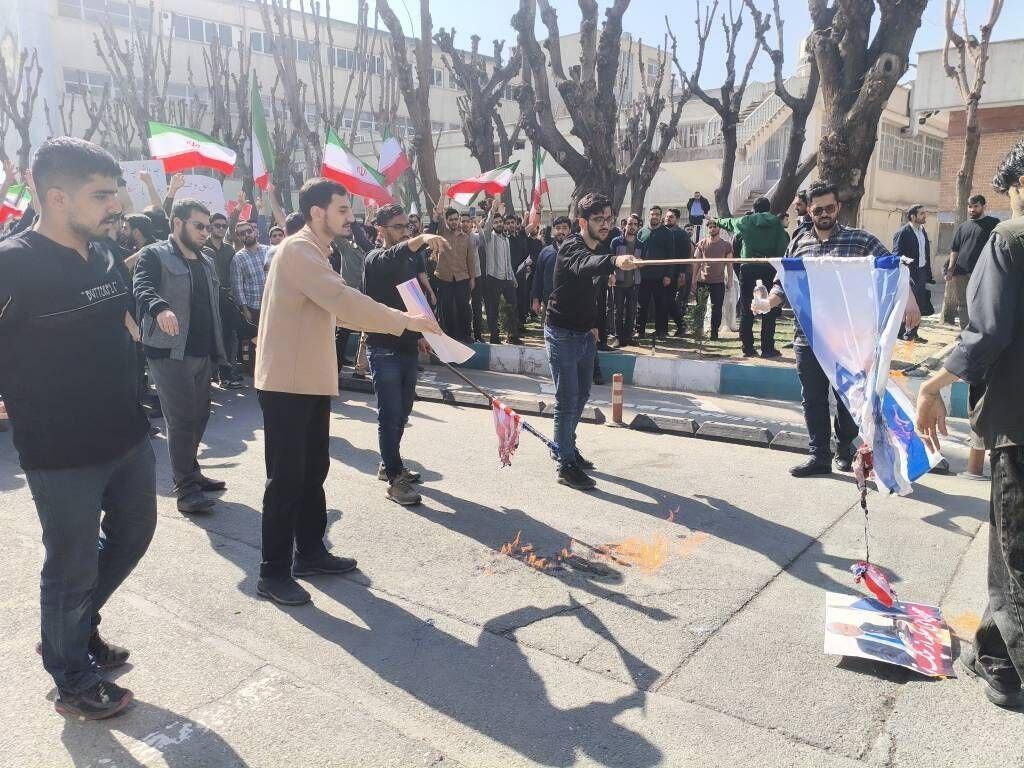
US and Israeli flags burned at Sharif University in Tehran
“I wouldn’t use the word ‘frustrated’ because he knows he has many alternatives, but the president is curious why they haven’t capitulated,” Witkoff said. “Under this kind of pressure, with the amount of naval power we have there, why haven’t they come forward and said, ‘We declare that we don’t want a weapon, and this is what we’re prepared to do.’”
As the United States continues to reinforce its presence in the region, Iran’s ground forces commander, Ali Jahanshahi, said Sunday that “enemy movements along the country’s borders are being monitored at every moment.” He added that the round-the-clock vigilance and precision of Iranian forces serve as a key deterrent against any miscalculation.
Meanwhile, Iranian state-affiliated media circulated footage Sunday of pro-regime demonstrations expressing support for the authorities and Supreme Leader Ali Khamenei. The rallies came a day after student protests erupted at several universities, where demonstrators chanted “Death to Khamenei.”
The Fars news agency published images it said were from demonstrations at the University of Tehran, reporting that protesters voiced “hatred toward the United States” and chanted “Death to America.”
The Mehr news agency also published footage from a rally by regime supporters at Shahid Beheshti University in Tehran, where participants burned images of Netanyahu and Trump, as well as Israeli and U.S.