


U.S. President Donald Trump recently offered a characteristically backhanded description of Stephen Miller, his deputy chief of staff for policy and homeland security adviser, saying he wished Miller would express his feelings — “but maybe not his most genuine feelings, because that might be a little too much.”
The remark underscored Miller’s standing inside the White House as one of Trump’s most influential and ideologically hard-line advisers. At 40, Miller is widely viewed as one of the most powerful presidential aides in modern White House history and among the few long-standing Trump loyalists whose influence has only grown over the past decade.
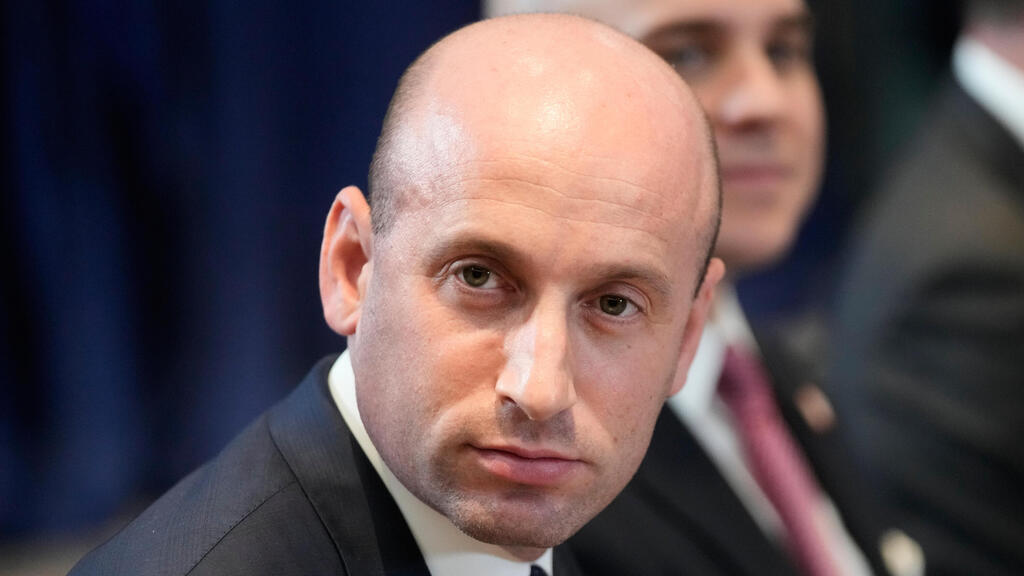
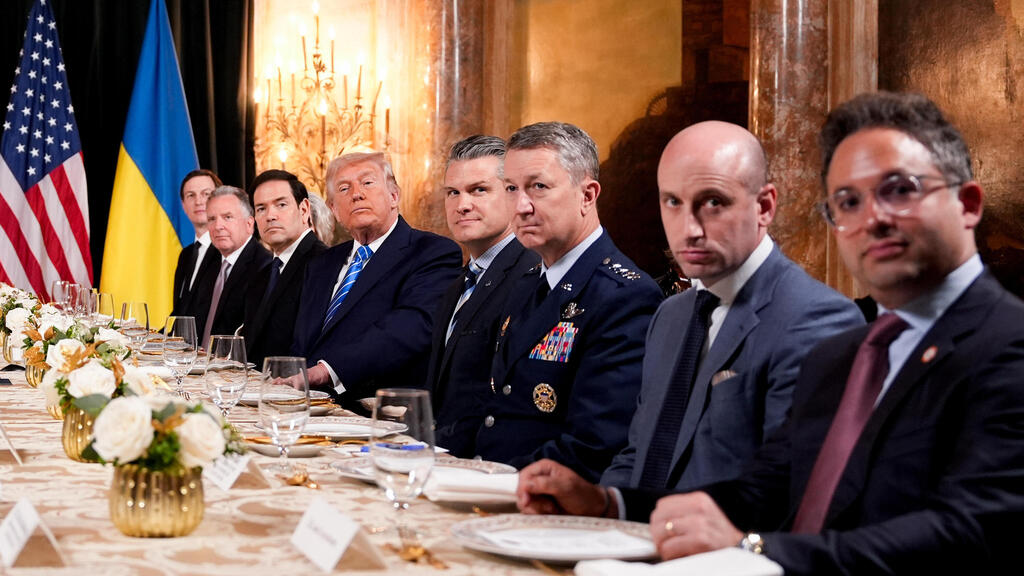
Miller with Trump’s senior team at a meeting with Ukrainian President Volodymyr Zelensky
(Photo: AP Photo/Alex Brandon)
Miller has been a central architect of Trump’s domestic agenda, particularly on immigration. He has championed policies that led to mass deportations without due process, family separations at the U.S.-Mexico border and efforts to narrow the criteria for U.S. citizenship, including proposals affecting people born in the United States.
Nearly every controversial Trump administration decision on immigration and deportation has borne Miller’s imprint. “Trump is basically afraid to argue with him,” a White House source said, adding that Republicans in Washington understand that Miller speaks directly for the president.
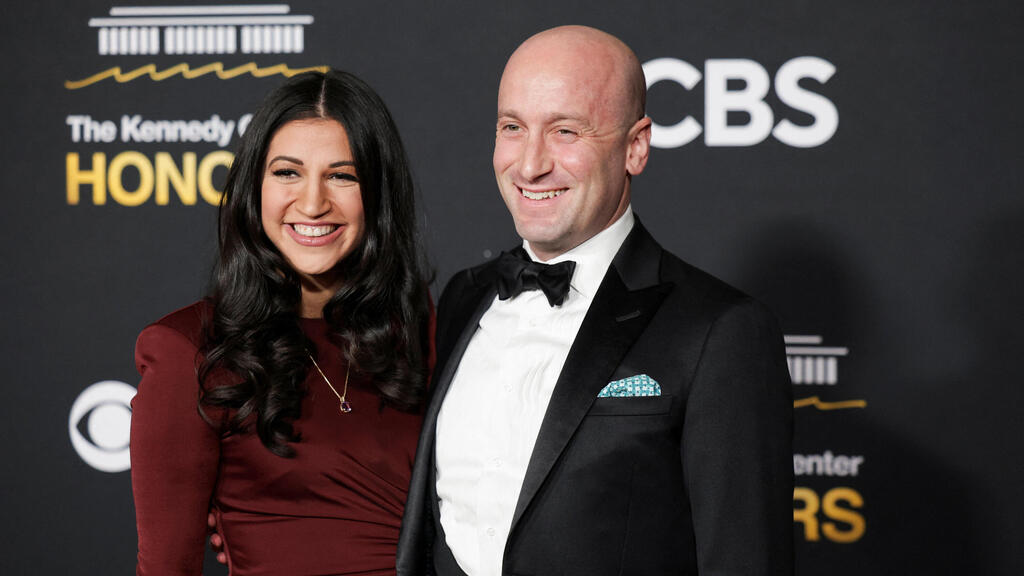
Miller with his wife, Katie
(Photo: REUTERS/Jeenah Moon)
Though Miller has long promoted the “America First” doctrine and argued for strict isolationism, his positions have evolved in ways that suggest a more expansive use of U.S. power abroad. Following recent U.S. military action in Venezuela, Miller has emerged as a leading advocate for continued American force to pressure weaker but resource-rich countries, with the aim of redirecting those resources to the United States.
In a combative interview with CNN on Monday, Miller argued that military force remains the defining principle of international relations and suggested that the use of U.S. power — including to annex Greenland — should not be ruled out. “We live in the real world, which is governed only by power,” Miller said. “Those have always been the iron laws of the world. No one would fight us if we decided to send the military to annex Greenland.” The aggressive rhetoric toward Greenland — a vast island territory belonging to Denmark, a NATO ally of the United States — highlights the extent of Miller’s influence over Trump, who rarely rebuffs him, according to current and former administration officials.
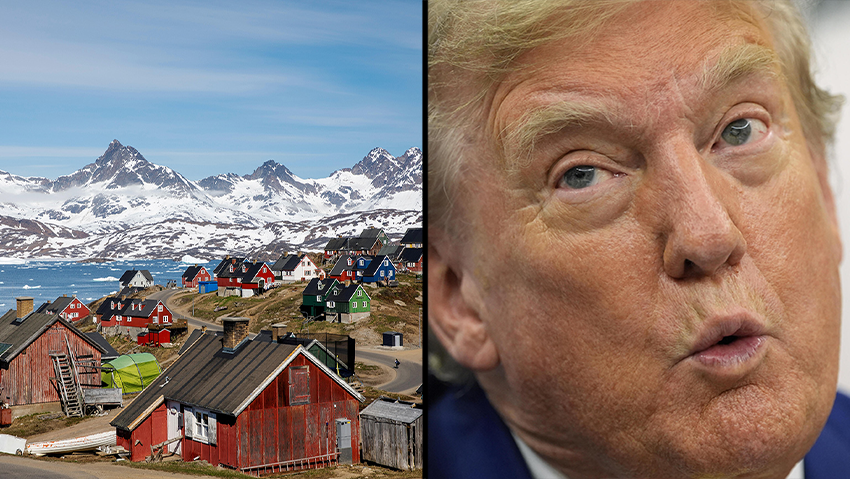
(Photo: Reuters, AP/Alex Brandon)
Miller grew up in an affluent family in Santa Monica, California, and attended a high school known for its left-leaning culture. As a student, he drew attention for confrontational activism, including being booed off a stage during a student council campaign speech after calling for an investigation into the school’s trash collection practices.
He later attended Duke University, where he gained prominence in conservative circles, before moving to Washington. While working as a Senate staffer, Miller sent hundreds of anonymous emails containing alarming accounts about immigrants, messages that were largely ignored at the time. A decade after entering Trump’s inner circle, Miller is now shaping U.S. policy in ways that, until recently, would have seemed implausible even to seasoned Washington observers.