

For an Israeli couple living in Paris, voting in the upcoming election will require more than a short walk to a neighborhood polling station. To cast their ballots, they had to buy flights to Israel costing nearly $4,800.
Other Israelis living or temporarily staying in the United States, Europe and elsewhere have described similar circumstances in recent weeks, facing costs of thousands of shekels — and sometimes thousands of dollars — as well as taking time off work simply to be in Israel on Oct. 27, when the country is scheduled to elect its 26th Knesset.
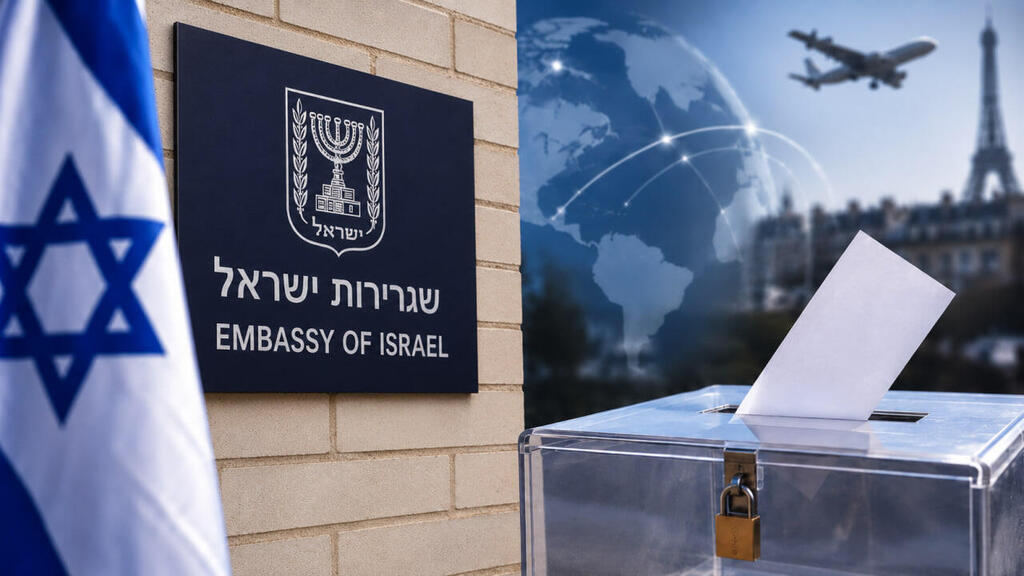
On the surface, the reason is simple: Israelis cannot vote from abroad. But that is not entirely true.
While those Israelis make the long journey home, an Israeli polling station may be operating just a few miles from where they live, inside an embassy or consulate. Israel already conducts voting overseas. It has a system for verifying voters, transporting sealed ballots back to Israel and including them in the national count.
In the 2022 election, about 4,500 eligible voters were registered to cast ballots at 103 polling stations in 101 Israeli diplomatic missions around the world.
But if an Israeli living in New York walks past the Israeli Consulate on voting day, that person cannot simply go inside and vote. The overseas polling stations are not open to the broader Israeli public.
In other words, the issue is not that Israel lacks the ability to conduct voting abroad. Rather, the country has chosen to limit who can use the system.
The restriction does not apply only to Israelis who have moved abroad. An Israeli whose primary residence is in Israel, pays taxes there and lives in the country year-round but happens to be overseas on Election Day — whether on vacation, a business trip or a family visit — generally cannot vote at an Israeli diplomatic mission.
To participate in the election, that voter must be in Israel on Election Day. An Israeli who booked an overseas vacation months in advance and later learned that an election would take place during the trip therefore faces a choice: change the travel plans or forgo voting.
The right exists, but not the means to exercise it
Israel’s Basic Law: The Knesset grants every Israeli citizen age 18 or older the right to vote. Israel has no constitution contained in a single document, with a series of Basic Laws instead serving as the foundation of its constitutional system.
But the country’s electoral system largely requires voters to cast ballots at designated polling stations. Voters are registered at a specific polling place in Israel and, in most circumstances, must appear there in person on Election Day.
Unlike a number of other democracies, Israel has no general system of mail-in voting, early voting for the broader public or online voting.
The law does, however, provide a defined list of exceptions for Israelis abroad.
Israeli diplomatic missions allow voting by people stationed overseas as government employees, including members of the military, as well as employees and emissaries of several major Jewish and Zionist institutions: the Jewish Agency for Israel, the World Zionist Organization, Keren Kayemeth LeIsrael-Jewish National Fund and Keren Hayesod-United Israel Appeal.
Their spouses and children up to age 20 may also qualify, provided they are otherwise eligible to vote.
The result is a system that treats Israelis living abroad differently depending on why they are there.
A Foreign Ministry employee posted to Washington can vote there. An Israeli who moves to the city for two years to pursue a doctorate cannot; a Jewish Agency emissary stationed in London can cast a ballot there, while an employee of an Israeli tech company sent to the same city for a temporary relocation would have to travel to Israel to vote.
The distinction may appear arbitrary in 2026, but its roots go back decades.
In July 1982, the Knesset held a debate that closely resembled the argument taking place today.
Knesset member Chaim Herzog, who later became president, proposed allowing citizens sent abroad on behalf of the state or national institutions to vote at Israeli diplomatic missions.

Chaim Herzog and Shevah Weiss
(Photo: GPO)
Lawmaker Shevah Weiss asked why the proposal should stop there. Why, for example, should Israelis studying at universities overseas not also be allowed to vote?
Herzog was reluctant to go that far.
Such an expansion would be too broad, he argued, pointing in part to what he called the phenomenon of “yerida” — a Hebrew term traditionally used to describe Jewish emigration from Israel and historically carrying a negative connotation.
Herzog said it was difficult to distinguish between Israelis temporarily overseas who intended to return and those who had permanently left the country. Someone sent abroad as an official emissary, by contrast, was by definition there for a limited period.
Herzog’s proposal did not become law.
The current arrangement was enacted only in 1990, through an amendment initiated by Weiss and lawmaker Edna Solodar and later merged with a government proposal.
But the earlier debate exposed the fundamental question that continues to shape the issue more than four decades later: Is Israeli citizenship alone enough to entitle someone to take part in choosing the Knesset when that citizen is living outside the country?
Should people who don’t live here decide who runs the country?
That is the central argument made by opponents of expanding voting from abroad.
Someone who lives in Israel is affected every day by government decisions on education, health care, taxes, the cost of living, transportation and security. Someone who has lived for years in Los Angeles or Berlin may retain a strong Israeli identity but does not necessarily bear the same consequences of those decisions.
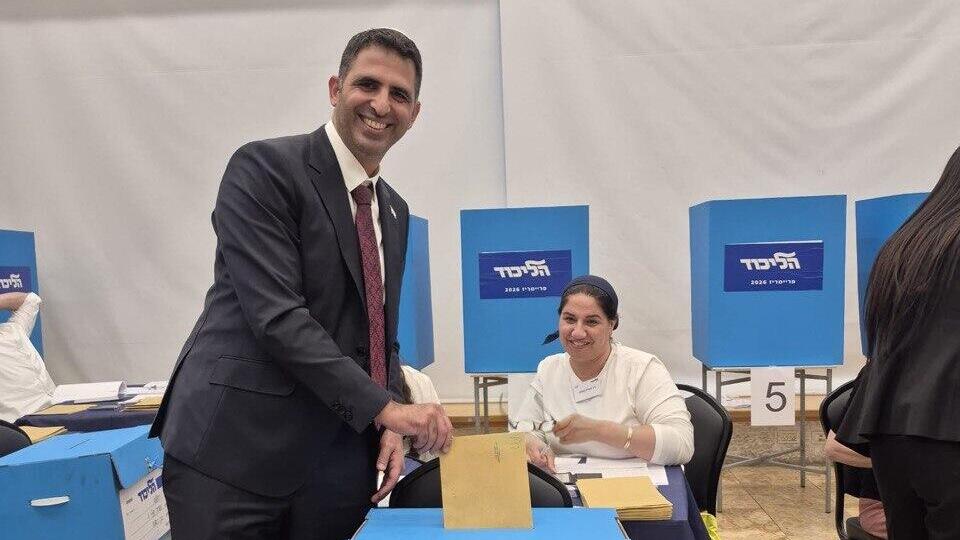
Communications Minister Shlomo Karhi votes in the Likud primary
That argument entered the political debate sharply this month when Communications Minister Shlomo Karhi said, referring to Israelis abroad, that “those who live in the country should have a say in its future,” adding that those who do not live in Israel are “welcome to make aliyah,” the Hebrew term for Jewish immigration to Israel.
“The left is now trying to bring in masses from abroad,” Karhi said. “Those who don’t live here shouldn’t come just because of their ‘Anyone but Bibi’ agenda to try to change the government,” referring to Prime Minister Benjamin Netanyahu by his widely used nickname.
His remarks drew sharp criticism from Israelis overseas, who argued that temporarily living abroad does not cancel their citizenship or sever their ties to Israel.
But that raises a more difficult question: Where should the line be drawn?
Should a student spending three years in Boston be allowed to vote from there? What about a tech worker on a six-year overseas assignment? An Israeli who left a decade ago but still owns a home in the country? Or someone born in Israel who moved to Canada as a child?
Giving every Israeli citizen abroad the right to vote remotely would resolve the question of where to draw that line, but it would create another concern: A potentially large population that does not live in Israel could help determine the government whose decisions primarily affect the people who do.
For that reason, even researchers who support expanding overseas voting often propose limiting it to Israelis whose stays abroad are temporary and whose primary center of life remains in Israel.
Israeli law already recognizes, to some extent, a distinction between citizenship and residency.
The constitutional right to vote belongs to every adult Israeli citizen, but exercising that right requires a voter to be included in the electoral register, which includes citizens listed as residents in the Population Registry.
As a result, an Israeli who permanently left the country and whose official registration was changed accordingly may not appear on the electoral roll at all. Even returning to Israel on Election Day would not allow that person to vote.
There is, however, no simple rule under which an Israeli automatically loses the ability to vote after, for example, five or 10 years abroad. In practice, eligibility depends on the person’s status in the Population Registry, which does not always uniformly reflect where a person’s primary center of life is.
Ahead of the current election, lawmakers considered expanding voting at Israeli diplomatic missions to include Israelis performing national or civilian service abroad. Other groups, including air crews, were also discussed.
Even that limited expansion proved contentious, however, and the provision was removed from the legislation. Simcha Rothman, chairman of the Knesset Constitution, Law and Justice Committee, said that on election-related matters, he preferred to advance measures that had broad political agreement.
The underlying question remains: If a young Israeli sent to perform national service in the United States can vote there, why not an Israeli university student? If an employee of one of Israel’s designated national institutions is eligible, why not an employee of an Israeli company sent abroad on a temporary assignment?
Instead of establishing a uniform standard based on a citizen’s continuing connection to Israel, the law largely relies on a list of eligible groups. Two Israelis can therefore live in the same foreign city for the same amount of time and hold the same citizenship, yet only one may be entitled to enter the consulate and vote.
How other countries handle overseas voting
International comparisons underscore how restrictive Israel’s system is, but they also show that there is no single approach shared by democracies.
According to the International Institute for Democracy and Electoral Assistance, or International IDEA, 131 of 218 countries and territories it examined provide some form of voting from abroad in legislative elections. In Europe, 44 of 48 do.

An Air France jet at Ben Gurion Airport
(Photo: Ronen Fefer / Shutterstock)
But “external voting” covers a wide range of systems. Depending on the country, citizens may vote in person at an embassy or consulate, by mail, through a proxy or, in some cases, electronically.
France is at the expansive end of the spectrum. French citizens abroad can not only participate in parliamentary elections but also have 11 electoral constituencies of their own, with lawmakers specifically representing them in the National Assembly. Online voting is available in parliamentary elections alongside other methods.
For France’s 2024 parliamentary elections, 599 polling stations were established at 352 locations for citizens overseas, with online voting accounting for a significant share of participation.
In the United States, most citizens living overseas can participate in federal elections through absentee voting. The process for receiving and returning ballots varies by state. Election materials may, depending on local rules, be transmitted by mail, email or fax, with voters returning their ballots according to their state’s requirements.
U.S. embassies and consulates do not generally operate as conventional polling places, but they can assist overseas voters, including with the return of voting materials.
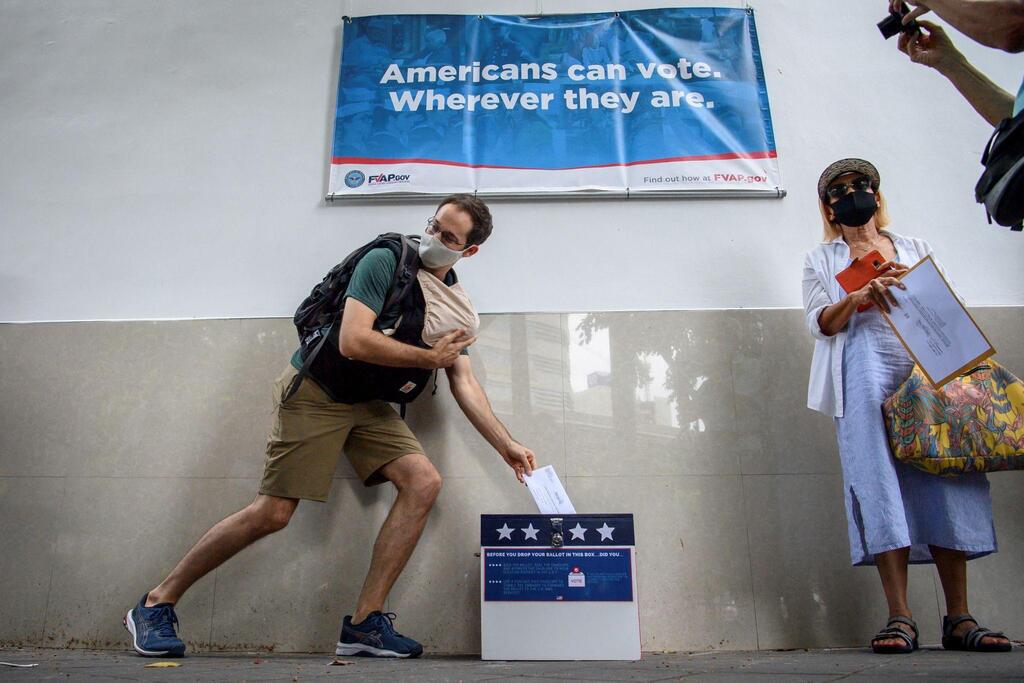
US citizens vote at a polling station in Bangkok, Thailand, 2020
(Photo: Mladen Antonov / AFP)
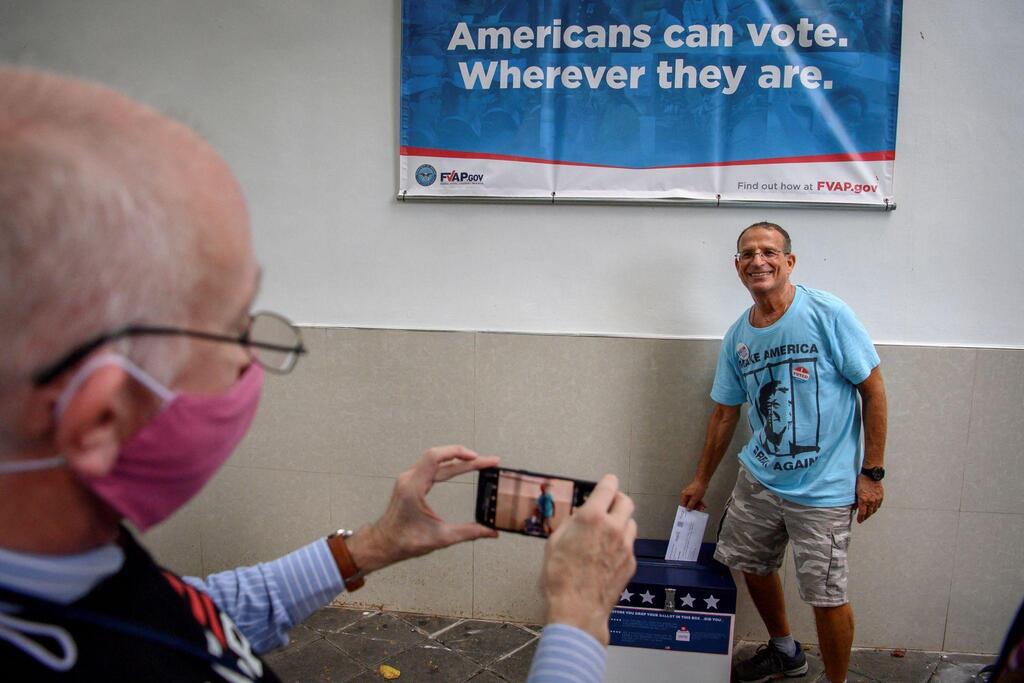
US citizens vote at a polling station in Bangkok, Thailand, 2020
(Photo: Mladen Antonov / AFP)
Britain has moved in the opposite direction from Israel in recent years, expanding overseas voting rights. Until 2024, British citizens who had lived abroad for more than 15 years generally lost their right to vote in parliamentary elections.
That restriction was abolished. Eligible British citizens who previously lived in the country can now register as overseas voters even if they left many years ago. They can vote by methods including mail or proxy.
Canada allows eligible citizens living abroad to register on an international register of electors and vote using a special ballot sent by mail. Their vote is assigned to the electoral district where they most recently lived in Canada.
But some of the models potentially most relevant to the Israeli debate lie between the two extremes.
Germany, for example, permits some Germans living abroad to vote but does not treat citizenship alone as sufficient.
Germans who are no longer registered as residents can qualify if they lived in Germany for a specified period after age 14 and that residence was within the previous 25 years. They may also qualify if they can demonstrate a direct and personal familiarity with Germany’s political situation and that they are affected by it.
The way Germany conducts overseas voting is also notable. Rather than assuming that the natural solution is to establish a polling station in every embassy, German authorities have said diplomatic polling places would be cumbersome and expensive. Germany has hundreds of electoral districts with different ballots, and reaching an embassy can itself require citizens to travel hundreds or even thousands of miles. Voting from abroad is therefore conducted primarily by mail.
Australia offers another middle-ground model. It allows citizens who have left the country to register as overseas voters under conditions intended to demonstrate that their absence is not a permanent break from Australia, including an intention to return within a specified period.
Those voters can cast ballots by mail or at overseas voting centers. During Australia’s 2025 federal election, 111 overseas voting centers operated, with the election commission’s final report recording centers across 81 countries and tens of thousands of votes cast abroad.
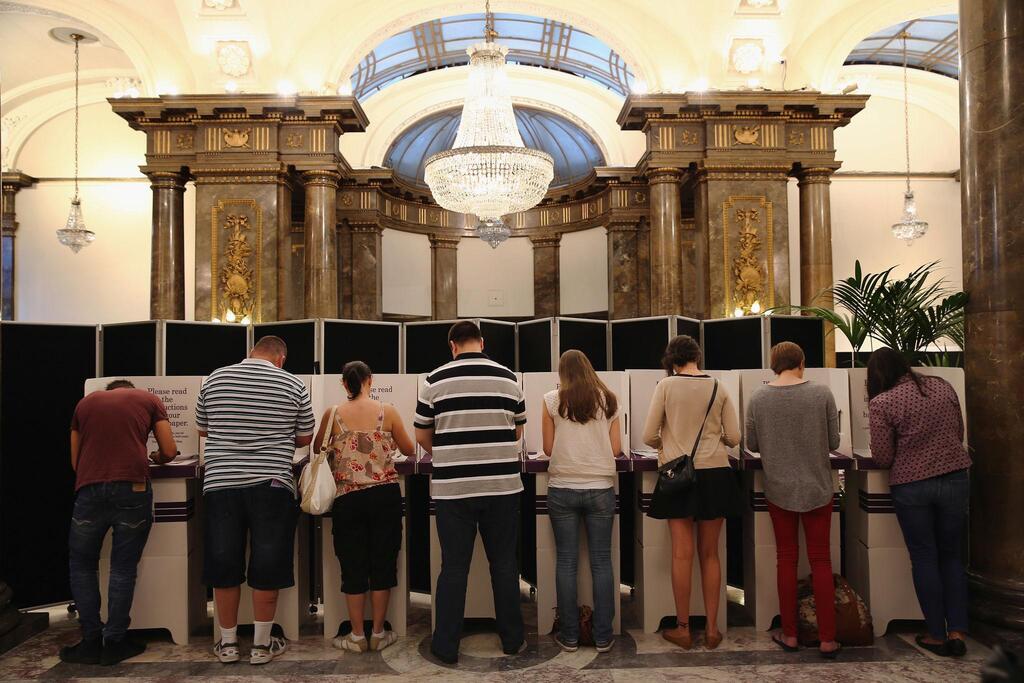
Australian citizens voting at a London polling station, 2013
(Photo: Dan Kitwood / Getty Images)
Australia, in other words, does not have to choose between two absolutes — only people physically inside the country can vote, or everyone holding a passport can vote.
It has created a third category: citizens who are abroad but whose connection to the country and intention to return remain strong enough for them to remain part of the electorate.
Other countries more closely resemble Israel.
In Ireland, for example, citizens living abroad generally cannot vote in general elections. Exceptions are limited to certain groups, including diplomats and their spouses as well as members of certain forces serving overseas.
Israel therefore sits toward the more restrictive end of the spectrum among Western democracies, but it is not alone.
In Israel, it could actually be simpler
One argument against expanding overseas voting is the logistical complexity: Authorities must verify voters’ identities, prevent double voting, preserve ballot secrecy and ensure votes are transported securely.
But in one respect, Israel is in a relatively simple position. Its parliamentary elections use a nationwide proportional representation system. The entire country is a single electoral district, and all voters choose from the same lists of political parties. Unlike in Germany or the United States, authorities would not need to prepare different ballots depending on a voter’s home district.
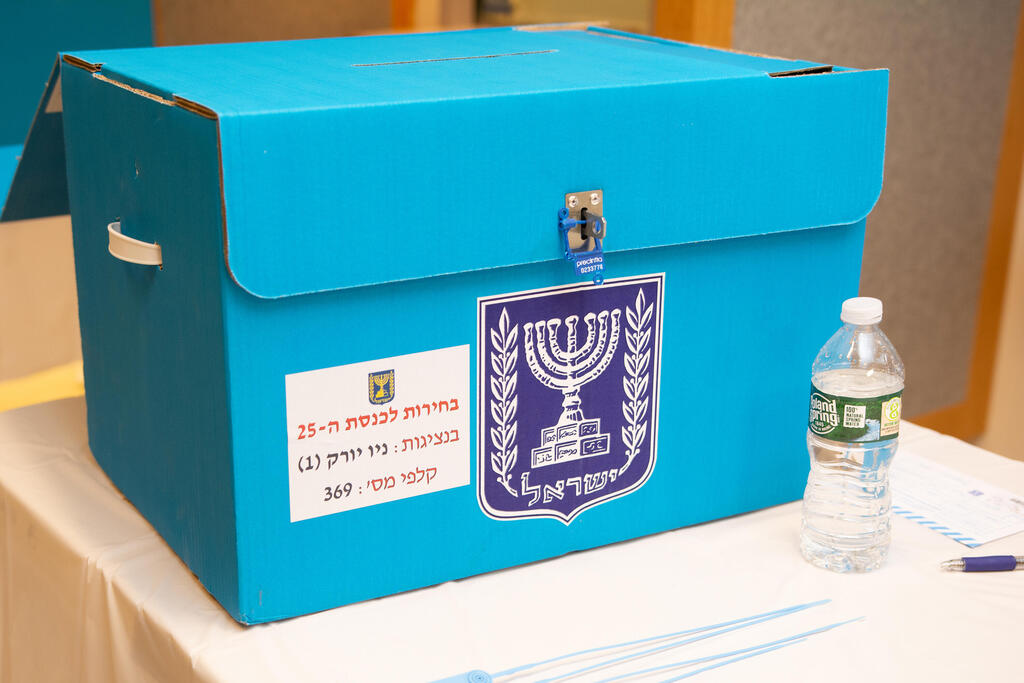
A ballot box in New York
(Photo: Naftali Shavelson)
More importantly, much of the infrastructure already exists. Israel already operates polling stations abroad for eligible groups, maintains lists of authorized overseas voters and transports their ballots back to Israel for counting. Expanding overseas voting would, of course, require a much larger operation, but it would not mean building an entirely new system from scratch.
The central question, then, is not whether Israel can put another voting booth inside its embassy in Paris. It is who should be allowed to stand behind it.
Supporters of expanded overseas voting also make an argument based on equality. Under the current system, Israel does not entirely prevent eligible Israelis who are abroad from voting. They can do so if they return to Israel. Someone who can afford a plane ticket, has flexibility at work and can take several days off can exercise that right. Someone who cannot may effectively be left out.
In the current election, that argument is no longer theoretical. When a family must spend thousands of dollars simply to reach a polling station, the right to vote still exists on paper, but the cost of exercising it is vastly different from that faced by someone living in Israel.
So how could it work?
If the Knesset decides to change the system, lawmakers would have to answer two fundamental questions: Who qualifies, and how would they vote?
Israel could adopt a broad model under which almost every registered Israeli citizen would be allowed to vote from abroad. Alternatively, lawmakers could restrict overseas voting to citizens who lived in Israel in recent years, whose primary center of life remains in the country or who are abroad only for a limited period.

Prime Minister Benjamin Netanyahu
(Photo: Ilia YEFIMOVICH / AFP)
Such an approach could create a middle category: Israelis would not immediately lose their place in the electorate simply because they moved abroad, but neither would every Israeli passport holder receive an unlimited right to vote from overseas indefinitely.
The second question is how those votes would be cast. Polling stations at embassies and consulates are the most familiar option, but they are not the only one. Israel could consider mail-in voting, early voting or other systems used elsewhere. Each carries challenges involving security and election integrity, but the experience of other democracies shows that the choice is not simply between maintaining the current restrictions and opening overseas polling stations to every citizen.
Ultimately, the debate over voting from abroad is far less technical than it may appear. Ballots, voter rolls, diplomatic mail and secure overseas polling stations are all mechanisms Israel already knows how to operate. The more fundamental issue is who should be considered part of the electorate entitled to choose the Knesset.
Is citizenship enough? Should residency in Israel also be required? And how long can an Israeli live abroad while still being considered part of the country’s political community?
In 1982, when Shevah Weiss asked why Israeli students overseas should not also be allowed to vote, Chaim Herzog warned of the difficulty of distinguishing them from Israelis who had permanently left the country.
More than four decades later, the same question remains unresolved.
Until the Knesset decides otherwise, most Israelis who find themselves outside the country on Oct. 27 will still have to go through an airport if they want to reach the ballot box — not because Israel has no polling stations overseas, but because the law says those polling stations are not for them.