


Hamas on Wednesday night handed over the bodies of two Israeli hostages to the International Committee of the Red Cross, which later transferred them to IDF forces before they were brought into Israeli territory.
The group claimed in a statement that it has returned all living hostages to Israel, as well as all the deceased "we are currently able to access."
Gallery
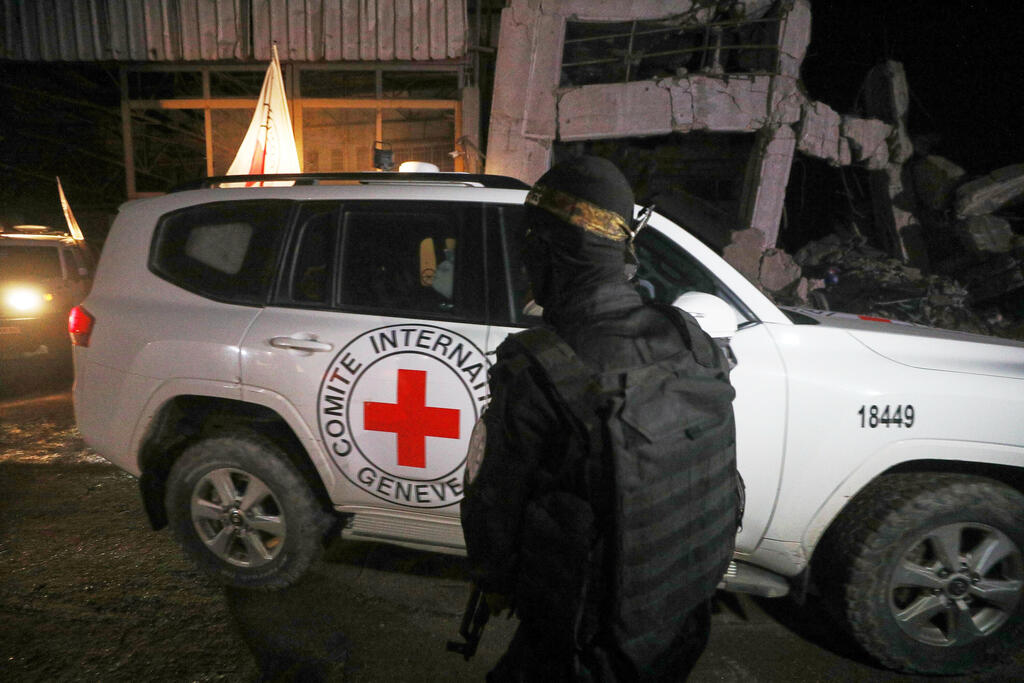
Bodies of two more Israeli hostages to the International Committee of the Red Cross
(Photo: AP Photo/Yousef Al Zanoun)
The terrorist organization acknowledged that 19 additional bodies of Israeli hostages remain unrecovered. "Reaching the remaining bodies requires significant effort and specialized equipment to locate and extract them," the group’s military wing said in its statement.
Israeli officials rejected Hamas’s claim, asserting the group is capable of retrieving the remains of at least 10 more hostages. According to Israeli assessments, Hamas is withholding effort and not acting in full compliance with the terms of the current ceasefire agreement.
Over the coming days, Egyptian and Turkish teams are expected to operate inside Gaza to search for additional remains. Israel has provided mediators with specific coordinates where it believes the bodies of hostages may be buried. However, Israeli officials warned the process could take weeks.
“Hamas must demonstrate 100% effort,” an Israeli official said. “So far, it has not shown that it is making such an effort.”
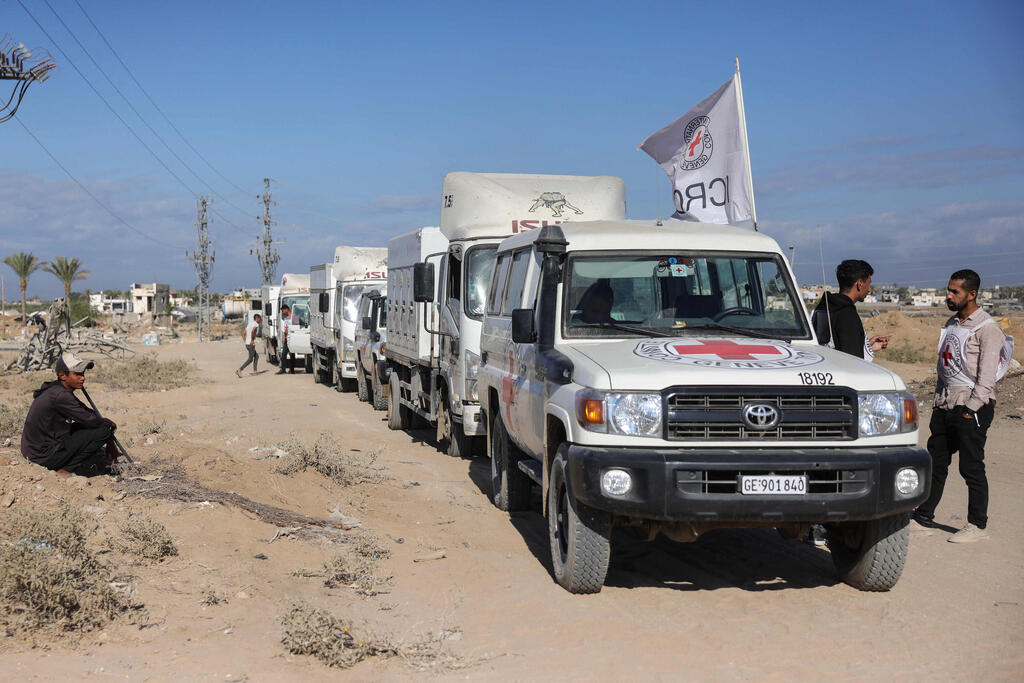
Archival: Red Cross convoy waiting to transport Israeli hostages out of Gaza
(Photo: BASHAR TALEB / AFP)
In a joint statement, the IDF and Shin Bet said: "According to received intelligence, the Red Cross is en route to a meeting point in northern Gaza, where several coffins containing the remains of hostages will be handed over.
"The IDF urges the public to act with sensitivity and await official identification, which will first be provided to the families of the hostages.
"Hamas is obligated to uphold the agreement and make every necessary effort to return the bodies of the hostages."
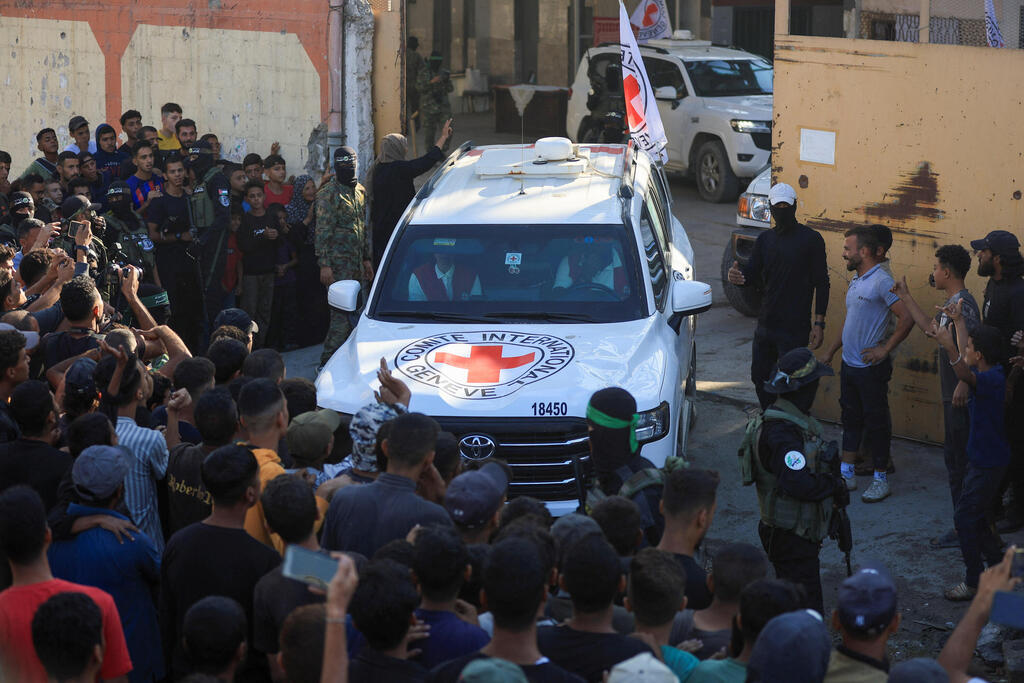
Red Cross convoy transfers remains of hostages back to Israeli territory
(Photo: REUTERS/Dawoud Abu Alkas)
Meanwhile, U.S. President Donald Trump told CNN on Wednesday that he would allow Prime Minister Benjamin Netanyahu to resume the war in Gaza if Hamas refuses to uphold its part of the ceasefire agreement. According to Trump, “Israel will return to those streets as soon as I say the word... What’s going on with Hamas – that’ll be straightened out quickly.”
Israeli authorities had been preparing throughout the day for what would be the third return of hostage remains from the Gaza Strip for burial in Israel. Initial assessments in Israel indicated Hamas would release two bodies, though Qatar-based Al Araby TV later reported that five could be handed over.
However, according to Hamas’ official statement, only two would be transferred Wednesday night. At the start of the negotiations, Hamas claimed it was aware of the whereabouts of at least 14 bodies, while Israeli defense officials insisted the terror group knows the location of more.
Hamas reportedly had planned on Tuesday to return a small number of hostage remains on Wednesday. There had also been speculation that the group might hand over more than expected—possibly as compensation for transferring the body of a Palestinian instead of that of an Israeli hostage.
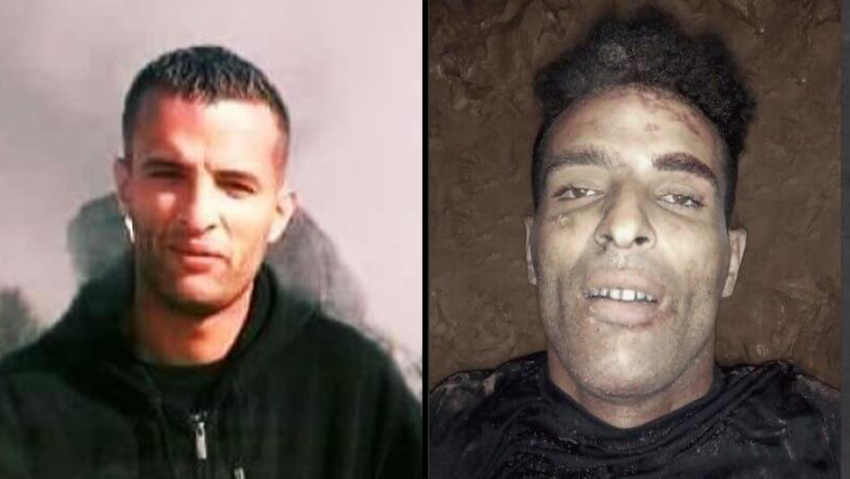
Khalil Dawas
The development follows a misstep by Hamas the previous day, when one of four bodies transferred to Israel was found not to belong to an Israeli hostage, but to a Palestinian man — Khalil Dawas — suspected of collaborating with Israel. The mistaken transfer, which Israeli officials believe was likely unintentional due to the man wearing an IDF uniform, may have prompted Hamas to increase the number of bodies it plans to return.
According to American officials familiar with the matter, Steve Witkoff, a U.S. President Donald Trump's envoy to the Middle East who played a key role in the release of living hostages, is “heavily involved” in the current negotiations. “He’s pushing hard and won’t let Hamas play games,” one official said. "There's pressure to increase the number of hostages returned. Hamas likely holds a high double-digit number of bodies, but recovery is expected to take time."
The officials noted that Egyptian intelligence is also assisting in the effort, given Cairo’s familiarity with Gaza’s terrain. Turkey, which is contributing forces to the emerging international monitoring mission, is also participating, though it reportedly lacks operational knowledge of the area.
Earlier Wednesday, the Palestinian Health Ministry confirmed that, in exchange for the return of three Israeli hostage bodies the previous night — those of Tamir Nimrodi, Uriel Baruch and Eitan Levy — Israel had released the bodies of 45 Palestinians. The exchange rate, based on the current deal framework, is 15 Palestinian bodies for every Israeli hostage killed in captivity.
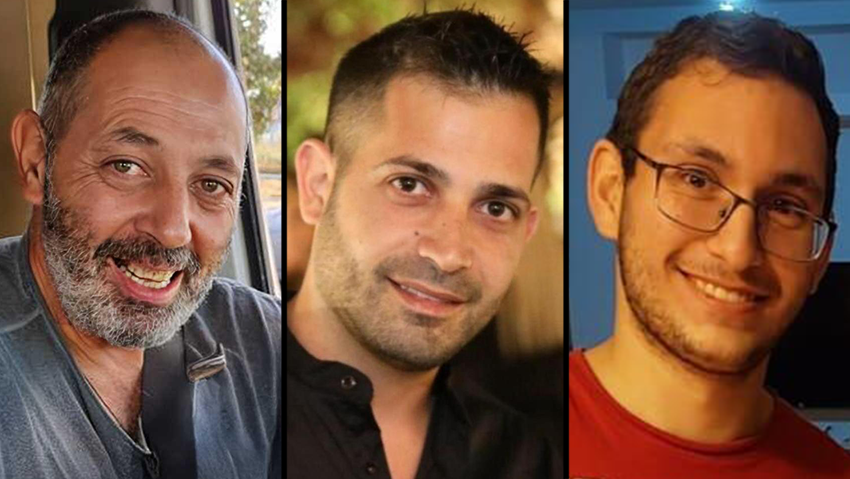
Eitan Levy, Uriel Baruch and Tamir Nimrodi
Following overnight forensic identification, Israeli authorities confirmed that one of the four bodies received Tuesday did not match any known hostage. While this is not the first time Hamas has transferred the wrong remains, Israeli officials believe the latest error was likely due to confusion caused by the clothing of the deceased. “It’s preferable they bring a body that turns out to be a misidentification than delay handovers for full verification on their side,” an Israeli source said.
Meanwhile, despite earlier threats to impose penalties, Israel has opted not to sanction Hamas over the mistaken transfer. Instead, the Kerem Shalom crossing will remain open, and 600 aid trucks are expected to enter Gaza - double the originally planned number.
However, the Rafah crossing remains closed. While Israel announced Tuesday it was shuttered as a punitive measure, a security source said Wednesday that logistical challenges are also contributing to the delay. “We were prepared to open the crossing, but yesterday’s issue with the body led to a recommendation to keep it closed,” the source said. “There’s still no date for reopening.”
He added that reopening Rafah requires on-the-ground preparation and advance teams, which take time to coordinate. Given the mistaken body transfer, officials now believe the crossing will likely remain shut through Thursday as well.
First published: 21:52, 10.15.25