

At least four vessels linked to Iran have been observed following unusual routes and lingering above undersea communications cables in the Gulf of Oman in recent weeks, raising suspicions that they may have been mapping the infrastructure or preparing to place explosives or naval mines nearby, the Financial Times reported on Friday.
The suspicious movements come amid repeated Iranian threats to attack undersea internet cables and data centers across the Persian Gulf region if the United States and Israel launch further strikes against Iran.
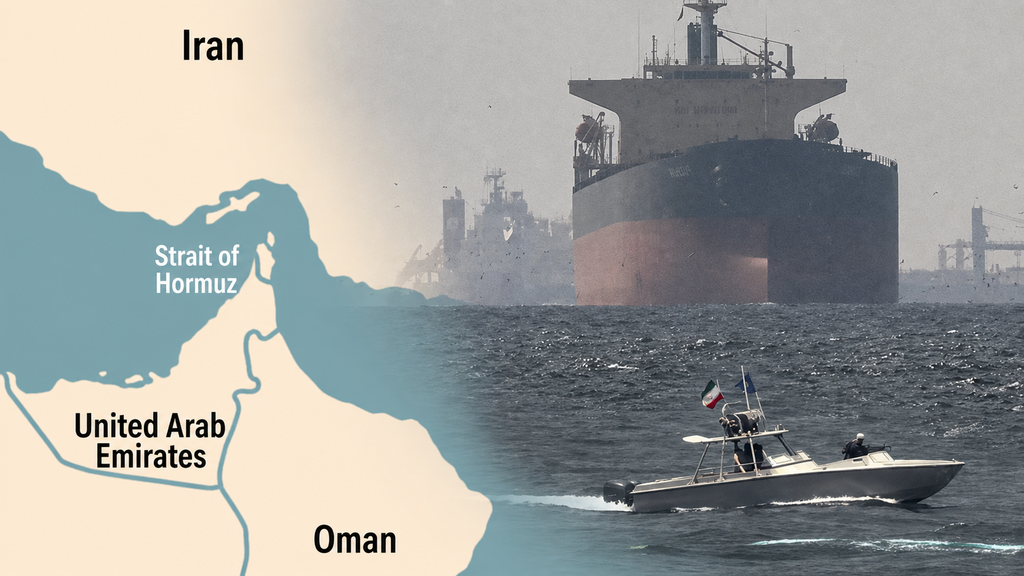
According to data collected by Israeli maritime intelligence company Windward, three of the vessels are oil tankers subject to U.S. sanctions, while the fourth is a small Iranian fishing boat.
The fishing vessel remained above two major communications cables, Europe India Gateway and Transworld, between Oct. 21 and 26.
The three tankers, tracked using a combination of maritime positioning data and satellite imagery, were observed slowing down over several cable routes, including 2Africa, a network designed to connect several Gulf countries to a system extending through the Red Sea and along Africa's eastern coast.
The vessels also operated near the Falcon cable, which links Gulf countries to India and Africa.
Windward, which employs approximately 120 people, most of them in Israel, was acquired in 2024 by American investment firm FTV Capital in a deal valued at $270 million.
The company said the vessels' movements differed significantly from those of other ships operating in the area.
"They sailed normally until they reached a specific cable corridor, and only then slowed, looped, turned back, loitered or went dark," Windward told the Financial Times.
The company said the behavior "fits the profile of mapping the cable routes, or placing charges or mines on them while dark."
Two of the tankers were empty, and all four vessels switched off their tracking systems at various points during the past month, according to the report.
Tanker circles cable route before disabling tracking system
One of the vessels, an oil tanker named Celestial Sea, circled the 2Africa cable for slightly more than four hours on Oct. 14.
The following day, the tanker disabled its tracking system in an area between the 2Africa cable and the Bay of Bengal Gateway, a submarine communications network connecting the United Arab Emirates and Oman with Malaysia, Sri Lanka and India.
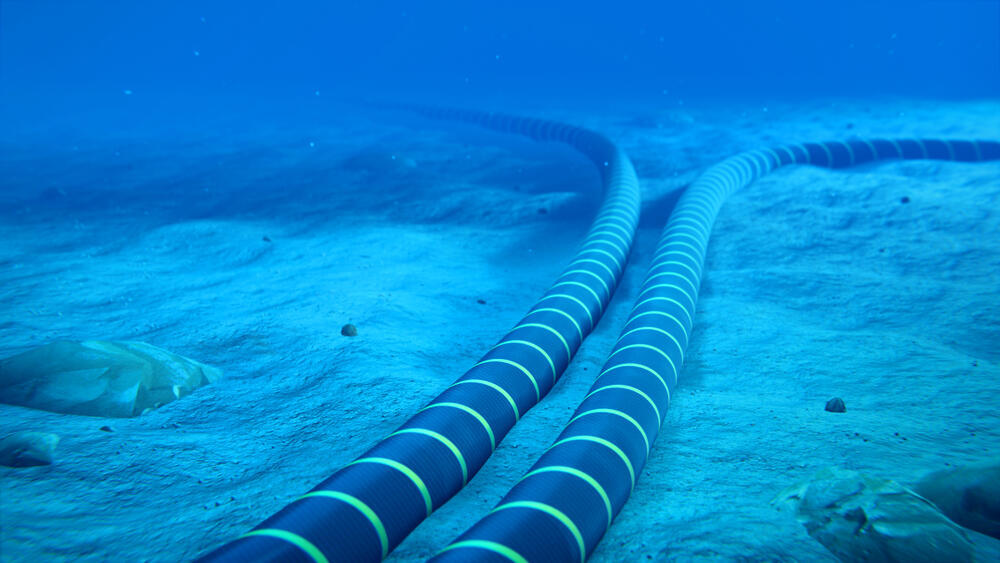
Undersea internet cables
(Photo: Shutterstock)
Four days later, Celestial Sea again changed direction while passing over the cable route before subsequently anchoring off the coast of Shinas, a port city in northern Oman.
Glory International FZ, the company that owns the tanker, did not respond to the Financial Times' request for comment.
The vessels' behavior has heightened concerns about the vulnerability of communications infrastructure in the Gulf, where countries rely heavily on submarine fiber-optic networks for internet connectivity and digital services.
According to telecommunications research company TeleGeography, six undersea communications cables currently pass through the Strait of Hormuz, the narrow waterway connecting the Persian Gulf with the Gulf of Oman.
Three additional cables are under construction: Fibre in Gulf, Sea-Me-We 6 and 2Africa.
The existing cables are particularly important to Iraq, Kuwait, Bahrain and Qatar, which depend entirely on connections running beneath the strait for their international internet connectivity.
Any disruption could affect not only domestic communications but also financial transactions, cloud computing, online commerce and other digital services throughout the region.
Iran threatens cables and AI facilities
Iranian officials have repeatedly threatened to target the region's digital infrastructure over the past month in response to statements by President Donald Trump and other senior U.S. officials about the possibility of renewed military strikes against Iran.
On Oct. 19, Hossein Mohabbi, a spokesman for Iran's Islamic Revolutionary Guard Corps, explicitly referred to undersea internet cables passing through the Strait of Hormuz.
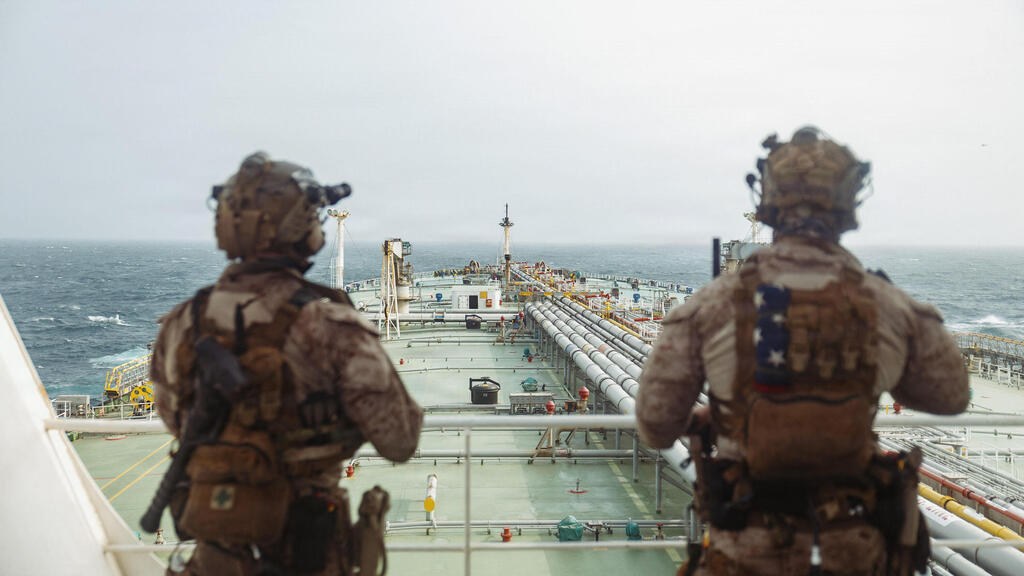
US Marines board oil Tanker off Oman
(Photo: AFP PHOTO / NAVCENT PUBLIC AFFAIRS / US MARINE CORPS)
"Seven major undersea internet cables run through the Strait of Hormuz, carrying all commercial and internet data," Mohabbi said.
"We just want [the U.S.] to realise that new targets and new weapons shall be unveiled. And ultimately, we shall sweep the remnants of U.S. power out of the region."
A week earlier, Mohsen Rezaei, secretary of Iran's Supreme National Security Council, threatened attacks against digital infrastructure. "Data centers and artificial intelligence facilities will be destroyed," Rezaei said.
Later in October, Yadollah Javani, the Revolutionary Guard's deputy commander for political affairs, also warned that assets including internet cables would be targeted in retaliation for strikes against Iranian infrastructure.
Experts warn of potential sabotage
Sidharth Kaushal, a naval warfare specialist at the London-based Royal United Services Institute, or RUSI, said the unusual vessel movements could be coincidental.
However, he suggested that Iran might be seeking to demonstrate its ability to threaten undersea infrastructure in the event of another conflict.
"Iran might be trying to demonstrate its capacity to damage undersea infrastructure if there is a war," Kaushal said.
John Pentreath, a retired rear admiral in Britain's Royal Navy, said even ordinary commercial vessels could potentially be adapted to deploy naval mines.
"Pretty much any vessel can launch mines," he said.
However, such operations would generally require modifications, including the installation of specialized rails or other equipment used to deploy mines.
Disruption could threaten Gulf financial and technology sectors
Experts warn that attacks on undersea communications cables could have significant economic consequences for Gulf countries, which have invested heavily in artificial intelligence, cloud computing and data center infrastructure.
Masha Kotkin, a former U.S. State Department official and fellow at the Center for Strategic and International Studies, said the region's expanding digital economy depends on the reliability of submarine fiber-optic networks.
Artificial intelligence operations, cloud computing services and data centers in Gulf countries all rely on the cables to maintain connectivity with international networks, she said.
Damage to the infrastructure could result in "slower internet [and] financial transactions" and would “disrupt communications networks, ecommerce and cloud computing”, Kotkin said.
The consequences could extend beyond temporary internet outages, affecting commercial operations, financial services and technology investments across the region.
Kotkin added that security threats in the Gulf have already led to the suspension of construction work on several submarine cable projects.