

New satellite images released Wednesday by AP reveal accelerated construction at Israel’s Dimona nuclear facility, showing a large new structure within the complex. The report was cleared for publication by Israeli censors.
Experts speaking to AP suggest the building could be a new heavy-water reactor to replace the aging original, or alternatively, a facility for assembling nuclear warheads. Limited information and Israel’s strict secrecy make it difficult to determine its precise purpose.

Israel has never confirmed or denied possessing nuclear weapons and is among the few countries that have not joined the Nuclear Non-Proliferation Treaty, leaving the International Atomic Energy Agency without authority to oversee activity at Dimona.
According to AP, construction likely began in 2021 or earlier, when a large excavation site near the original reactor was first identified. The new satellite images from July 5 show thick concrete walls, underground levels, and cranes, though distinctive reactor features like a protective dome are not visible. Some experts believe the tall structure could house a new reactor core, while others suggest it might be for warhead assembly.
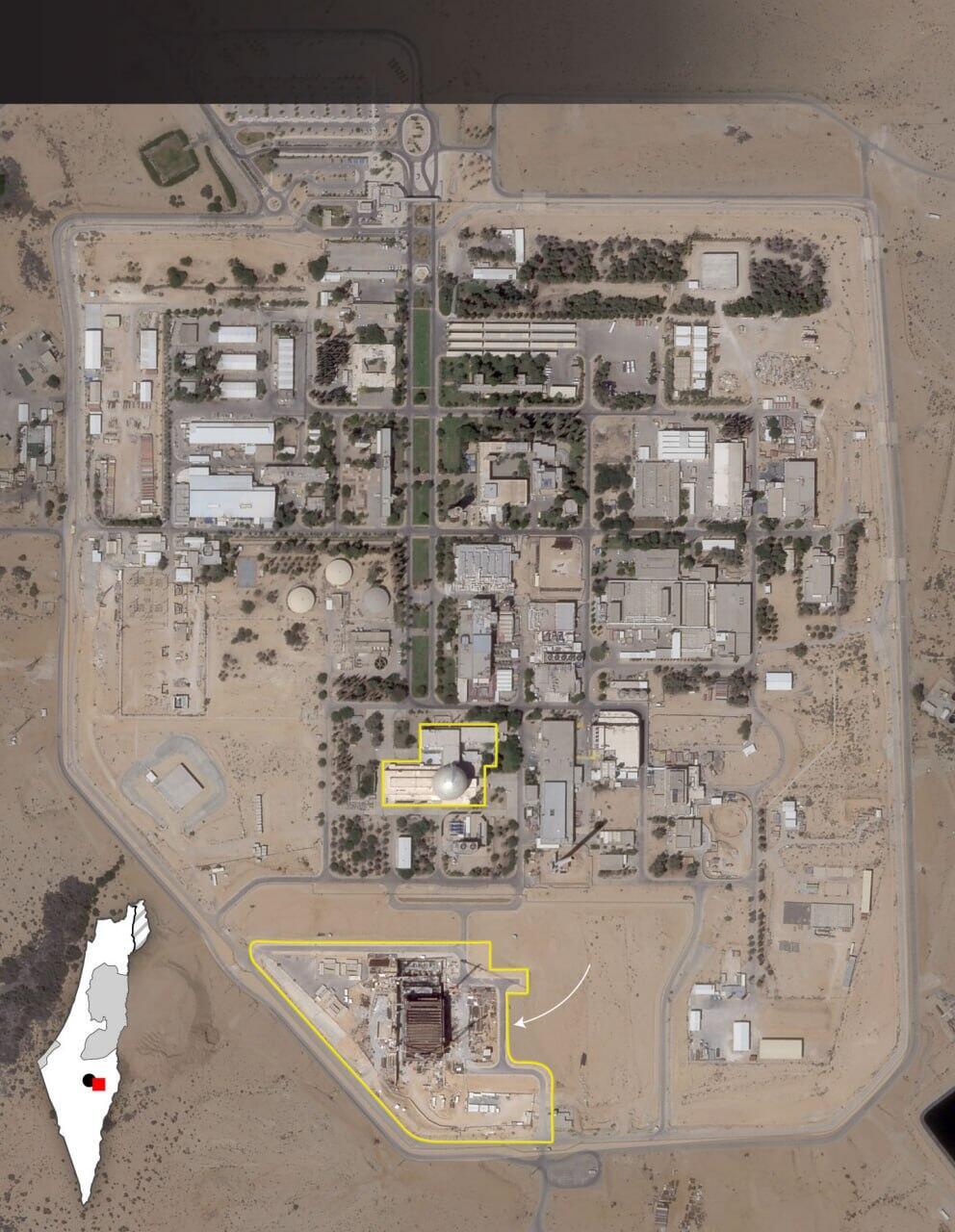
(Photo: Planet Labs PBC via AP)
“If it’s a heavy-water reactor, the goal may be to maintain the ability to produce fuel that can be processed into plutonium for additional nuclear weapons,” one expert said. “Or it could be a facility for maintaining the arsenal or producing new warheads.”
The current Dimona reactor has operated for more than six decades, far beyond the typical lifespan of reactors of its generation. Heavy-water reactors produce plutonium and tritium, essential materials for nuclear weapons. Experts say the construction could aim to replenish Israel’s tritium stock, which decays at roughly 5% per year, rather than expand the existing arsenal.
AP notes that building a new structure at the secretive site is likely to draw international scrutiny, particularly following recent Israeli and U.S. strikes on Iranian nuclear facilities. Israel continues to maintain a policy of nuclear ambiguity, considered a central deterrent strategy since its inception.

Construction work back in 2021
(Photo: AP)
"Textile factory"
Past concerns have arisen over the safety and efficiency of Dimona’s existing reactor. In 2004, Israeli soldiers distributed iodine tablets to local residents in case of a radioactive leak. Construction of the Dimona Nuclear Research Center, now named for Shimon Peres, began in the late 1950s with French assistance amid regional tensions with neighboring Arab states. The project also served as a deterrent, though Israel has never officially confirmed possessing nuclear weapons.
For years, Israel concealed the facility’s military purpose, even from the U.S., its key ally, initially labeling it a “textile factory.” In 1998, Shimon Peres, who led Israel’s nuclear program, said, “We built the nuclear option not to create Hiroshima, but to have Oslo.”
This new construction underscores Israel’s continued focus on maintaining and modernizing its nuclear infrastructure while navigating international scrutiny and regional security concerns.