

More than two weeks after the war began, IDF spokesman Brig. Gen. Effie Defrin said Sunday the Israeli military plans to continue striking targets in Iran for at least three more weeks, through the Passover holiday and possibly beyond.
“We have thousands of targets ahead,” Defrin said in an interview with CNN. “We are ready, in coordination with our US allies, with plans through at least the Jewish holiday of Passover, about three weeks from now. And we have deeper plans for even three weeks beyond that.”
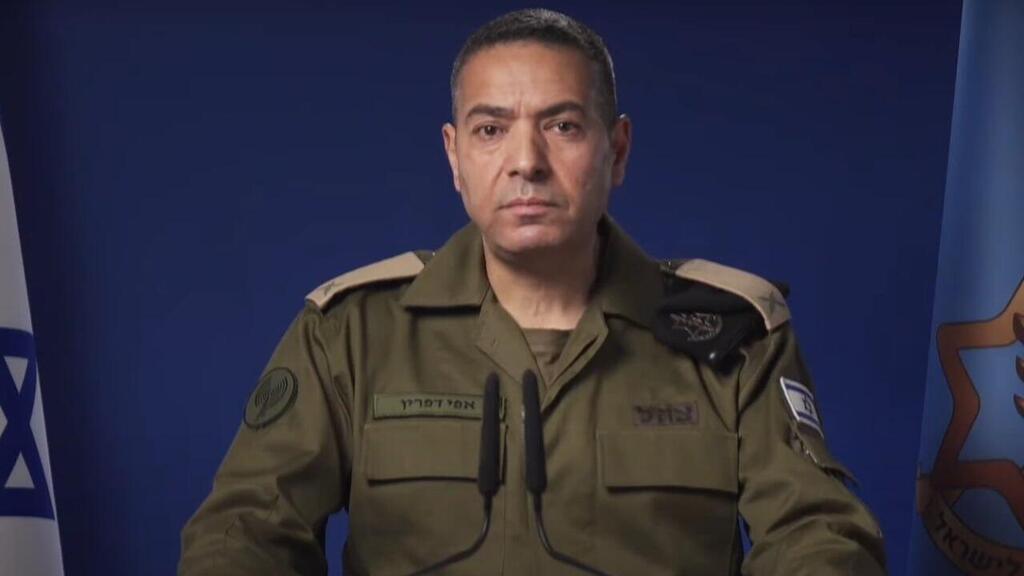
Defrin emphasized that Israel’s goal is to “weaken the Iranian regime severely.” According to him, the IDF “is not working according to a stopwatch, or a timetable, but rather to achieve our goals.”
His remarks come as questions continue in Israel and abroad about whether U.S. President Donald Trump will seek to end the war sooner rather than later. For now, the conflict appears to be causing political damage to Trump ahead of the November midterm elections, particularly due to rising oil prices.
Trump has delivered mixed messages in recent days. Alongside claims that the war could end soon, he has also promised to “finish the mission” and continue striking Iran.
Over the weekend, he ordered attacks on military infrastructure on Kharg Island, through which roughly 90% of Iran’s oil exports pass. The move was widely seen as a U.S. escalation, and Tehran responded with additional attacks on civilian ports in Gulf states.
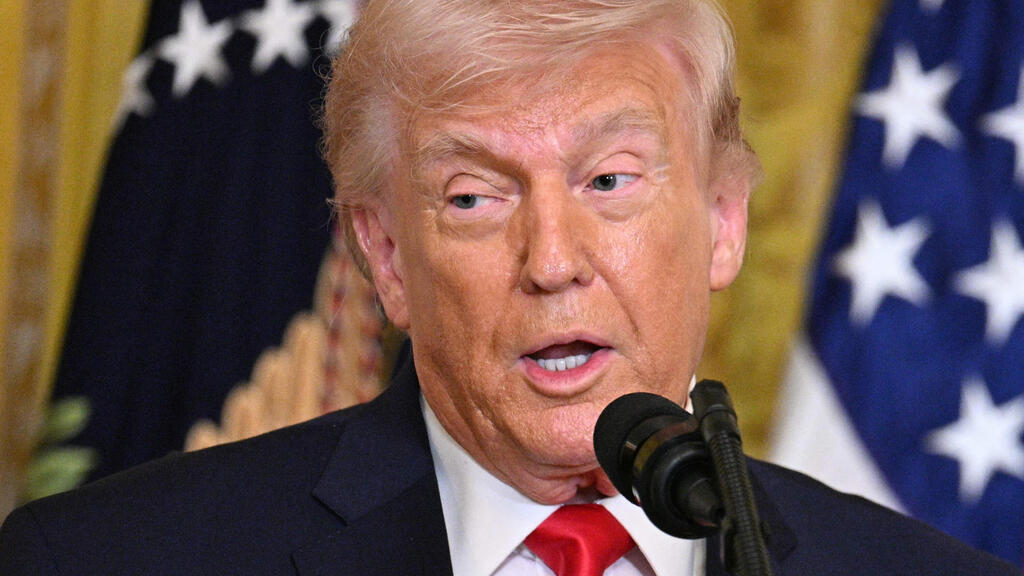
US President Donald Trump
(Photo: Jim Warson/ AFP)
In an interview overnight with NBC, Trump said Iran “appears” interested in reaching a deal.
“But the conditions are still not good enough,” he said.
Reuters reported Saturday that both Trump and the Iranian regime rejected regional proposals for ceasefire negotiations. However, Iranian Foreign Minister Abbas Araghchi sounded more open to the possibility on Sunday.
He said contacts are continuing with neighboring countries, including Qatar, Saudi Arabia and Oman.
“Diplomatic communication has not stopped,” Araghchi said. “There are efforts and mediation by countries in the region to reduce tensions and raise ideas for ending the war. Tehran confirms its readiness to consider any proposal that guarantees a complete end to the war.”
Missile launches declining, Israeli official says
At the same time as the CNN interview, The Wall Street Journal quoted an Israeli security official saying the IDF has significantly degraded Iran’s ability to launch ballistic missiles toward Israel.
According to the official, recent attacks have involved only one or two missiles at a time.
The official said Israel and the United States now control Iranian airspace to a large extent, making it extremely difficult for Iranian launch units to operate in coordination for fear of being struck.
At the beginning of the war, Iran launched dozens of missiles per day on average, the official said. In recent days, the average has dropped sharply to single-digit launches or slightly more.
He also said that from an area in northwestern Iran that launched dozens of missiles during the early days of the war, no missiles have been launched for nearly a week.
The decline does not mean missile launches have stopped entirely. Even a single missile fired in the middle of the night can send millions of Israelis rushing to shelters.
Earlier Sunday, the commander of the Islamic Revolutionary Guard Corps’ Aerospace Force, Maj. Gen. Majid Mousavi claimed Iran launched “heavy and fast Sejjil missiles toward Israeli air command and control centers.”

The Sejjil missile
(Photo: AP)
The Sejjil is a solid-fuel ballistic missile with a range of about 2,300 kilometers. It has not previously been reported as used in the current war.
The reliability of the claim is unclear, and Iranian officials have issued numerous false statements during the conflict.
Israel denies reports of an interceptor shortage
Meanwhile, the American news site Semafor reported Saturday that Israel informed the United States last week that it faced a critical shortage of ballistic missile interceptors.
According to the report, Israel entered the current war already facing limited interceptor supplies following last summer’s 12-day war.
Foreign Minister Gideon Sa’ar was asked about the report on Sunday and denied it.
Military officials also said the IDF currently does not face a shortage of interceptors.
According to those officials, the Israeli military prepared for a prolonged confrontation with Iran alongside the United States, and operations are currently proceeding according to plan.
The Israeli government on Saturday approved an urgent security procurement package described as classified.
Ministers were asked to approve a reduction in the state budget to fund the purchase, which is estimated to cost 2.6 billion shekels. The procurement includes munitions, advanced weapons systems and the replenishment of critical combat stockpiles.