

Israeli officials are identifying signs that Tehran’s hard-line leadership is changing its approach to the conflict and preparing for the possibility of expanding it. At the center of the assessment is the possibility that Iran could try to exert military and economic pressure on the United States and Israel, including by targeting energy infrastructure, shipping routes and Washington’s allies in the region.
Recent reports indicate that Tehran increasingly understands that the conflict is not being fought only on the military battlefield. The naval blockade and damage to Iran’s ability to export oil and generate revenue are weighing on the regime, while the United States continues to apply economic pressure. According to a recent Reuters report, President Donald Trump’s administration is considering intensifying pressure on Iran through additional sanctions, including against entities involved in oil exports and the financial system.
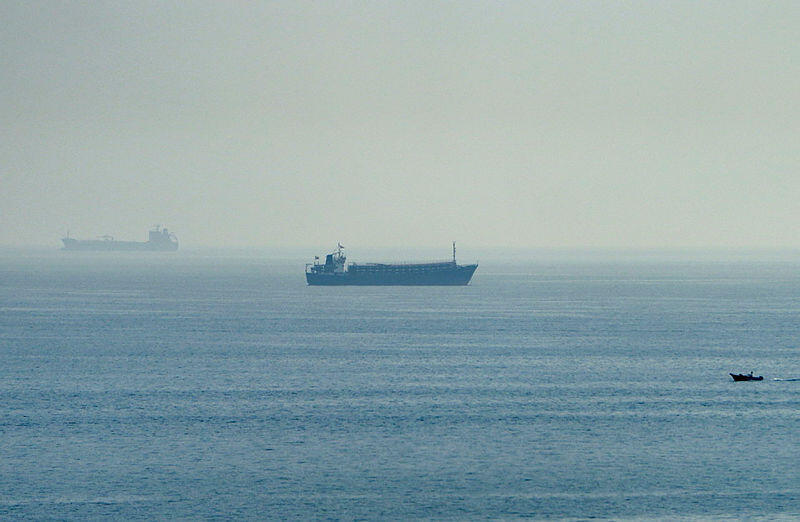
At the same time, the shift of the fighting to the maritime arena is already clearly visible. Traffic through the Strait of Hormuz has fallen dramatically following attacks on vessels, and the strait, through which a significant portion of global oil and gas trade once passed, has become one of the central arenas of confrontation between Iran and the United States.
Araghchi also stressed that Iran’s talks with Oman over the Strait of Hormuz are separate from the question of reopening the waterway. He said the discussions concern the technical task of establishing new shipping routes because the previous lanes can no longer be used, with work underway on a temporary route that could later become permanent.
Trump added another volatile element to the standoff Monday, threatening Oman over its parallel talks with Tehran on managing shipping through the Strait of Hormuz. Asked about the negotiations, he told Fox News: “If Oman gets in the way, we’ll bomb the s*** out of them.” Trump later reiterated that his overriding goal remains ensuring Iran cannot obtain a nuclear weapon.
Even after such a route is agreed, Araghchi said, renewed navigation through Hormuz would depend on additional conditions being met by the United States. Baghaei described the talks as complex and sensitive because they involve the sovereignty of both Iran and Oman, while senior IRGC official Yadollah Javani said the strait would reopen only once Washington fulfills its commitments under the Islamabad agreement.
A senior Israeli official assessed that “it is precisely the economic pressure on Iran that could push it toward an offensive move.”
“If Tehran concludes that the continuation of the blockade threatens the stability of the regime and its ability to finance the security apparatus and the organizations it supports, it may try to change the equation through regional escalation,” the official said.
The possible Iranian logic, according to the Israeli assessment, is straightforward: If Tehran can disrupt energy routes and drive up oil and gasoline prices in the United States, political pressure on Trump to end the campaign and return to the negotiating table could increase.
This is not only an Israeli assessment. American and European analyses in recent weeks have also indicated that Tehran is trying to use disruptions to shipping and energy routes as leverage against Washington, based on the understanding that the economic cost of a prolonged war could become a political problem for the U.S. president ahead of the midterm elections.
Trump
(Photo: Samuel Corum / GETTY IMAGES NORTH AMERICA / AFP)
Congressional midterm elections are expected in November, and a debate is already underway in Washington over the economic and military cost of the campaign. Fuel prices and fears of a prolonged war could become a significant political issue for the Republican administration.
Israel’s concern is not limited to the possibility of an immediate attack. The security establishment is also monitoring Iran’s efforts to restore its missile and drone capabilities and rebuild military infrastructure damaged during the conflict, as reported over the past day by The Wall Street Journal. According to the report, Iran’s reconstruction has proceeded faster than expected.
American assessments indicate that Iran is likely to exploit periods of relative calm to restore its capabilities, particularly its asymmetric capabilities. At the same time, recent reports point to tighter control by the Islamic Revolutionary Guard Corps and preparations for a prolonged confrontation.
Israel, meanwhile, is trying to increase production of its defensive systems. The Defense Ministry announced in June that production of Arrow interceptors would be accelerated as part of preparations for ballistic threats from Iran and its allies.
The result is an arms race between Iran’s offensive capabilities and Israeli and American interception capabilities, one in which interceptor stockpiles carry strategic importance no less significant than the number of missiles Iran possesses.
Iran’s ‘insurance policy’
Another element is Iran’s nuclear program. Attention is focused on the underground facility known as Pickaxe Mountain near Natanz. Satellite images published in recent months indicate continued work at the compound and vehicle movement near the tunnel entrances. International Atomic Energy Agency inspectors have not been allowed to visit the site, and information about what is happening inside remains very limited.
The site is considered exceptionally fortified and deep, raising concern in Israel and the United States that it could eventually become a central component of Iran’s nuclear capability or serve as an “insurance policy” for the program in the event of another attack.
However, it is important to stress that there is currently no public information proving that the site is already operating as an active enrichment facility or that it holds a significant stockpile of enriched uranium.
Israel’s security establishment is therefore looking not only at the possibility that Israel or the United States might decide to renew attacks, but also at the opposite scenario: Iran itself could initiate a move that triggers an Israeli and American response.
Such a scenario could begin with a limited action, including a missile or drone attack, a strike on shipping or energy infrastructure, or the activation of one of Iran’s regional allies, and rapidly develop into a broader campaign.
The risk is not entirely theoretical. Tensions have recently increased in arenas where Iran-backed organizations operate, including the Houthis in Yemen and Hezbollah in Lebanon. At the same time, Iran itself has threatened to strike energy infrastructure in the region if the United States and Israel attack Iranian energy facilities. Israel is therefore preparing in both directions: defending against an Iranian attack or an attack by its proxies, while maintaining offensive capabilities should the political leadership decide to act.
One of the central questions is the degree of coordination between Jerusalem and Washington in the event of further deterioration. One possible scenario is that the United States gives Israel a green light to act, launches an attack itself or operates jointly with Israel. Alternatively, Trump could prefer to halt an Israeli move if he fears its consequences for the American campaign, energy prices and the November elections.
The political arena could enter the equation
(photo: WZO)
Israel’s domestic political arena could also enter the equation. As elections in Israel approach, Prime Minister Benjamin Netanyahu could have an interest in presenting action against Iran as a security and strategic achievement. Ultimately, however, in the event of a joint American-Israeli campaign, Trump’s capabilities and willingness to act would have a decisive influence over its timing and scope.
The expiration of the 60-day deadline set by the memorandum of understanding has therefore produced a dangerous equation: Iran is under intense economic and military pressure, but that very pressure could create an incentive for escalation.
Iranian officials are also rejecting the significance of the 60-day deadline altogether. Foreign Ministry spokesman Esmail Baghaei said the memorandum of understanding does not specify a 60-day period and that Iran would not accept pressure tied to a timetable. He said Washington had failed to meet its commitments under the agreement and therefore “the issue of the 60 days is irrelevant and our forces are ready to respond.”
Foreign Minister Abbas Araghchi similarly argued that there had been no ceasefire requiring an extension, saying the memorandum had marked an end to the war before the U.S. allegedly violated it and fighting resumed. He added that Qatar and Pakistan continue to exchange messages with Tehran, but that Iran has not yet decided to resume negotiations with the United States.
Tehran may believe that the best way to improve its negotiating position is not necessarily to wait for the pressure to wear it down, but to generate a regional crisis that forces Trump to recalculate the cost of the war.
According to Israeli assessments, this risk is well understood. Alongside diplomatic and economic efforts, the security establishment is preparing for the possibility that the next round will begin not in Jerusalem or Washington, but in Tehran.
The security establishment is on alert and preparing both defensively and for a rapid shift to offensive action.
The situation could also create a risk of miscalculation, in which one side launches an attack out of fear that the other is preparing to strike first, and vice versa. It is a complex and sensitive situation that must be managed carefully.
Mojtaba’s secret plan
According to Iranian and Arab officials who spoke with The Wall Street Journal, Iran’s hard-line leaders believe the agreement was merely an attempt by the United States and Israel to ease pressure on the global economy and buy time for a larger attack later.
Instead of placing their trust in the talks, they spent the past two months preparing for a bigger fight. Their efforts have included giving the IRGC greater control, appointing veterans of the Iran-Iraq War and other internal crises to key positions, expanding domestic counterintelligence operations and increasing production of missiles and drones.
The leadership quickly seized the initiative, attacking ships to strengthen Iran’s grip on Hormuz and expanding the battlefield into the Red Sea, which Saudi Arabia has used to bypass Iran’s hold over the Persian Gulf.
The Journal reported, citing sources familiar with the matter, that Arab intelligence officials had gathered evidence, including communications between Iran and allied militias in countries such as Yemen and Iraq, of a strategic shift within the country’s hard-line leadership and preparations by its forces to widen the war and increase the costs for the United States.
Iranian leaders, alarming weaker Gulf states such as Kuwait, are increasingly speaking about “offensive operations on enemy territory.”
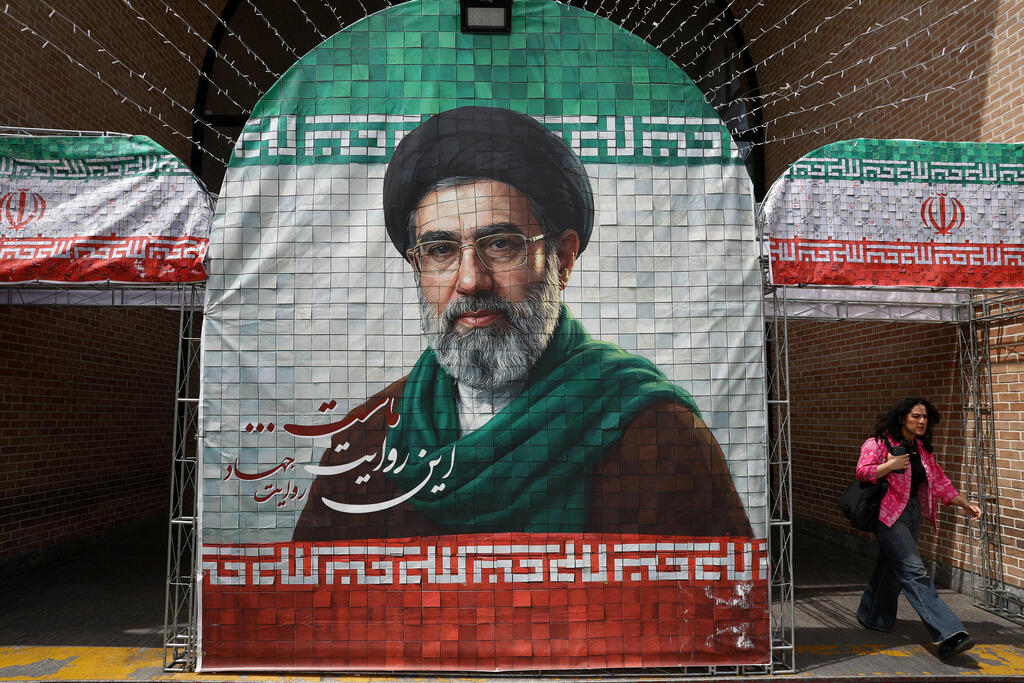
Mojtaba Khamenei
(Photo: Majid Asgaripour/WANA (West Asia News Agency)/Reuters)
Iran has effectively pursued a two-track policy. While its diplomats sought an agreement with the United States, Iranian leader Mojtaba Khamenei took steps to prepare the security apparatus for a wider confrontation that could potentially be initiated by Tehran itself.
The IRGC used the relative calm created by the memorandum of understanding to lay the groundwork with allied militias across the region and prepare them to increase attacks if necessary, sending advisers to Iraq, Yemen and Lebanon to discuss plans.
The intelligence, which included intercepted communications, showed that the IRGC was sending commanders to Houthi-controlled areas of Yemen to plan an intensified confrontation with Saudi Arabia in coordination with Iraqi militias also backed by Iran.
Officials familiar with the findings said the IRGC oversaw deployments of missiles, naval weapons and drone launchers to positions overlooking the Red Sea. It also provided the Yemeni militants with intelligence, target lists including Saudi ports and energy facilities, and advice on sheltering from possible Saudi retaliation.
Behind the scenes, according to the report, Supreme Leader Khamenei prepared his forces for more aggressive fighting, appointing seven key security figures to oversee military institutions and domestic repression as part of a reorganization revealed a week ago.
The appointments came with aggressive objectives, including tightening the military chain of command, turning an ideological militia into a neighborhood-level intelligence agency and emphasizing an offensive approach.
The IRGC has also drawn up new plans for further escalation, including preemptive strikes, according to Iranian officials and public statements.
Among the possibilities are sabotaging internet cables in the Persian Gulf, fomenting political unrest in countries with Shiite communities such as Kuwait and Bahrain, and potentially even conducting ground operations in Kuwait.
First published: 12:43, 08.17.26