

Iran's Vice President Mohammad-Reza Aref said Tuesday that Tehran may agree to direct talks with the United States over its nuclear program if the right conditions are met. But he stressed that even now — two months after the joint Israel and American strike on Iran’s nuclear facilities — the Islamic Republic’s position remains that the demand for it to halt uranium enrichment entirely is “a joke.”
Washington and Jerusalem had expected that, following the attack, Tehran would find itself in a far weaker bargaining position. Yet, at least publicly, the regime is projecting confidence. “Iran is ready for negotiations on equal terms to safeguard its interests,” Aref said. “The Islamic Republic’s position reflects that of the Iranian people, and the right conditions must be in place.”
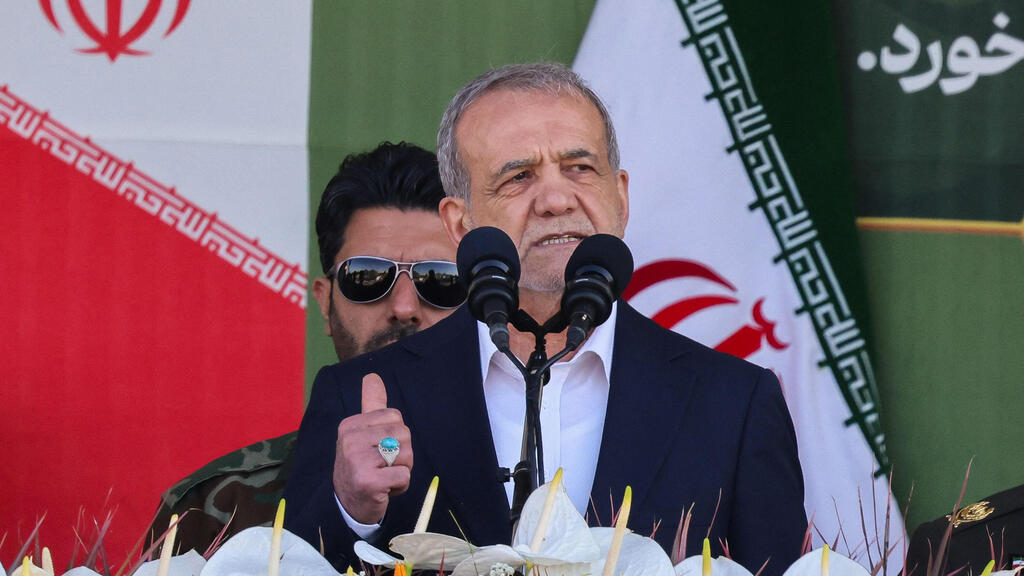
Aref’s remarks follow a controversial statement on Sunday by Iranian President Masoud Pezeshkian, who voiced support for renewing negotiations with the U.S. despite deep mistrust between the sides. “You don’t want to talk? Well, then what do you want to do? Do you want to go to war?” he asked critics. “Entering talks does not mean we intend to surrender.” He urged that such issues should be approached without emotion.
Get the Ynetnews app on your smartphone: Google Play: https://bit.ly/4eJ37pE | Apple App Store: https://bit.ly/3ZL7iNv
A senior commander in Iran’s Islamic Revolutionary Guard Corps, Aziz Razanfari, responded Monday by warning that foreign policy must be handled with secrecy, and that rash public statements from leaders could have serious consequences for the country.
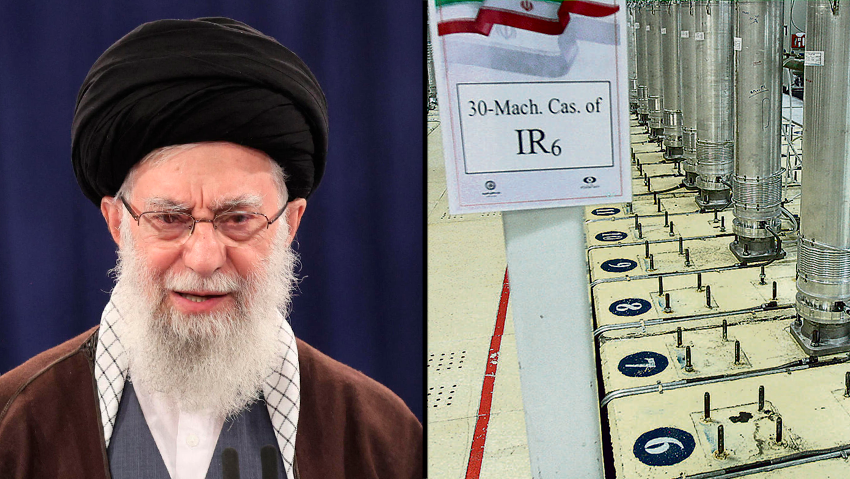
(Photo: AFP, AP)
Pezeshkian also came under attack from the Tasnim news agency, which is affiliated with the Revolutionary Guard. “Whether we should negotiate or not, which strategy to adopt, and what the talks should include — all of these are matters for debate,” the agency wrote. “Anyone can voice an opinion, argue their viewpoint and criticize the other side. But when you speak publicly, we are not the only ones listening. The enemy hears this and shapes its policy and decisions based on its assessment of our strengths or weaknesses.”
Tasnim directly challenged the president: “Will portraying us as so weak and desperate — as if we have no choice but to negotiate and, if we don’t, the other side will kill us—lead the enemy to negotiate and make concessions? Mr. Pezeshkian! Displaying weakness in this way blocks the path to the negotiations you believe in and harms national interests. No discourse is neutral.”