


“That’s my daughter,” Deborah, a 42-year-old mother from Bnei Brak, said as she pointed to a photograph taken during a police raid on an underage wedding in the northern Israeli town of Yavne’el.
Her daughter was 17 at the time. Deborah told the Knesset Committee on the Status of Women and Gender Equality on Wednesday that the marriage took place despite her repeated attempts to stop it and persuade her daughter to wait until she turned 18. The committee held a follow-up session on underage marriages in Yavne’el, an issue it has examined repeatedly in recent months.

Deborah said she traveled to Yavne’el with her younger daughter on the night of the wedding. Shortly after the bride sat down and began reciting the traditional bride’s prayer, police entered the house and took Deborah and her daughter for questioning. By the time they returned, Deborah said, she was being blamed for bringing the police to the wedding.
Her daughter and other relatives stopped speaking to her, she said, and the chuppah ceremony was eventually held after she left. “I never got to accompany my daughter to the chuppah,” Deborah told the committee. “To this day, she barely speaks to me.”
About two months after the wedding, her daughter became pregnant. “She never told me,” Deborah said. “Do you know how I found out? About three months into the pregnancy, I received an alert from the health fund because she was still a minor. She’ll give birth before she turns 18. To this day, she hasn’t told me she’s pregnant.”
Deborah told lawmakers that her former husband remarried shortly after their divorce and later moved to Yavne’el.
When their daughter was 16, she went to live with him. Within three months, Deborah said, the teenager was engaged to a man three years older than her. “I heard about the engagement from relatives,” she said. “She didn’t tell me.”
The engagement was initially broken off, but Deborah later found a letter her daughter had written to a rabbi describing how difficult it was for her to see the young man around town.
“She wrote that she didn’t like him,” Deborah said. “She signed the letter: ‘I wanted to hear the righteous man’s advice and accept upon myself whatever the righteous man tells me to do.’”
Not long afterward, Deborah said, her daughter became engaged to the same man again. “She didn’t tell me.”
Before the wedding date was set, Deborah said, her daughter spent a Shabbat with her. “I asked her to stay engaged, but continue living with me and wait until she was 18 and one day old,” she recalled. “But they refused. The wedding was set for her 17th birthday.”
Her daughter knew how strongly she opposed the marriage, Deborah said, but she also tried to make clear that her opposition would not change their relationship. “I kept telling her that she was my daughter, that I loved her and that I would be there for her no matter what.”
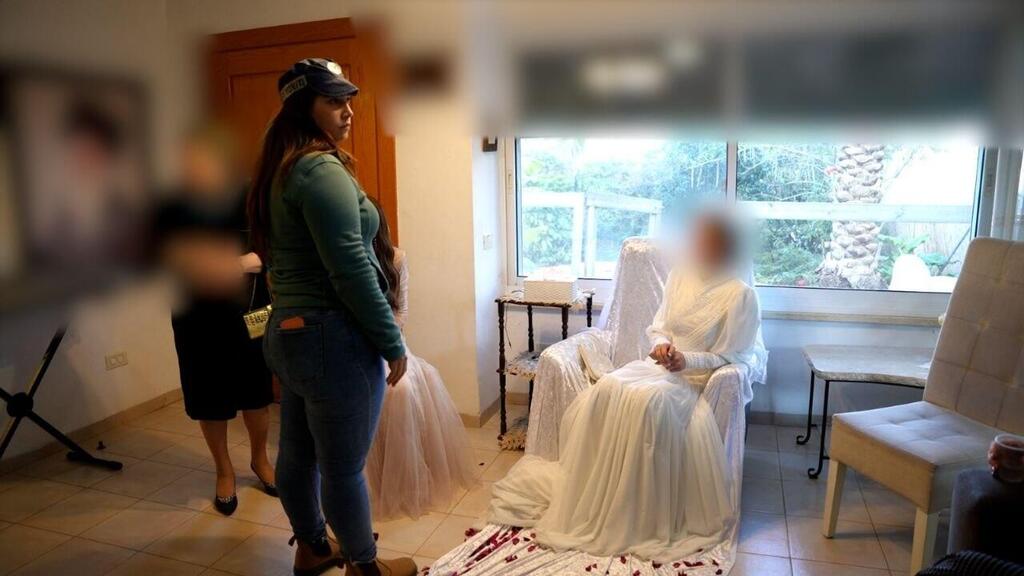
(Photo: Israel Police)
On the wedding night, Deborah and her younger daughter arrived in Yavne’el. “After my daughter sat in the bride’s chair, she began saying the bride’s prayer, and then police entered the house,” Deborah said.
“We were taken for questioning that lasted for hours at the Tiberias police station. I was the one who opposed the wedding, but I was accused of calling the police.”
When she returned to Yavne’el, she said, the atmosphere had changed completely. “From the moment we came back, I was totally ignored. My daughter and the family members acted as though I didn’t exist. I was trying to be there for her while also taking all the blame.”
After Deborah left, she said, the wedding ceremony went ahead. “They held the chuppah without me. I never got to walk my daughter to it.”
Deborah also sharply criticized the authorities’ response, arguing that responsibility did not rest with police alone. “There is also the welfare system, and its conduct in these cases is beyond criticism,” she said. “It makes no sense for social workers to send a girl home when she lies to them and says she isn’t getting married.”
She called for stronger intervention and for those involved in arranging underage marriages to face prosecution. “If the police do an excellent job, but when the evidence reaches prosecutors there are no indictments, then we haven’t done anything,” she said.
Police have carried out several operations in Yavne’el over suspected underage marriages. Earlier this month, officers detained 16 adults and minors suspected of having recently married or of preparing for illegal wedding ceremonies.
Committee chair MK Meirav Cohen said the cases exposed so far may represent only a fraction of the phenomenon. “We are seeing only the very tip of the iceberg,” Cohen said.
She said she had spoken with a woman who previously worked in Yavne’el’s education system and claimed that by around ninth grade, as many as 80% of girls in the community were already married.
“The message is that if you haven’t married, you’re strange, that something is wrong with you,” Cohen said, citing the woman’s account. The same allegation was raised publicly at Wednesday’s committee hearing.
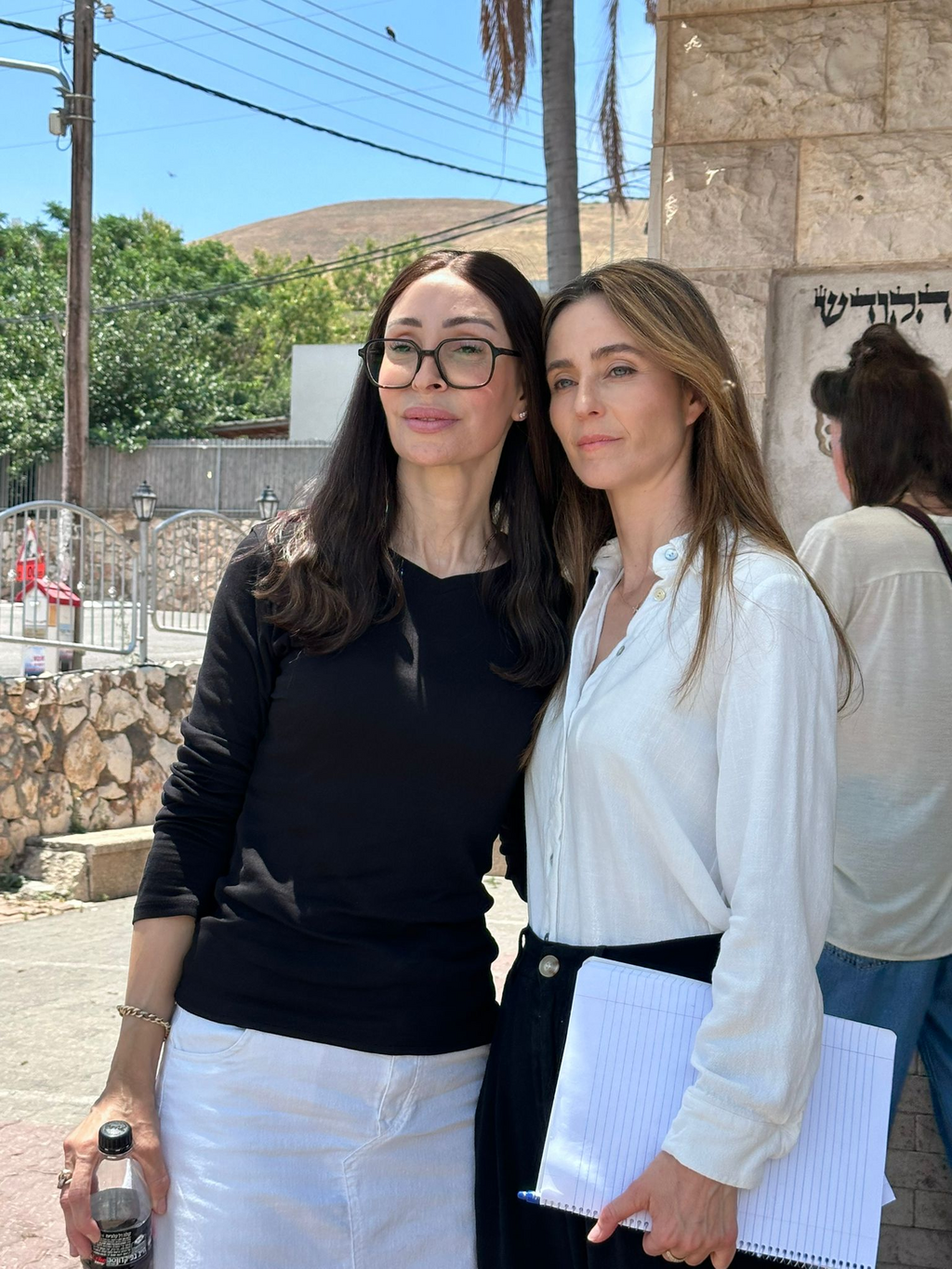
MK Meirav Cohen at the synagogue compound in Yavne’el with Sarah Maimoni
Cohen also said she had heard allegations of sexual abuse involving young girls and described what she believed to be a wider system that enabled the marriages to continue.
“For something like this to happen, you need an entire mechanism of silence,” she said, listing nonprofits, educators, welfare officials, bridal instructors and wedding organizers.
Cohen criticized the head of the Yavne’el local council for refusing to attend the Knesset hearing with municipal employees, and accused local figures of enabling the practice.
“The boycott only tells us that we are moving in the right direction,” she said.
“The way to solve this is to dismantle this cult and stop ignoring a phenomenon that leaves these boys and girls with no way out. We will be there for those children.”