

European intelligence officials are warning that Russia could seek to test NATO in the coming months, potentially through a limited incursion into alliance territory, drone attacks or other provocations, as concerns grow that Moscow is preparing to escalate its operations in Europe.
One European intelligence chief told The Guardian that such an attack could come within “months, not years,” although other senior officials cautioned that there are no indications an attack is imminent and warned against fueling public panic.
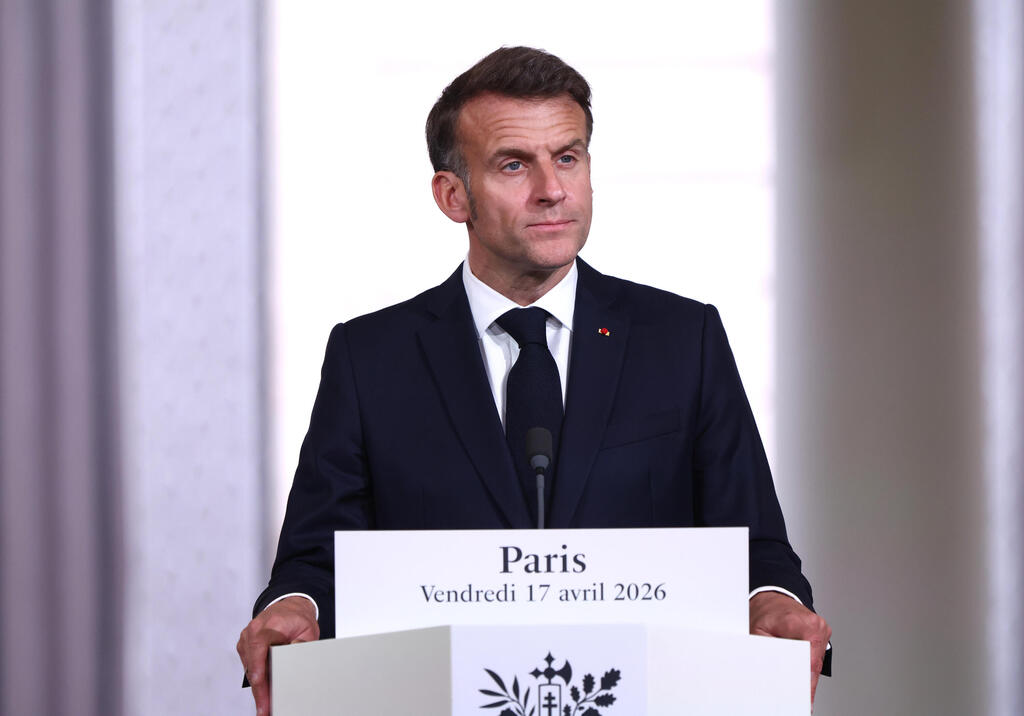
The warnings, published Sunday, came after Polish Prime Minister Donald Tusk told parliament that intelligence assessments indicated Russia could seek to test the military alliance in the coming months. French President Emmanuel Macron described the Polish warnings as well-founded and documented and on Friday summoned political party leaders and candidates in France’s 2027 presidential election for emergency talks in Paris on the issue.
Concerns about escalation are mounting as world leaders gather in New York this week for the annual UN General Assembly and as Russia and Ukraine intensify aerial attacks in the war that began with Moscow’s full-scale invasion in February 2022.
Ukraine launched hundreds of drones and missiles at Moscow and other parts of Russia early Sunday in one of its largest aerial operations since the war began. Russia said about 1,600 drones were involved in the attack, including hundreds targeting the Moscow region.
In separate interviews with The Guardian, three senior European intelligence officials described the assessments behind the warnings about Moscow.
Michal Koudelka, head of the Czech Republic’s Security Information Service, or BIS, said that in addition to a large-scale drone attack, a limited Russian incursion into NATO territory bordering Russia could be among the scenarios being considered.
“It's possible,” Koudelka said in a rare interview with the British newspaper. He said possible Russian actions could include “a limited incursion, false-flag provocations, a massive influence campaign,” adding that many people were working to prevent such a scenario. Koudelka said an escalation could happen in “months, not years.”
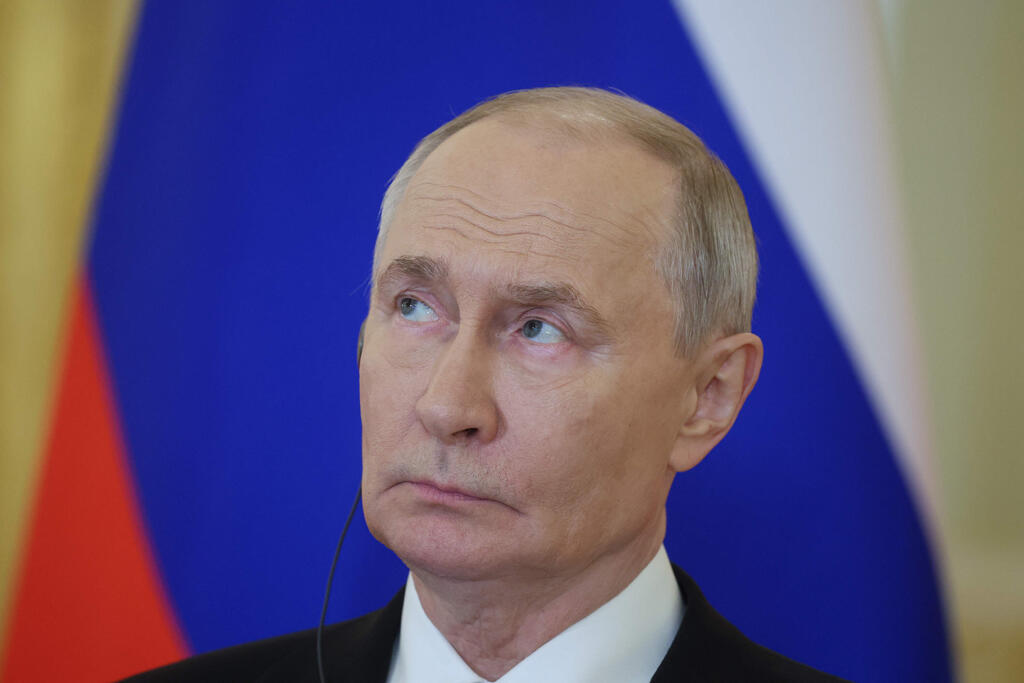
Russian President Vladimir Putin
(Photo: MAXIM SHIPENKOV / POOL / AFP)
Officials in the Baltic states offered more cautious assessments, warning that amplifying speculation about a Russian attack on NATO territory could itself serve Russian President Vladimir Putin’s objectives.
Normunds Mežviets, director general of Latvia’s State Security Service, said his agency had seen no evidence of an imminent Russian attack.
“We don’t see indications of an imminent attack,” he said, while adding that there were indications Moscow was preparing for “more decisive” action in Europe.
Mežviets said it remained unclear whether such preparations were part of a broader strategy to destabilize Europe as the war in Ukraine approaches its fifth year. But he welcomed what he described as a change in attitudes among Western European governments toward the threat posed by Russia.
Before Russia’s full-scale invasion of Ukraine in 2022, Mežviets said, Baltic governments repeatedly warned their Western European partners about Moscow but were often ignored. That changed after the invasion, he said, when Western officials acknowledged that the Baltic states and Poland had been right about the threat.
‘Social media panic’
Estonian Foreign Ministry Secretary General Jonatan Vseviov also pushed back against what he called “panic on social media” over the possibility that Russia could attack NATO territory to test the alliance.
If there is reason to fear an attack, the Estonian government will say so, Vseviov wrote on X, urging the public in the meantime to remain calm and carry on with their daily lives.
The senior intelligence officials interviewed by The Guardian declined to describe the specific intelligence underlying their assessments.
They also declined to say whether CIA Director John Ratcliffe’s surprise visit to Moscow last month was intended in part to warn the Kremlin against attempting to test NATO.
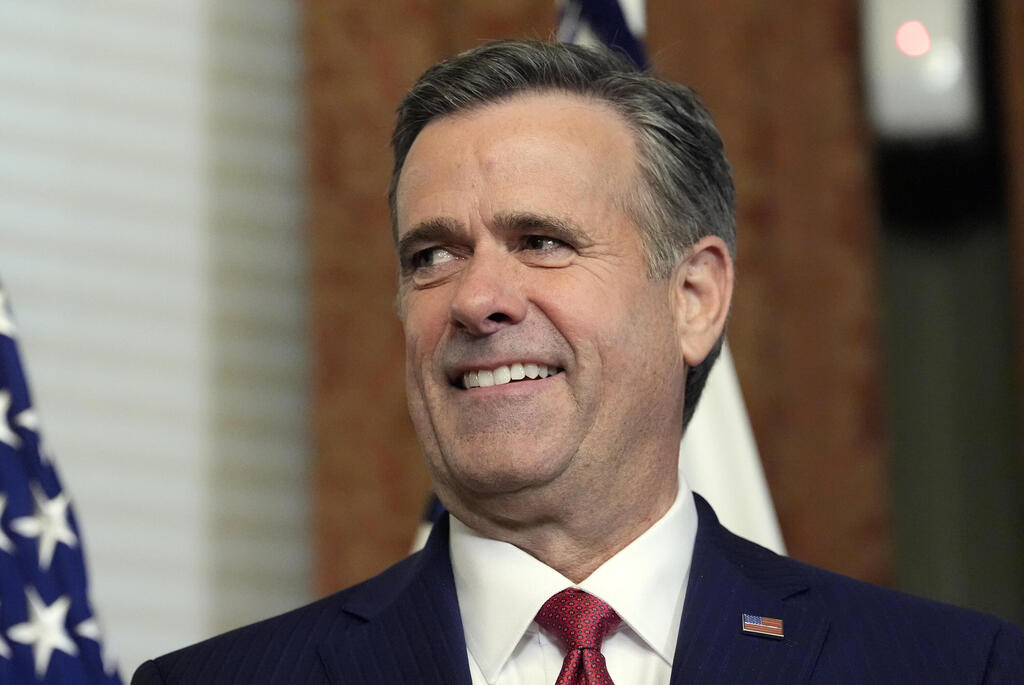
CIA Director John Ratcliffe
(Photo: AP Photo / Alex Brandon)
Thomas Nilsson, head of Sweden’s Military Intelligence and Security Service, also spoke with the British newspaper and expressed skepticism about Moscow’s willingness to negotiate seriously over Ukraine.
Nilsson said he had seen no indication that Moscow genuinely wanted negotiations, adding that his assessment was that Russian leaders still believed they could achieve their strategic objectives and were therefore engaging in what he described as “negotiation theater.”
Nilsson, Koudelka and Mežviets agreed that Russia’s campaign of sabotage and other covert operations in Europe was likely to intensify and expand in the coming months.
Nilsson described an incident in which an explosives-laden drone was discovered at Leipzig/Halle Airport in Germany as a “gamechanger.” German authorities have blamed Russia for the August incident, saying evidence indicated the Russian state provided expertise and equipment to operatives recruited to carry out the attack. Moscow has denied involvement.
The drone, carrying explosives, was discovered near a Ukrainian Antonov cargo plane used to transport weapons to Ukraine. It failed to detonate, but German authorities said the device could have caused a catastrophe.
Sending an armed drone into a busy airport in the heart of Europe represented a significant escalation because it could have killed people or severely damaged critical infrastructure, Nilsson said.
He said Russia’s intensified sabotage campaign appeared to have several objectives: weakening European support for Ukraine, creating divisions within NATO and spreading fear across Europe.
Mežviets said Russia appeared to be shifting from relatively indiscriminate acts of sabotage and arson intended primarily to create panic toward attacks on specific targets linked to Western support for Ukraine.
“We see them looking to attack railway infrastructure, Ukraine support infrastructure,” he said, adding that European intelligence agencies were now seeing a shift toward targets in the defense industry.
Such operations, he said, could achieve both practical and psychological objectives, disrupting Western support for Ukraine while simultaneously spreading fear.
Koudelka said another consequence of the sabotage campaign was the strain it places on European intelligence services because even fires, accidents and technical failures with no connection to Russia increasingly require investigation as potential acts of sabotage.
Every fire or malfunction must now be examined by intelligence agencies as a possible terrorist attack, Koudelka said, describing that additional burden on security services as an outcome that benefits the Kremlin.
European governments have increasingly accused Russia of conducting what they describe as hybrid warfare across the continent, including sabotage, arson, cyberattacks and disinformation campaigns. NATO Secretary-General Mark Rutte said this month that Russia had become “increasingly reckless,” citing incursions into NATO airspace, fires at factories producing defense equipment for Ukraine and the Leipzig incident.
Trump: ‘This ridiculous war must end’
Meanwhile, following one of Ukraine’s largest attacks on Russia since the start of the war, U.S. President Donald Trump wrote on Truth Social Monday that the “ridiculous and never ending War with Ukraine must be ended.”
Trump also said Russia had “unfortunately” lost control of parts of its diesel industry because of the war.
Ukraine launched about 1,600 drones toward regions across Russia overnight Saturday into Sunday, according to Russian accounts, with hundreds directed toward Moscow. The operation was among Ukraine’s largest attacks on Russian territory since the beginning of the war.
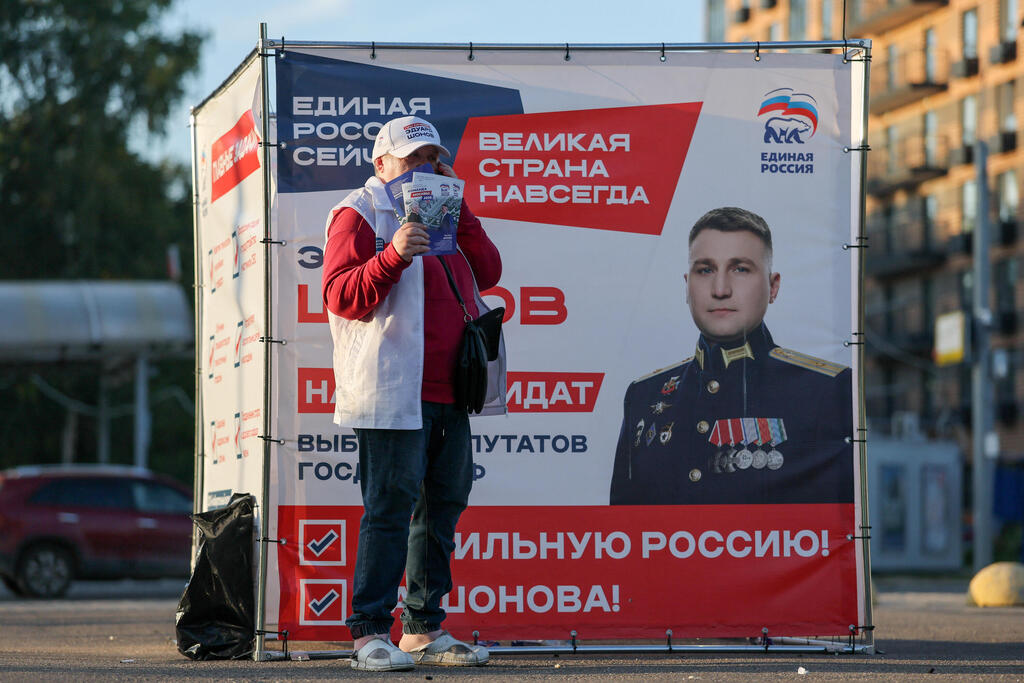
A volunteer campaigns for a United Russia candidate during Russia’s parliamentary elections in Moscow
(Photo: REUTERS/Ramil Sitdikov)
The assault came a day before results were announced from Russian parliamentary elections that produced an expected victory for Putin’s ruling United Russia party. Voting was also conducted in Russian-occupied regions of Ukraine, which Kyiv and the European Union denounced as illegal.
Reports from Moscow indicated that the Moscow Oil Refinery in Kapotnya, in the southeastern part of the capital, was hit. Videos circulating from the area showed smoke rising from several parts of the energy facility, which had also been targeted in June.
The refinery is a major supplier of fuel to Moscow and the surrounding region and is estimated to provide a significant share of the capital’s fuel needs.
The Ukrainian attack could add to tensions between Kyiv and Washington over strikes on Russian energy infrastructure. Trump has expressed concern that such attacks could disrupt global fuel supplies and drive up energy prices.
Last week, Trump called on Ukrainian President Volodymyr Zelenskyy not to attack oil refineries deep inside Russia, arguing that the strikes were contributing to global fuel shortages and higher energy prices.
The following day, Trump said in a post on his Truth Social platform that Russia and Ukraine had agreed to halt attacks on energy facilities. Neither side confirmed such an agreement, and strikes on energy infrastructure have continued.
Zelenskyy did not commit to complying with Trump’s demand and responded with a statement disputing the U.S. president’s characterization of the situation.
Ukraine, Zelenskyy said, had proposed that its partners secure an agreement with Russia to stop attacks on critical infrastructure.
Food supplies, energy facilities and other basic infrastructure essential to civilian life should be protected, he said, accusing Russia of routinely attacking those targets.
Ukrainian energy facilities, port infrastructure, logistics networks and even warehouses containing food and medicine continue to come under Russian attack, Zelenskyy said.
The intensifying strikes come as European security officials increasingly warn that the war’s effects are extending beyond Ukraine’s borders. While the intelligence chiefs interviewed by The Guardian differed over how imminent a direct Russian challenge to NATO might be, they agreed that Moscow’s covert and hybrid operations in Europe were likely to increase in the months ahead.