

At least 12 U.S. soldiers were wounded Friday night in an Iranian attack on Prince Sultan Air Base in Saudi Arabia, which also damaged U.S. military refueling aircraft, The Wall Street Journal reported overnight, citing U.S. and Saudi officials familiar with the details.
According to the report, two of the wounded soldiers are in very serious condition. The officials said the injured personnel were inside a structure that was hit in the attack, which included the launch of at least one ballistic missile and several drones.
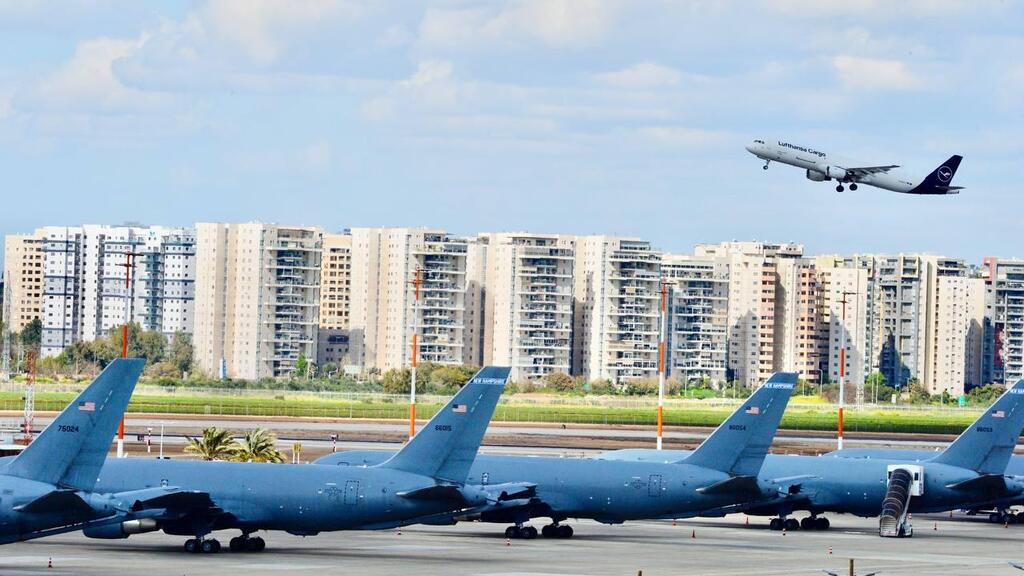
The missile strike marked at least the second time Prince Sultan Air Base has been hit since the war began. In an earlier strike at the start of the war, five refueling aircraft were damaged. The Wall Street Journal also reported on that incident, prompting U.S. President Donald Trump to criticize the outlet, saying “they want us to lose the war.”
Meanwhile, CBS News reported overnight, citing multiple sources, that the aircraft carrier USS George H.W. Bush will join the area of responsibility of U.S. Central Command, or CENTCOM, which is overseeing the war with Iran. The sources said the carrier could join combat operations after completing an exercise earlier this month and is now available for operational missions.
Two U.S. aircraft carriers are currently in the Middle East participating in the war with Iran: the USS Abraham Lincoln and the USS Gerald R. Ford.
Earlier in March, U.S. reports said the George H.W. Bush, along with a strike group of three guided-missile destroyers, would be deployed to the Middle East, though that has not yet occurred. Military analyst Ron Ben-Yishai noted at the time that one goal of sending a third carrier to the region, beyond sustaining a prolonged campaign without overextending forces, would be to deter Yemen’s Houthi rebels, who have threatened to join the war — a possibility also raised by Iran.
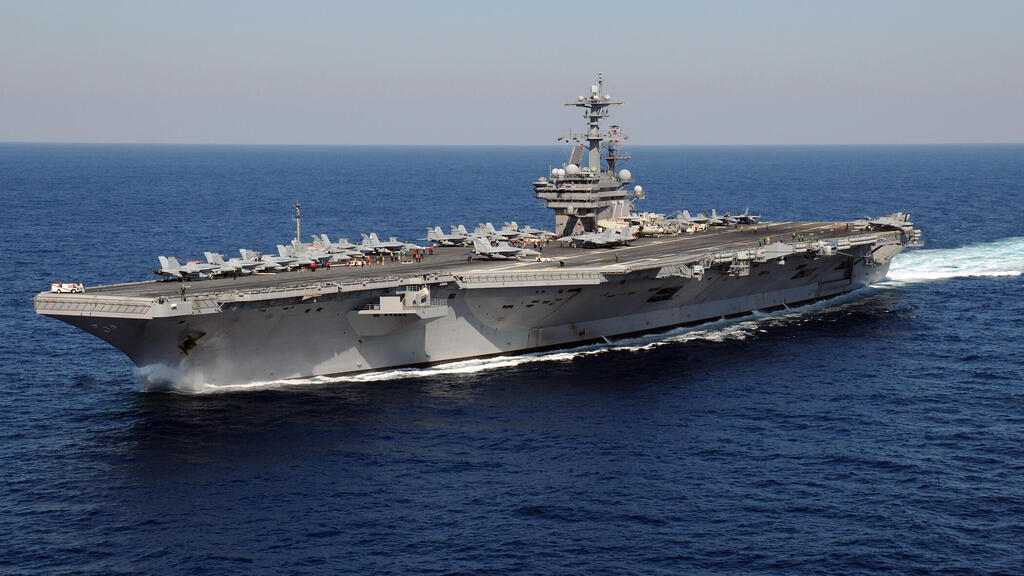
the aircraft carrier USS George H.W. Bush
(Photo: MC3 (SW) Nicholas Hall/Wikipedia)
It remains unclear where exactly the George H.W. Bush would be deployed. CENTCOM will need to decide whether it will remain in the eastern Mediterranean to strike targets in western Iran or transit the Suez Canal to the Red Sea. Dispatching the carrier, Ben-Yishai said, would allow the other two carriers to reduce their operational tempo and replenish supplies, effectively giving U.S. forces greater staying power.
The United States has 11 aircraft carriers. If a third is deployed to the region, more than a quarter of them would be committed to the war with Iran: two older Nimitz-class carriers — the Bush and the Lincoln — and the newer Ford-class Gerald R. Ford.
Sending the George H.W. Bush to the Middle East, if carried out, would mark another step by President Donald Trump to reinforce U.S. forces in the region, amid indirect contacts with Iran through Pakistani mediation.