

U.S. President Donald Trump addressed the situation with Iran Wednesday afternoon, claiming that “the United States has complete control over the Strait of Hormuz. I think we are going to keep it. Our naval blockade is called by everyone ‘the Wall of Steel,’ and there is nothing Iran can do about it.”
He repeated his claims that Iran “has no navy, no air force, the remaining soldiers are not getting paid and the Revolutionary Guards are fleeing. Their ‘leadership’ is uncertain at best, they have no money and the country is finished. All they have is fake news and 300% inflation that is getting worse! Iran is all talk and no action, the bully of the Middle East is no more. Praise be to Allah.”
His remarks came after a senior Iranian official told Reuters on Wednesday afternoon that his country is unlikely to extend the ceasefire agreement with the United States that ended the war launched by Washington alongside Israel.
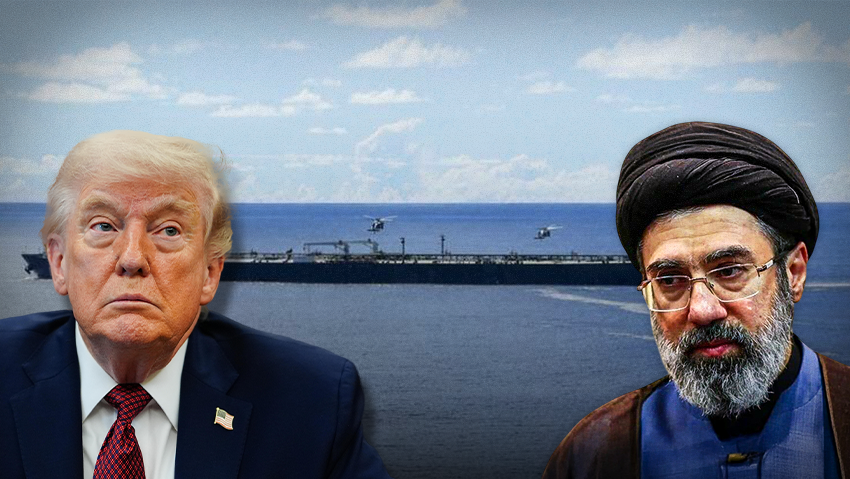
“There is no talk of an extension because, from Iran’s perspective, there is no period that began and therefore nothing to extend,” the source said. “The United States violated the interim agreement 48 hours after it was reached and withdrew from it a few days later.”
The official also said that one of the issues being discussed in negotiations is a return by the U.S. to the memorandum of understanding, despite his earlier claim that there was no ceasefire that led to the talks. He later said that “no progress has been made.” He stressed again that the discussions are not focused on extending the ceasefire between the sides.
Trump had threatened Tehran two days earlier, writing on his Truth Social account that “Iran has asked for compensation for the damage caused to it during the war. This is an interesting idea because I am also demanding compensation from them for all the people they killed and those who were severely wounded. Compensation should also be paid to the hundreds of thousands of protesters Iran has killed over the past 50 years, not to mention the 52,000 protesters it has killed over the past five months. I have instructed my representatives to insist on this in negotiations.”
In the post, he noted that the war began with the goal of preventing Iran from obtaining nuclear weapons, and said Tehran’s compensation demand “was never mentioned in our negotiations or meetings!” Trump referenced many victims of Iran’s actions and claimed: “I have instructed my representatives to strongly include this in any future negotiations, wherever they take place.” He later published another post, writing: “Iran should also be held responsible for the damage and deaths caused to the people of Lebanon, Syria, Yemen and Gaza.”
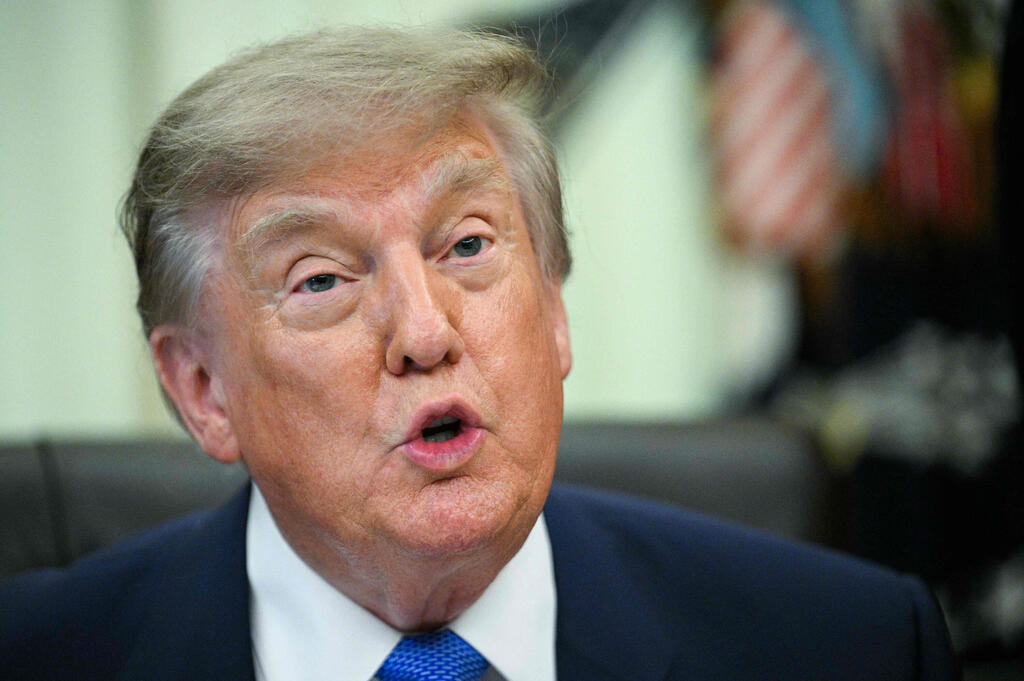
Trump: 'The United States has complete control over the Strait of Hormuz'
(Photo: Jim Watson / AFP)
Trump’s comments came despite the fact that the memorandum of understanding signed between the sides — which the Iranian official now says is being discussed again — did include a clause addressing a mechanism to fund Iran’s reconstruction.
The clause stated: “The United States of America commits, together with regional partners, to jointly develop a final and mutually agreed program of at least $300 billion for the reconstruction and economic development of the Islamic Republic of Iran. The mechanism for implementing this program will be formulated as part of a final agreement within 60 days. All necessary licenses, exemptions and approvals for the relevant financial transactions will be granted by the United States of America.”
Earlier, Mohammad Bagher Zol-Qadr, who served as secretary of Iran’s Supreme National Security Council, published a detailed list of Iran’s conditions for an agreement. Zol-Qadr pledged that “the Strait of Hormuz will not be reopened unless America corrects its behavior,” and presented a series of demands:
The U.S. must no longer threaten Iran; “an end to the war and aggression against Iran and its allies in Lebanon, Palestine, Yemen and Iraq”; an end to the naval blockade of Iranian ports; the withdrawal of U.S. naval and air forces from Iran’s vicinity; payment of compensation for damage caused by two wars against Iran; the removal of sanctions; and “the unconditional release of the frozen and stolen assets of the Iranian people.”
First published: 18:20, 08.12.26