


Against the backdrop of rising nationalist violence, clashes and attacks on an American photographer and foreign diplomats by Jewish extremists over the weekend, the IDF is stepping up operations against centers of violence in the West Bank. In recent days, the military has already begun expanding enforcement efforts, with security officials seeking to send a clear message: Operations against illegal sites will continue, and additional evacuations will be carried out wherever structures built without authorization must be removed.
The decision reflects a growing recognition that arrests, vehicle seizures and financial measures against suspects must be accompanied by stronger enforcement against the physical infrastructure that enables such activity. Security officials believe responding to violent incidents after they occur is insufficient and that action must also be taken against illegal sites they assess could serve as bases for further confrontations.
Police arrest operation 'Olive Leaf' in the West Bank this morning
(Video: Israel Police Spokesperson's Unit)


Gallery
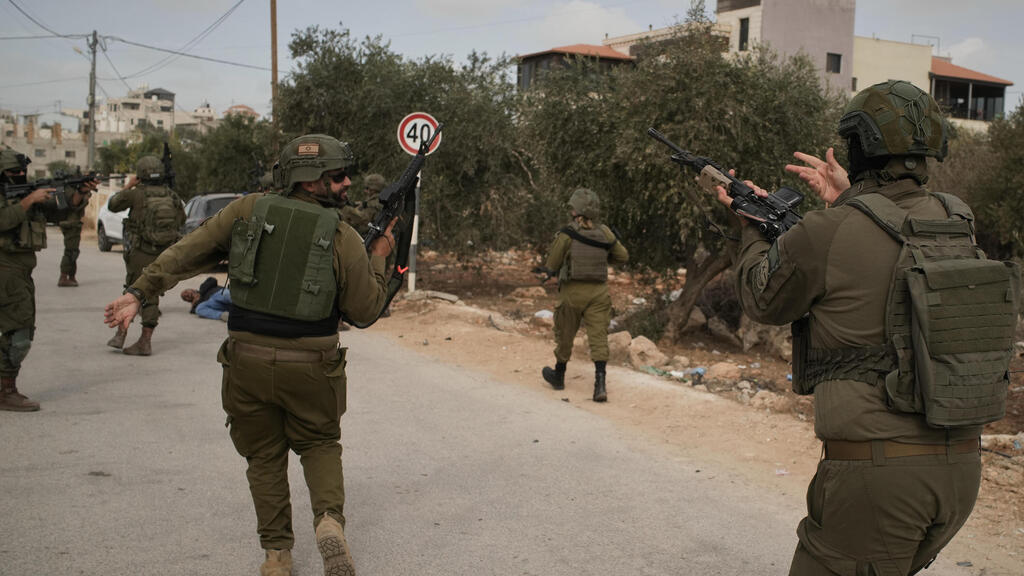
IDF troops deployed to clashes in the village of Abu Falah on Friday
(Photo: AP Photo/Leo Correa)
Since the beginning of 2026, approximately 200 illegal sheds and structures have been cleared across the West Bank, including in Areas A and B. The figure refers to clearance operations rather than necessarily 200 separate outposts, as the same outpost may have been evacuated more than once.
At the same time, two reserve Border Police companies were deployed to reinforce the area Saturday night. The forces are intended to help manage confrontations during the olive harvest season, strengthen the security presence on the ground and expand enforcement operations. One of their assigned missions is to double the number of evacuations. Security officials have emphasized that while efforts continue to legalize settlements where permitted and support agricultural farms, illegal construction will not be allowed at sites targeted for enforcement.
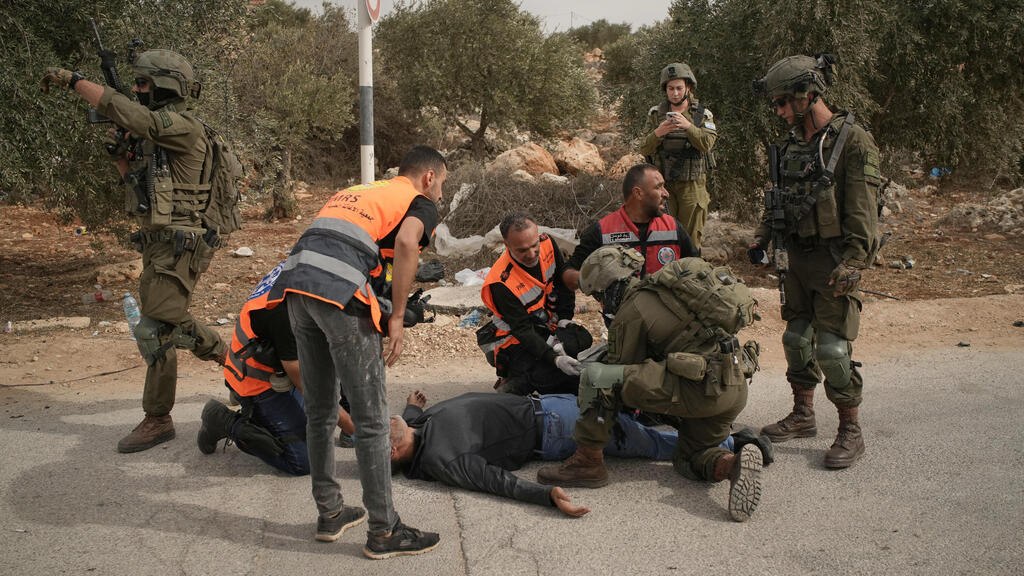
Abu Falah
(Photo: AP Photo/Leo Correa)
One of the locations where forces have operated in recent days is the illegal Shirat Zion outpost. According to a security official, structures at the site were evacuated Sunday, and six suspects were arrested by Border Police during the operation. All six were subsequently released, with a court ordering them to stay away from the compound. The decision, however, drew criticism from law enforcement officials. They argued that the compound had already been declared a closed military zone under an order issued by the regional military commander, which remains in effect until November. In their view, barring the suspects from the site offers no effective solution because it merely prohibits them from doing something that was already forbidden.
"We need effective enforcement," security officials said, stressing that military and police operations must be accompanied by legal measures that create deterrence and prevent suspects from quickly returning to the area. Meanwhile, security forces began additional evacuations Monday morning, arresting four more suspects as part of the enforcement operations.
Security officials view enforcement against illegal outposts as one of the tools available to reduce friction and violence. Alongside arrests, vehicle seizures and financial measures against suspects, the objective is to prevent illegal outposts from remaining in place and becoming recurring flashpoints for confrontation.
Attack on foreign diplomats in the village of Taybeh
(Video: Amit Orpali, Roni Federman)
Jewish rioters attack an American journalist from The Washington Post
(Video: Reuters)
The challenge for the IDF is to turn the current reinforcements and wave of evacuations into a sustained campaign rather than a one-time response to an exceptional incident. The question is whether expanded enforcement will succeed in reducing the number of violent incidents and whether cooperation between the military, police and judicial system will provide an effective response that prevents the same sites from being reestablished after their evacuation.
Amid international criticism following the violent incidents, particularly the attack on foreign diplomats, security officials are seeking to demonstrate that efforts to combat nationalist violence go beyond condemnations and arrests. For them, the real test will be on the ground: the scale of enforcement, the ability to prevent illegal outposts from being rebuilt and whether those involved in violence face meaningful consequences.
During the fall olive harvest season in the West Bank, violent incidents have been increasing, drawing international media attention this year. Last Friday, dozens of masked Jewish rioters attacked Palestinian olive harvesters in the village of Abu Falah, near Ramallah, injuring two people, including Heidi Levine, a photographer for the American newspaper The Washington Post.

Photographer Heidi Levine at the hospital
(Photo: REUTERS/Ali Sawafta)
A day later, Jewish extremists attacked diplomats from France, Belgium and Poland, along with Israeli activists who were visiting an olive harvest near the Palestinian village of Taybeh, considered the last remaining Christian village in the West Bank. Videos from the scene showed a group of masked men armed with sticks and stones approaching a vehicle carrying the diplomats and pursuing them on an all-terrain vehicle. Bernard Baudoux, mayor of the French town of Aulnoye-Aymeries, was later seen sitting on the ground with his back against a vehicle, wearing a French flag around his neck for identification. According to the diplomats, he was pushed during the attack.
Police announced Monday morning that they had launched an arrest operation in the West Bank under the name "Olive Leaf." Ten Jewish suspects were arrested in the early morning hours, and the operation continued into the morning. The detainees were taken for questioning by the Judea and Samaria District's central investigative unit and at police stations in the Samaria region. According to a police statement, investigators seized evidence in the suspects' possession linking them to the alleged offenses.