


During his first term, Donald Trump visited George Washington’s Mount Vernon estate on the banks of the Potomac River with French President Emmanuel Macron. At the height of the tour, Trump asked the site’s director, Doug Bradburn, why the first U.S. president had not named the estate after himself.
“If he was smart, he would’ve put his name on it,” Trump said. “You’ve got to put your name on stuff or no one remembers you.”
Bradburn reminded Trump whom the U.S. capital is named after, and people present said Trump appeared pleased by the point.
“Put your name on things or no one will remember you” has been Trump’s mantra since he was a young New York real estate developer. Many of his properties are sites and buildings someone else built, which he bought and branded with his name in large gold letters.
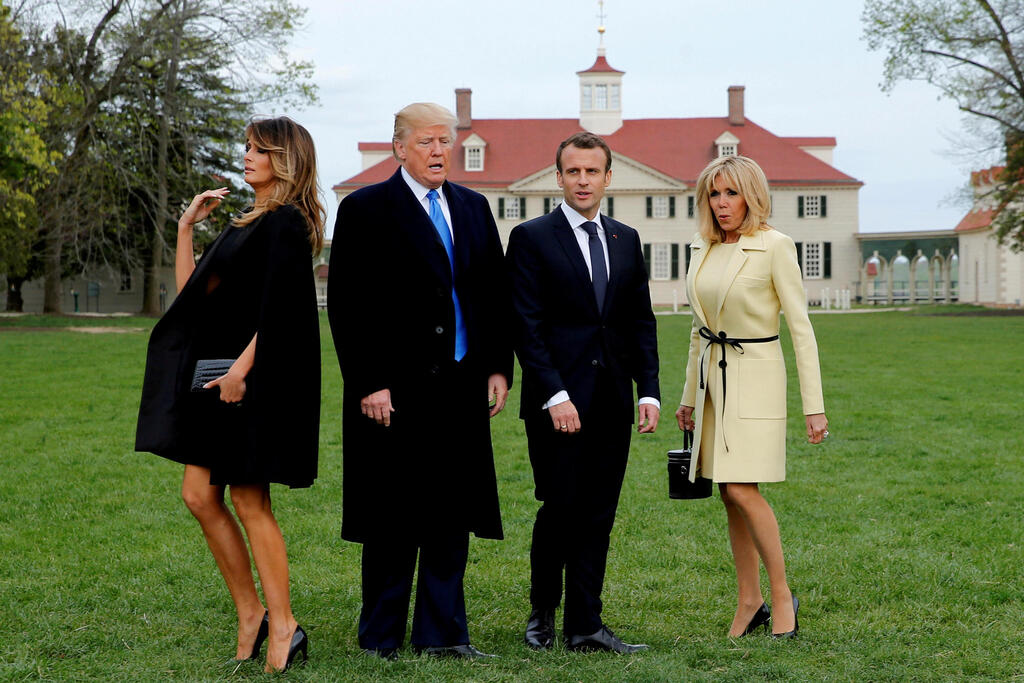
The 2018 visit to Mount Vernon
(Photo: Reuters)
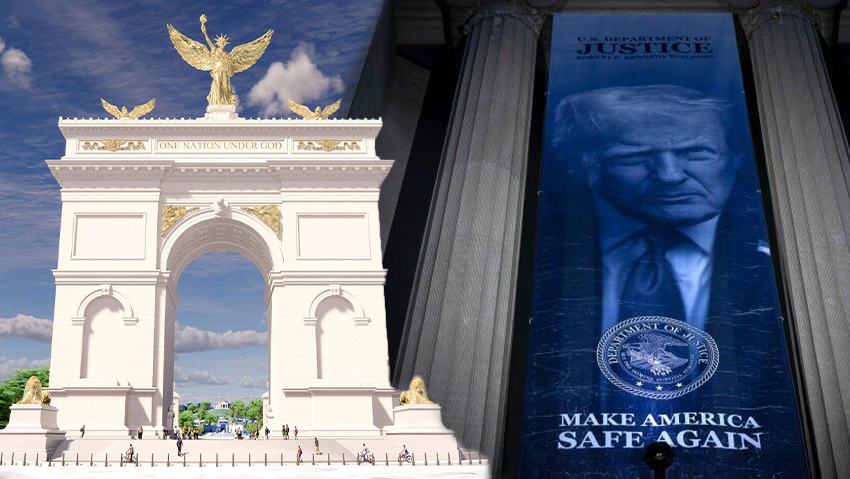
One might have thought that after reaching an office that makes a person one of the best-known figures in the world, Trump would stop worrying about being forgotten. Instead, since returning for a second term, he has devoted much of his time to leaving a physical mark on Washington — from changes at the White House, to the “Trump-Kennedy Center,” to plans for a massive triumphal arch.
‘The biggest and most beautiful’
Upon returning to the White House, Trump filled with loyalists committees that most previous presidents paid little attention to, including the Committee for the Preservation of the White House and the National Capital Planning Commission.
Last week, allies on the planning commission approved construction of a 75-meter (246-foot) triumphal arch across the Potomac River from the Lincoln Memorial. Trump has promoted the idea since visiting the Arc de Triomphe in Paris, which stands 50 meters (164 feet) tall, and has said the U.S. version would surpass it.
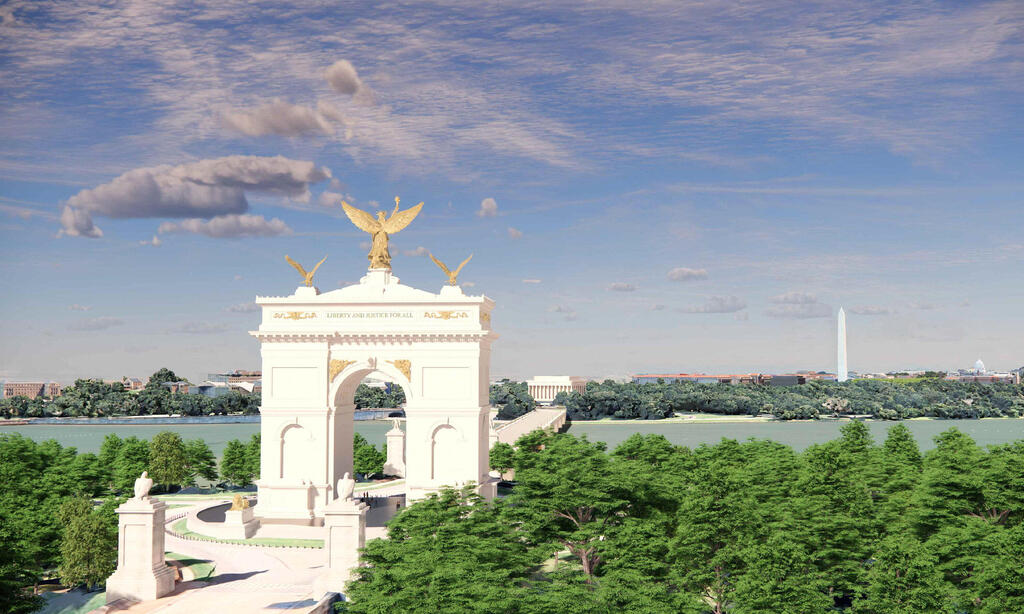
(Photo: U.S. Commission on Fine Arts/Handout via REUTERS)
Washington is the only major Western capital without a monumental arch, and the idea initially drew some support. But the proposal expanded significantly. What began as a plan for an 18-meter (59-foot) structure grew to 75 meters after reaching Trump.
The arch, unofficially dubbed the “Arc de Trump,” would be taller than its Paris counterpart and larger than the nearby Lincoln Memorial. Plans call for a gilded statue resembling the Statue of Liberty at the top, along with eagle figures and inscriptions reading “One nation under God” and “Liberty and justice for all.”
Veterans groups have opposed the project, arguing it would damage the view from Arlington National Cemetery. Trump, in a Truth Social post, described the project as a major addition to Washington that Americans would enjoy for decades.
‘The woman with the dog’ disrupted the plan
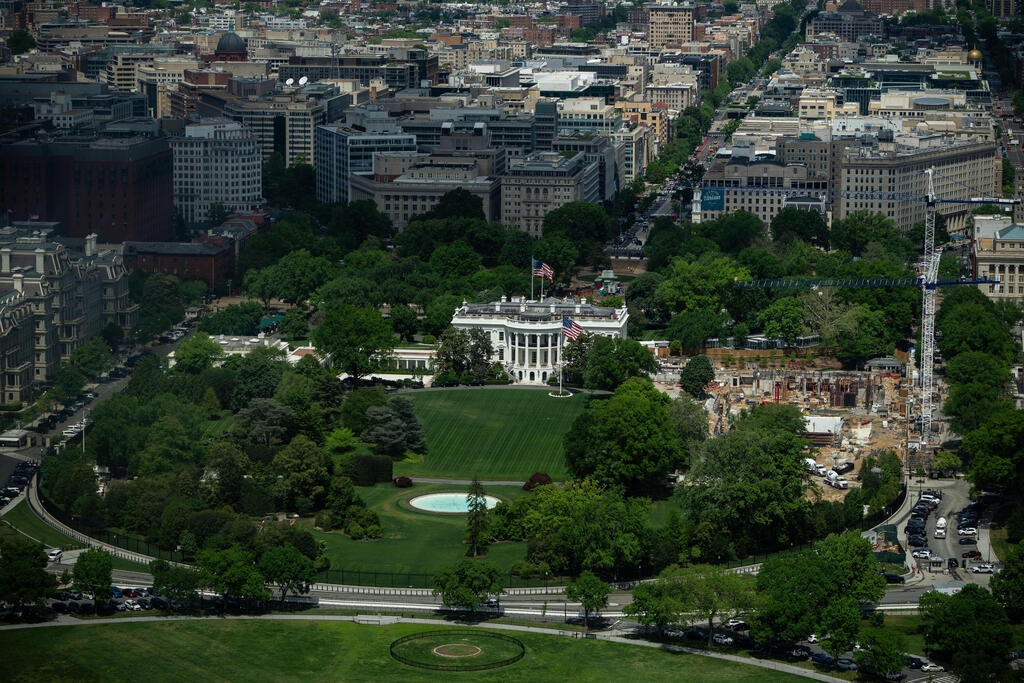
Trump has also pushed sweeping changes at the White House. While presidents traditionally make modest additions — such as Franklin Roosevelt’s pool or Barack Obama’s basketball court — Trump ordered the demolition of the East Wing, a structure that had stood for more than a century and historically housed the first lady’s offices.
The demolition, which typically would require congressional approval, was carried out to make way for a ballroom estimated to cost $400 million. The price tag initially stood at $100 million before rising sharply.
(Photo: Heather Diehl / GETTY IMAGES NORTH AMERICA / AFP)
According to a Washington Post analysis, Trump has frequently discussed the ballroom project, more often than some major policy issues. He has pressed to complete it before the end of his second term.
A court recently halted aboveground construction, ruling it lacked congressional approval, though underground work — including a new bunker — has continued. The administration argued the project includes critical security features against threats such as drones and missiles.
Trump has said the structure would include a “drone-proof roof,” armored glass and other protective systems, though the court rejected the argument that the ballroom itself is essential to national security.
After a shooting outside an event at the Washington Hilton, Trump argued on social media that a secure White House ballroom could help prevent such incidents and called for the lawsuit blocking the project to be dismissed. He referred to one of the plaintiffs as a “woman walking her dog.”

That appeared to be a reference to Alison Hoagland, an architectural historian involved in the lawsuit, who has argued the project would harm the surrounding landscape. She has denied having a dog.
Sen. Lindsey Graham, a Republican ally, said the incident highlighted the need for a more secure venue and announced plans to advance legislation approving the project and allocating federal funding.
With plenty of gold: the ‘Saddamization’ of the White House
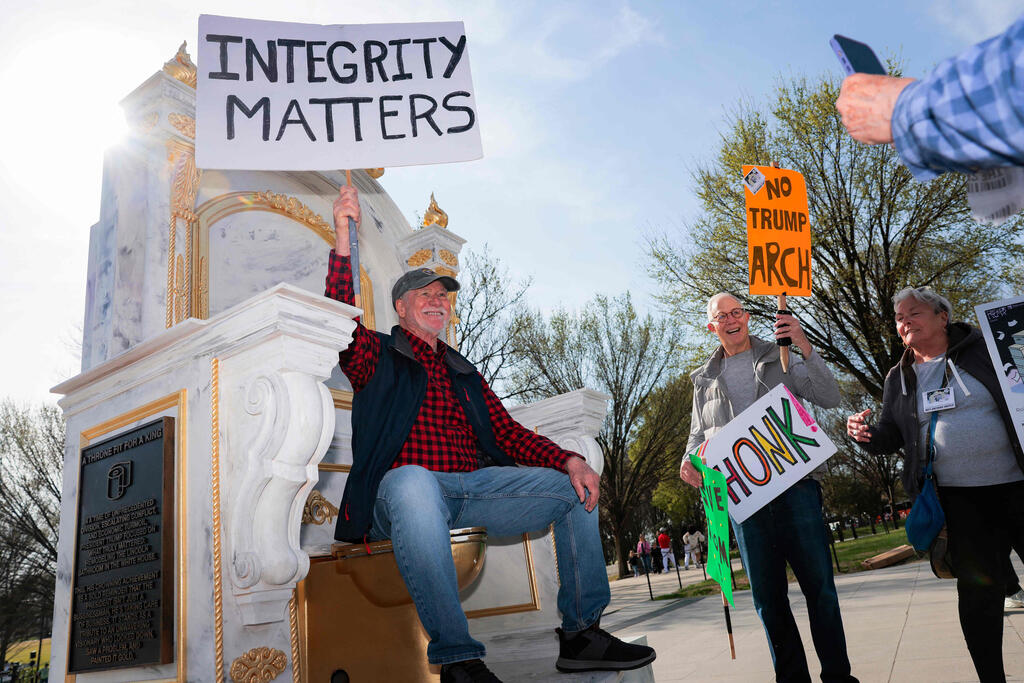
The ballroom is the most prominent project, but it is part of a broader set of changes. Trump renovated the bathroom attached to Abraham Lincoln’s bedroom with marble flooring and gold fixtures and ordered paving over parts of the historic Rose Garden, originally designed during the Kennedy administration.
He has also added gold-colored elements to the Oval Office, drawing comparisons by critics to the decor associated with former Iraqi leader Saddam Hussein.
(Photo: AP Photo/Julia Demaree Nikhinson)
Trump ordered the removal of a historic magnolia tree planted by President Andrew Jackson in 1829, citing its condition, and replaced a portrait of Hillary Clinton with an image of himself styled in the colors of the U.S. flag.
Along a White House colonnade, portraits of past presidents were installed, excluding Joe Biden, whose image was replaced with a depiction of an autopen.
The New York Times reported in March that Trump is considering converting the White House Treaty Room — a historically significant space used by past presidents and the site of major agreements — into a guest bedroom with a private bathroom.
Kennedy, move aside
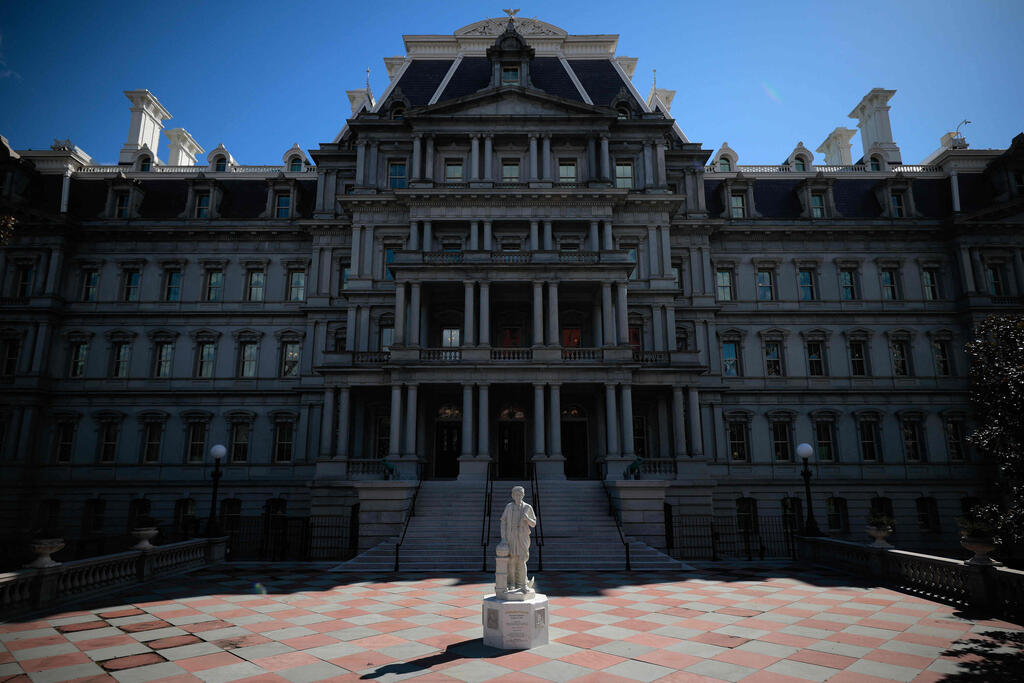
A statue of Christopher Columbus was recently installed at the entrance to the White House executive office building. The move is part of Trump’s effort to restore Columbus’ standing after monuments were removed during protests in 2020.
The statue is a replica of one that was toppled by protesters in Baltimore during demonstrations following the killing of George Floyd.
The case that best illustrates Trump’s approach is the Kennedy Center for the Performing Arts. After returning to office, he replaced much of its board and moved to reshape its programming, including opposition to what he has described as “woke artists.”
(Photo: CHIP SOMODEVILLA / GETTY IMAGES NORTH AMERICA / AFP)
In December, the board voted to rename the institution the Donald J. Trump and John F. Kennedy Memorial Center for the Performing Arts. Trump said he was “surprised” and honored by the decision, and the new name was installed shortly afterward.
Trump has since announced plans to close the center for two years for renovations costing $250 million, again without congressional approval.
Additional steps have drawn criticism as efforts to elevate Trump’s personal brand. Plans include placing his image on a commemorative U.S. passport edition, adding his signature to U.S. currency, issuing a 24-karat gold coin bearing his likeness and attaching his name to government programs such as TrumpRx and the “Trump Gold Card,” a proposed initiative offering citizenship to wealthy immigrants.