

A Moroccan lawyer has filed a complaint with the public prosecutor in Rabat after a video circulated on Arabic-language social media showing the burning of an Israeli flag during a pro-Palestinian demonstration in the Moroccan capital.
Faical Oumerzoug told ynet he filed the complaint Friday against several organizations and private individuals, accusing them of spreading hate content against Israel and the United States.
An Israeli flag set on fire during a pro-Palestinian demonstration in Rabat, Morocco


He said the material included the burning of the Israeli flag and signs bearing “extreme racist and antisemitic slogans that incite hatred.” He said such acts violate Moroccan law and claimed that one of the inciters called on residents of Marrakesh to murder Jews, something he said required action “before the incidents escalate and become real crimes.”
Oumerzoug asked authorities to open an investigation into those involved and "examine their ties to external actors, including Algeria, the Khamenei regime in Tehran, the Islamic Revolutionary Guard Corps, Hezbollah and the Muslim Brotherhood."
He also called for legal proceedings against anyone found to have “contributed to or participated in a conspiracy against Morocco and against the Jews, and acted in the service of foreign interests.”
One of the names mentioned in Oumerzoug’s complaint is Aziz Ghali, a Moroccan activist who took part in the Sumud flotilla to the Gaza Strip in 2025. Ghali was detained in Israel for several days and later released.
“Unfortunately, he was released,” Oumerzoug said. “We here in Morocco disavow him and condemn him. We have filed complaints against him.”
During the years of fighting in the Gaza Strip, Morocco has seen numerous demonstrations against Israel across the country. In most cases, protesters expressed support for Palestinians, demanded that Morocco cut ties with Israel and called for an economic boycott.
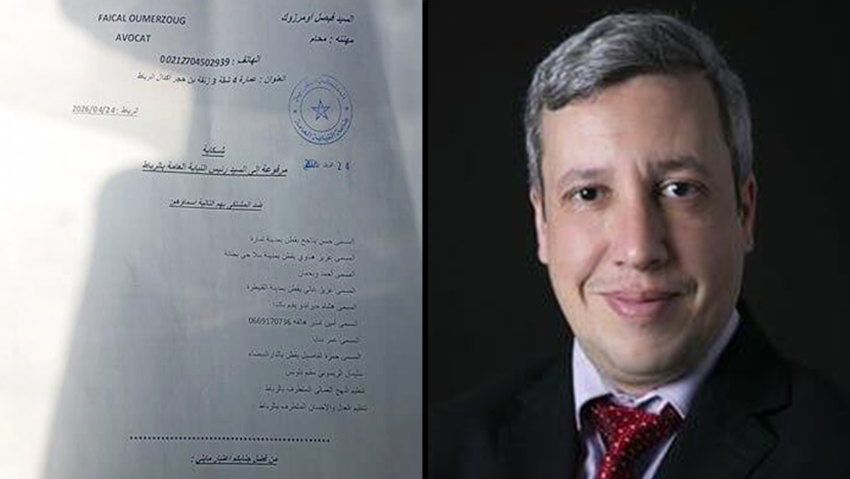
Faical Oumerzoug
Despite the protests, close relations between Israel and Morocco have been maintained. Opponents of the demonstrations have argued that they are not widespread and that the government does not suppress them because it wants to allow a “release of pressure,” while keeping them under control.
“We are for coexistence, peace and progress,” Oumerzoug said. “We have no problem if a person is Christian or Jewish. Every person lives with his beliefs.”
He said there are attempts to exploit the Palestinian issue and bring people into the streets, but that such efforts harm Morocco itself, threaten its stability and undermine what he described as the country’s defining values of coexistence and peace.
According to Oumerzoug, some groups in Morocco are acting on instructions from Iran and from certain foreign organizations and entities that provide them with money, in an attempt to damage the strong alliance between Morocco and Israel.
Oumerzoug described his complaint as “a personal initiative by a citizen who represents the vast majority of the people.”
“We all support Morocco-Israel relations,” he said. “We will defend our strategic relations and will not give space to these extremist organizations. Extremists do not represent us. We see Morocco and Israel as one. Our Jewish brothers have the right to pray and hold their ceremonies safely. Morocco was also a land of the Jewish religion. This cannot be denied.”