


A wave of grief and anxiety has swept through Druze villages on Israel’s Golan Heights following a massacre in the Syrian city of Sweida, just across the border, where hundreds were killed in days of brutal fighting.
Mourning tents have been erected, mass funerals held, and many families remain in limbo, waiting anxiously for word from missing relatives caught in the violence.
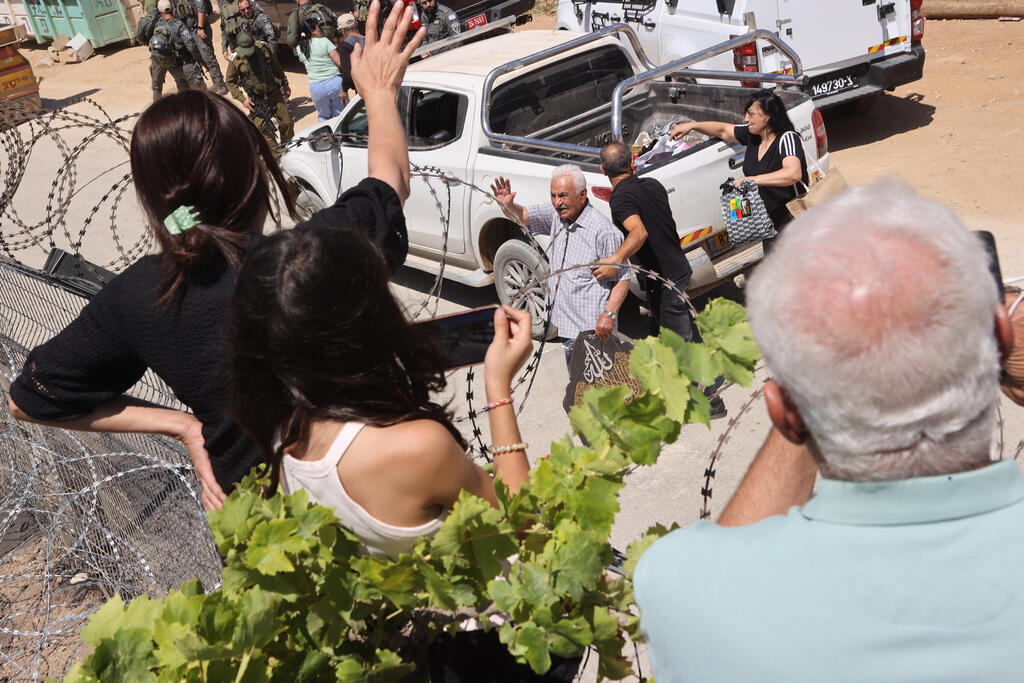
“What’s happening to them is happening to us,” said Jamil Batahish, a resident of Mas’ade. “Every family here has relatives there.”
According to residents, nearly every household has someone awaiting a phone call, a sign of life. At the al-Sha’ar family home, relatives are worried about a cousin still in the combat zone. “Today he sent me a message on WhatsApp. I played it for everyone,” said the family’s patriarch, Nazem. “We’re all worried about him and about Sweida. It’s not ‘over there’—it’s in our hearts. We and they are one.”
The violence in Sweida, a city with a significant Druze population, erupted amid a breakdown in ceasefire efforts between Syrian regime forces and armed Bedouin groups. More than 500 people were reported killed in the clashes. According to the Syrian Observatory for Human Rights, at least 154 Druze civilians and 79 fighters from the community were killed, including 83 who were executed by forces affiliated with the Syrian defense and interior ministries.

Bedouin fighters
(Photo: REUTERS/Khalil Ashawi)
Fighting intensified earlier this week, and while a ceasefire was reportedly reached overnight, Bedouin militants resumed attacks by Thursday evening. A Bedouin commander told Reuters the agreement did not bind his fighters, only the regime of President Ahmad al-Shara, whose forces had withdrawn. He said his units aimed to free Bedouins detained by Druze fighters in recent days.
The Observatory reported 243 regime troops and 18 Bedouin militants had been killed in the fighting, along with three civilians allegedly executed by Druze fighters. It also reported 15 Syrian government troops were killed in Israeli airstrikes meant to assist Druze forces, though the military said it was unaware of any such attack.
Get the Ynetnews app on your smartphone: Google Play: https://bit.ly/4eJ37pE | Apple App Store: https://bit.ly/3ZL7iNv
Residents of the Druze village of Buq’ata held mass funerals for relatives killed in the massacre. In Mas’ade, a mourning tent was set up for Imad al-Halabi, 62, who was killed defending his home. “He died a hero,” said his sister. “There’s nothing harder. He bled to death in the street, and his body wasn’t found for four days.” Her daughter added that the family has been separated from their Syrian relatives since the border was closed in 1967.
The border violence also led to rare reunions. While Druze youths from the Golan reportedly crossed into Syria to help relatives defend their homes, some Syrian Druze crossed into Israel—many reuniting with family for the first time in years. Some have since returned to Syria.
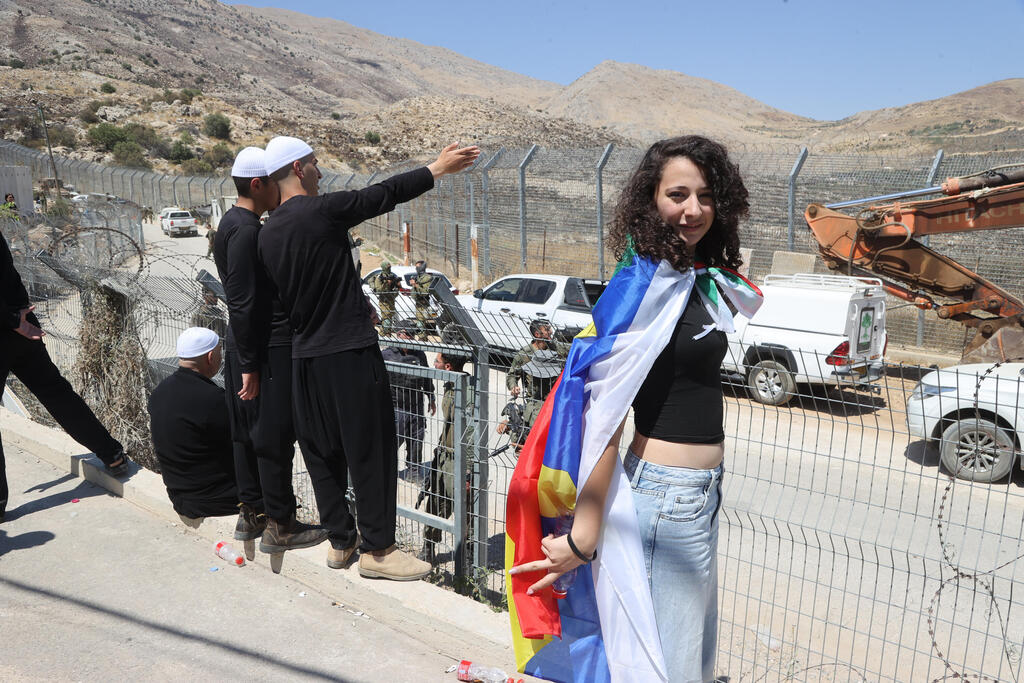
Druze protestors on the border with Syria
(Photo: Yariv Katz)
“This is the second time I’ve come here,” said Radi Abu Qais, a Syrian Druze who visited relatives in Majdal Shams. “The first time was for a religious visit. Now I came with my whole family. I just hope the visits continue.”
At the border, women waited quietly for news. “I’m just sitting here, waiting,” said Hafida Batahish, who hoped to see her brother. “I miss him. I worry. We didn’t speak. I’m still hoping.”
Another woman, Nahi Abu Salah, said, “I want to breathe the scent of Sweida’s people. They were massacred and tortured. I just want to see them and know they’re all right.”
According to local sources cited by Al Jazeera, more than 1,000 Bedouin civilians are being held by armed Druze groups in the town of Shahba near Sweida.