


Prime Minister Benjamin Netanyahu told local government leaders in a closed-door meeting that Israel is operating on the assumption that the war will last “a few weeks” rather than days, according to people who attended the discussion.
Those who heard Netanyahu’s remarks said Israel’s aim is to conclude the most intensive phase of the war before Passover, the major Jewish holiday that begins in early April this year, or at least to reach a point at which Iran has been stripped of most of its missile-launch capabilities and Israel can shift to what officials describe as an emergency routine.
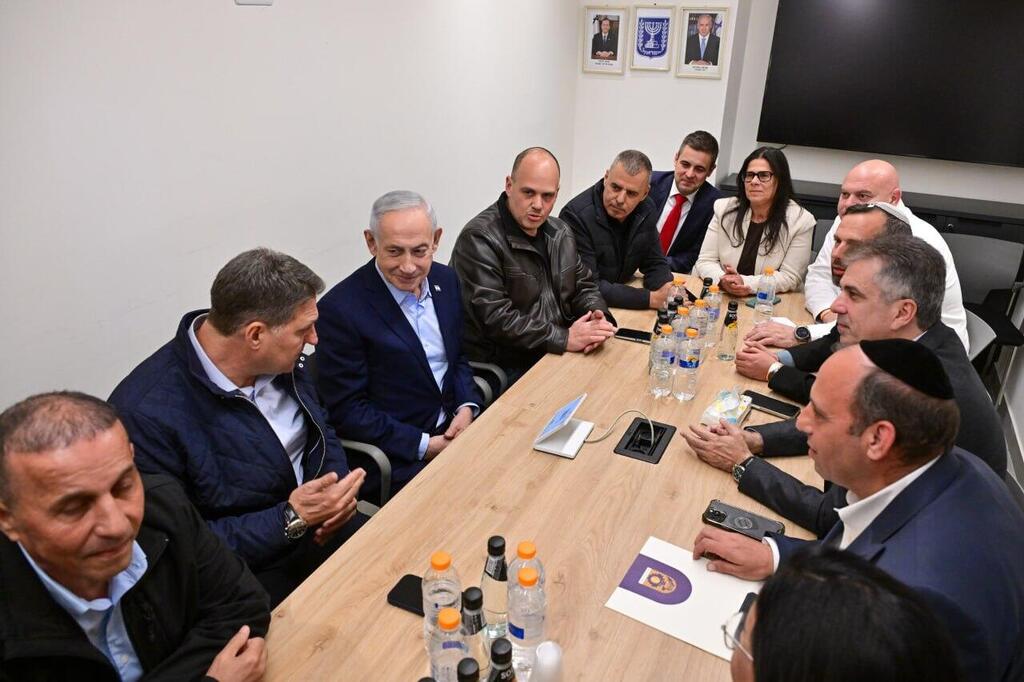
“There are various factors that we are taking into account. It is not a day or two, and I cannot tell you with 100% certainty whether it will be a month or a week,” Netanyahu said, according to participants in the meeting.
“At the moment, we are working on the assumption that this will definitely be measured in a few weeks and not days. At the same time, I say honestly: I do not know with 100% certainty. We are completing the mission now and not resting for a second. We are moving forward as fast as possible. I do not know how long it will take.”
On the possibility of regime change in Iran, Netanyahu said, according to those present, that a government cannot be replaced “at the push of a button.”
“That cannot succeed without a popular uprising there,” he said, according to the participants. “We and the Americans are doing everything possible, mainly from above, from the air, to give them the conditions for that. Here too, we wish it would break out tomorrow morning, but we cannot really know. We are doing everything possible to help them, but our ability in the end is limited.”
In Iran, police commander Ahmad Reza Radan warned Tuesday that the regime would treat anyone who took to the streets as an enemy.
“Whoever comes into the streets at the enemy’s request, we will treat him in the same way that we treat enemies,” he said.
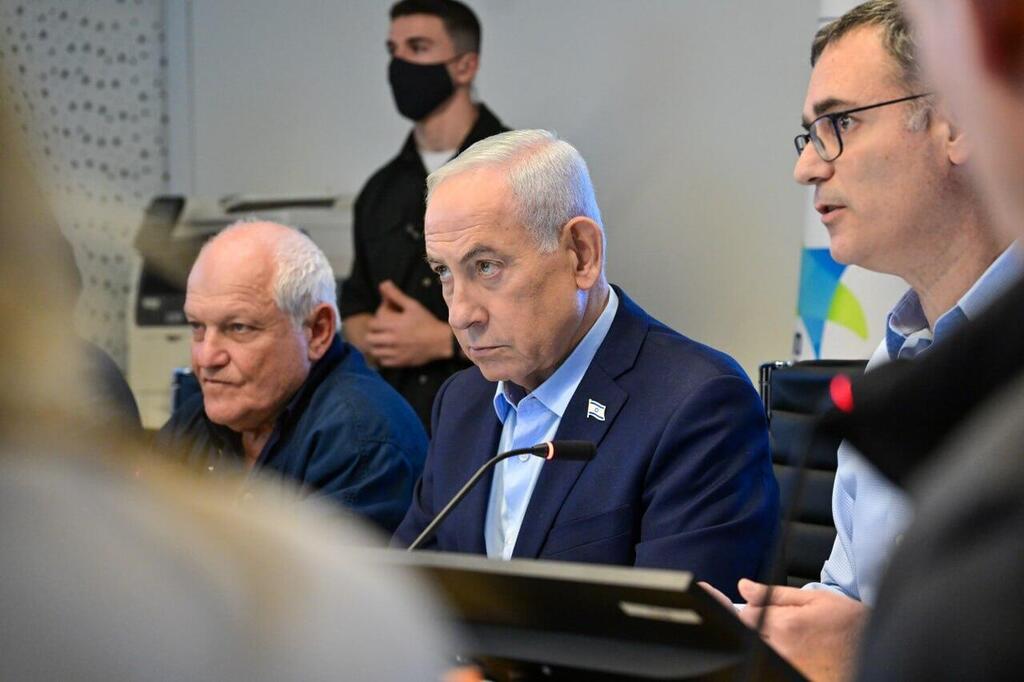
(Photo: GPO)
Netanyahu, for his part, on Tuesday called on Iranian citizens to seize what he described as a moment of weakness for the regime. In a post on X, the Israeli leader wrote: “People of Iran, we are waging a historic war for liberty. This is a once in a lifetime opportunity for you to remove the Ayatollah regime and gain your freedom. Together with the United States, we are hitting the Tyrants of Teheran harder than ever.”
At the meeting with local government leaders, Netanyahu also said that even if Iran’s next leader were killed, there would always be successors, and that Israel would have to wait for someone else to emerge and take control.
“There are conditions that ostensibly make this possible, but you do not really know what the condition of the people is in their homes,” he said, according to participants. “That is the only point because of which we cannot be certain the regime will change, but we are doing everything necessary to create optimal conditions and hope someone will take the reins.”
For now, the central variable remains when President Donald Trump decides to halt the war, largely because of U.S. public opinion and concern over rising oil prices, according to Israeli officials cited by the participants.
Trump said Monday that the war against Iran was, in effect, “very complete, pretty much” and that the United States was ahead of its planned timetable of four to five weeks. Later, when asked at a news conference whether the war could end within the week, Trump said no.
Bottom-line assessments among senior Israeli officials are that the fighting is likely to continue for another one to two weeks.