

“There was singing in the ward, prayers, laughter, and joy.” That’s how Prof. Noa Eliakim-Raz, head of the returning hostages’ unit at Rabin Medical Center, described the first night of freedom for those released from Hamas captivity after two harrowing years.
Among them was IDF soldier Matan Angrest, who spent his first night home sleeping beside his parents. His grandfather, Moti, said that Matan appeared “mostly healthy, with some scars on his hands and fingers, and in good spirits.”
Hostages welcomed back home
(Video: IDF, Itay Pollak, Sivan Hilai, Yossi Pons, GPO, Lior Sharon, Knesset Channel; video editing by Omri Tsingel)


“When I saw him, I cried,” Moti said in an interview from Sourasky Medical Center. “He told me he loves me, and I told him I love him. He survived all that horror. When he saw me, he even noticed my mustache had grown. We were so happy and emotional to see him. When he arrived in the ambulance from Re’im, my wife Rina and I broke down in tears.”
Moti said that one of the first things his grandson told him was, “If it were up to me, I’d go back to serve.” “That’s love for the country,” he added. “Our whole family was raised on that. Even my younger son, Matan’s uncle, volunteered for reserve duty and has already served 500 days. His goal was to bring his nephew home. Yesterday we saw the helicopter land, and there was Matan, stepping out and holding the Israeli flag.”
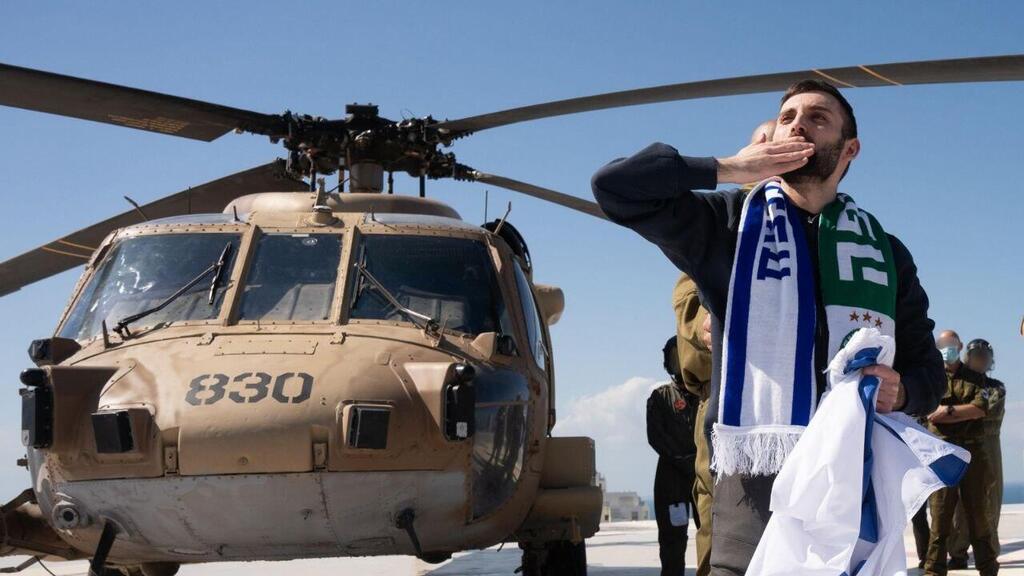
Though not religious, Matan began praying while in captivity. “He prayed three times a day,” his grandfather said. “He put on tefillin at his bar mitzvah and hadn’t done it since. Maybe now he’ll start again, like his grandfather.”
Matan also learned that his sister, Adi, had followed through on her enlistment in the Border Police after his abduction. “Before he was taken, he gave her his blessing and said, ‘We’re a family of fighters,’” his grandparents said. “He was thrilled to find out she’s serving.”
Rina, Matan’s grandmother, said, “We finally slept better last night—after two years without breathing. We focused only on Matan and his release. It’s a miracle. When we met, I didn’t want to ask too many questions. He told me, ‘Grandma, it’s okay,’ and even apologized for making us live through these two years. He said, ‘I’m sorry.’”
Meanwhile, Avinatan Or, reunited with his partner Noa Argamani, stepped out of Rabin Medical Center Tuesday morning for a brief walk in the courtyard with his family.
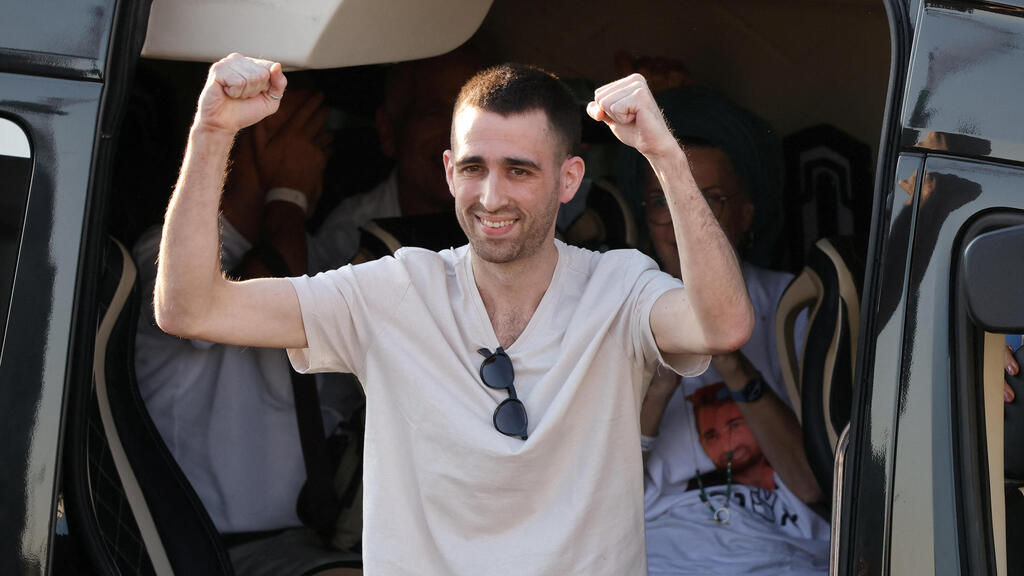
Avinatan Or
(Photo: Gil Cohen-Magen/ AFP)
Prof. Eliakim-Raz emphasized that the hospital allows each released hostage to recover at their own pace. “This is their first morning not in captivity—it’s monumental,” she said. “Many didn’t sleep all night. We’re adapting their checkups and schedules to their rhythm. After two years underground with no routine, adjusting to one in a single day is a major and difficult step in rehabilitation. What we want most is to give them back control. I’m always happy when someone says, ‘Today I’m not doing a test.’”
At Rabin Medical Center, Guy Gilboa-Dalal was also surrounded by family. A close friend said, “They brought him his guitar—his true love. He’s doing okay, and we’re all so happy. They also brought his anime books and Maccabi Haifa memorabilia. He’s a die-hard fan and can’t wait to return to the stands at Sami Ofer Stadium.”
Following the emotional reunion of Bar Kupershtein with his family on Monday, his cousin Barak Oz said the freed hostage had heard about the campaign fought for him while he was in Gaza. “I’m so happy,” Oz said.
“We spoke on video yesterday—it was the happiest moment of my life. He told me that everything I did for him gave him strength. We told each other how much we love one another. He thanked me for fighting for him, and I told him I’m crazy about him. I never believed he could hear me there, but I always ended my messages saying, ‘Bar, your father is talking to you, he’s standing up and fulfilling your dream.’ Now I know he heard it. Seeing him stand, hug me, and talk again—it’s overwhelming. He smiled, he looked good. He’s just himself again.”