

Hezbollah intends to carry out large-scale rocket barrages every few days in an effort to sow panic among the Israeli public. On Tuesday, the Israel Defense Forces identified preparations for such a barrage and, unlike in the previous instance, warned that more extensive fire than usual was expected. At the same time, the military acted to thwart and disrupt as many launches as possible. The IDF said Hezbollah had planned to fire roughly twice as many rockets as were ultimately launched.
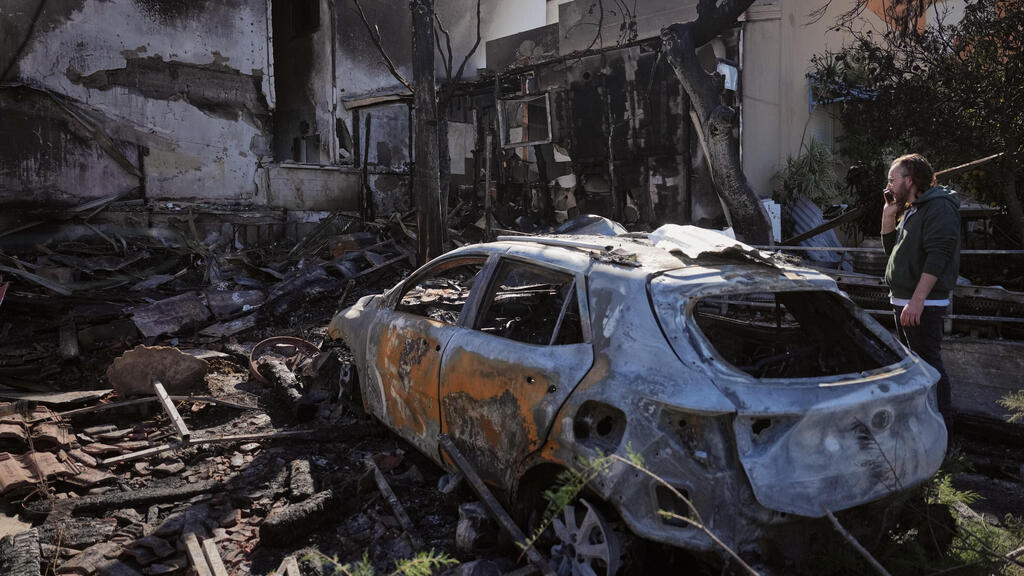
Hezbollah fired more than 100 rockets on Tuesday, most of which were intercepted or otherwise neutralized. In the largest barrage, which began at 8:30 p.m., the terror group launched about 40 rockets, most of which did not cross into Israeli territory. There were also drone launches that were intercepted. A day later, Israel’s Northern Command pointed to significant lessons learned by the Israeli Air Force in dealing with drones, after air defense systems struggled against them in a previous round of fighting.
The Israeli Air Force struck Hezbollah launchers and operatives in Lebanon
(Video: IDF)


Even before the launches began, the IDF said it had struck launchers, most of them mounted on mobile trucks. The military said targeting these vehicles is significant because their numbers are limited and they are central to Hezbollah’s rocket capabilities. As part of efforts to disrupt the barrage, the IDF also evacuated numerous villages from which launches were carried out, mainly in the Nabatieh area, pushing Hezbollah operatives farther from the Israeli border.
In response to the barrages, Northern Command carried out strikes in Lebanon, focusing on Hezbollah’s logistics hub in the Tyre area. The IDF also targeted fuel stations belonging to the group as part of efforts to damage its economic infrastructure. According to the military, these stations in Tyre are used by Hezbollah operatives to fuel vehicles, heavy equipment and launcher trucks. An additional economic target was struck in Beirut’s Dahieh district, a Hezbollah stronghold in the southern suburbs, and a targeted killing was apparently carried out in an apartment in Beirut on Wednesday morning.
Hezbollah’s methods
Northern Command has identified changes in Hezbollah’s operating methods following lessons from Operation Northern Arrows, an Israeli military campaign in Lebanon. The group, which was heavily damaged and is now left largely with short-range rockets, previously concentrated its weapons in several large depots to enable simultaneous heavy barrages. It has since shifted to dispersing its weapons, making it harder for intelligence agencies to track the many sites. The trade-off, according to the IDF, is a reduced ability to produce large-scale barrages as in the past.
The IDF said Hezbollah operatives dismantled mobile launchers and dispersed their components, including launcher arrays mounted on trucks. The weapons are spread across rural compounds in Shiite villages, often inside homes. Northern Command is working to disrupt this approach, as assessments indicate Hezbollah still has thousands of short-range rockets.
While Northern Command has identified an increase in Hezbollah rocket fire, the impact has been limited because most launches do not cross the border. At the start of the war, Hezbollah fired about 100 rockets and other projectiles per day; in recent days, that number has risen to about 150 daily, with roughly 60% falling short of Israeli territory.
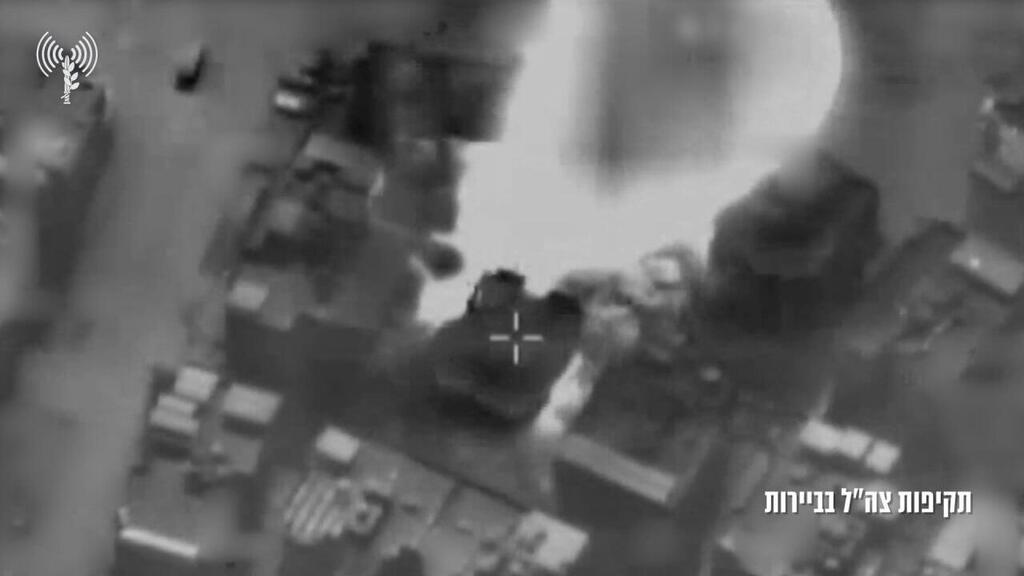
IDF strikes in Beirut
(Photo: IDF)
Meanwhile, Northern Command is expanding its ground presence in southern Lebanon. The first phase, launched earlier this week, was rapid and aimed at ensuring the ability to raid and penetrate key positions from which Hezbollah operates. The current goal is to push forward and remove the direct threat to Israeli communities, including anti-tank fire and short-range rockets.
So far, the IDF says more than 500 Hezbollah terrorists have been eliminated. According to the military, Hezbollah fighters are not engaging in close-quarters combat; instead, they are dispersed along a second and third line of villages, conducting defensive fighting and retreating when Israeli forces advance. At the same time, the IDF has expressed concern over what it describes as renewed Hezbollah entrenchment in these villages, something that was not expected after Operation Northern Arrows. Troops have found bags containing improvised explosive devices that had not yet been deployed. The military says this underscores what it views as the Lebanese army’s insufficient efforts to disarm Hezbollah.
As a result, Israel is seeking to establish a more substantial defensive buffer along the border, drawing lessons from the war in Gaza. Troops are advancing cautiously, using robots to scan areas before entering them, alongside airstrikes and artillery fire.
According to estimates, despite the absence so far of close combat, hundreds of Radwan Force terrorists — Hezbollah’s elite unit — are positioned south of the Litani River, with about 200 of them eliminated. They are deployed in small cells across a wide area spanning roughly 200 villages.