

Lebanon on Tuesday denied Israeli claims that a Lebanese soldier killed in an airstrike near the southern city of Sidon had links to Hezbollah, rejecting allegations that members of the army are connected to the Iran-backed terrorist group.
The denial followed an Israeli airstrike on Monday that Israel said killed three Hezbollah operatives involved in rebuilding the group’s military infrastructure in southern Lebanon. The Israeli military said two of those killed were members of Hezbollah’s air defense unit and alleged that one of them was concurrently serving in Lebanese army intelligence.
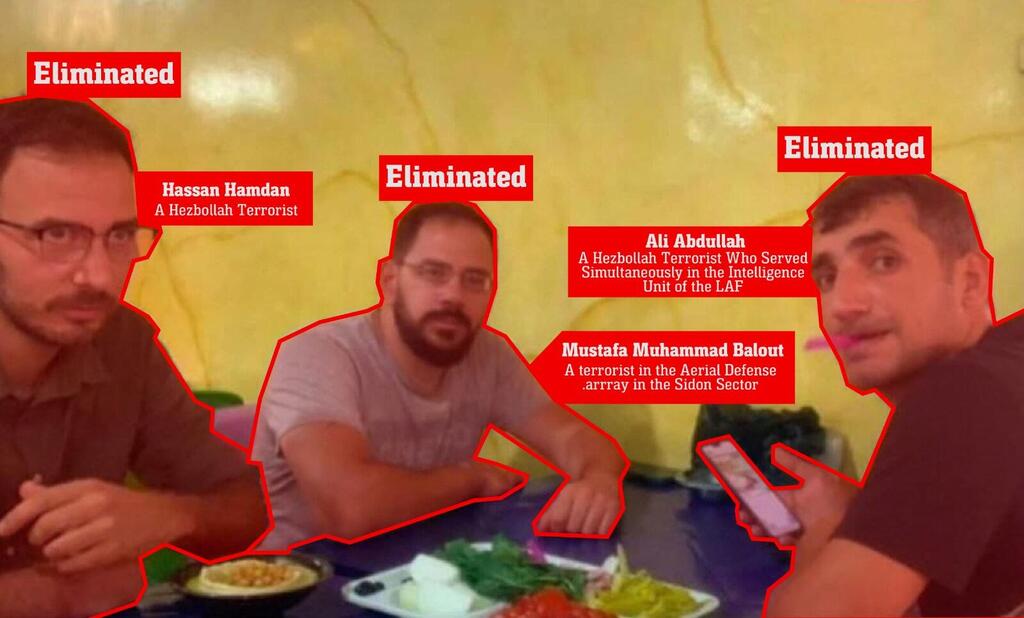
Three Hezbollah eliminated in an Israeli airstrike on Monday
(Photo: IDF)
The Lebanese army later confirmed that Warrant Officer Ali Abdullah, a member of the army’s Support Brigade and Anti-Tank Regiment, was killed when an Israeli strike hit a vehicle near Sidon. Lebanon’s Defense Ministry said any suggestion that army personnel are affiliated with political or armed groups is false.
Defense Minister Michel Menassa said the claims amounted to a “malicious attack” on the Lebanese army as an institution. A Hezbollah official also denied to Reuters any link between the group and members of the Lebanese military.
Israel’s military said the strike was part of an ongoing campaign against Hezbollah operatives attempting to restore terrorist infrastructure in southern Lebanon, activity it says violates the ceasefire understandings along the Israel-Lebanon border.
According to the IDF, Abdullah was a Hezbollah operative who also served in the Lebanese army. Two additional Hezbollah members were killed in the strike: Mustafa Balout, who the military said was active in Hezbollah’s air defense network in the Sidon area, and Hassan Hamdan.
The strike comes amid heightened sensitivity in Lebanon over claims of coordination between the Lebanese Armed Forces and Hezbollah. Earlier this month, Lebanon’s military issued a rare public denial after Iranian media outlets alleged extensive ties between the two.
Diplomatic efforts are ongoing to stabilize the Israel-Lebanon frontier following a U.S.-backed ceasefire reached in November 2024, which ended more than a year of fighting between Israel and Hezbollah. The agreement calls for the disarmament of Hezbollah, beginning in areas south of the Litani River near the Israeli border.
On Tuesday, the Lebanese army said it was nearing completion of the first phase of its deployment plan in southern Lebanon and was assessing next steps based on conditions on the ground.
Israel has repeatedly accused Hezbollah of violating the ceasefire by attempting to rebuild military infrastructure and reposition forces in southern Lebanon. An international committee overseeing the truce said last week it was focused on returning displaced civilians to their homes, warning that tensions could rise if a year-end deadline to disarm Hezbollah is not met.