

Storm Byron brought unusually heavy rainfall, with several areas along Israel’s coastal plain recording more than 50% of the annual average within just a few days. The intense rain caused flooding, flash floods and widespread damage, but the Israel Meteorological Service stressed that despite the large volumes, the system ultimately represents a loss for the water economy and has harmed agriculture.
According to meteorological data, Shavei Zion, south of Nahariya, recorded 331 millimeters of rain by midnight, 55% of its long-term annual average. At the Port of Ashkelon, 240 millimeters were measured by midday, about 60% of the annual average. Haifa reached 43%, while Ein Carmel, the area with the highest rainfall during the system, recorded 47%. Hadera saw 37%, Kfar Hayarok 30%, Beit Dagan 25% and Ashdod 25%.
Elderly man's home flooded in Ashkelon, caregiver trapped - and rescued
(Video: Tomer Shunem Halevi)


Flooding in Ashkelon and Kiryat Gat
(Video: Israel Fire and Rescue)
In Jerusalem’s Givat Ram neighborhood, rainfall reached 25% of the annual average, compared with 22% in Maale Adumim and 36% in Ariel. Beersheba recorded 49% and Sderot more than 40%. Kibbutz Yotvata logged 181% of its annual average, though most of the rain in the Arava fell during a system that preceded Byron.
Conditions were less favorable in the Upper Galilee and the Golan Heights. The Upper Galilee recorded only 15% of average rainfall, while the Golan ranged from 13% at Merom Golan to 17% in the southern plateau. In northern Lake Kinneret, rainfall reached 17%, and 27% was recorded at Tzemah on the lake’s southern shore.
Data also show that in most parts of the country, rainfall totals through Dec. 11 were above the multi-year average, except in the Upper Galilee, the Golan and the Karmiel area. Overall, the Carmel region, the northern Negev and the coastal plain received about a quarter to a third of their annual rainfall in recent days, including roughly 220 millimeters out of an annual 600 to 650 in the Carmel, and about 120 millimeters out of 350 to 400 in the Gaza border region.
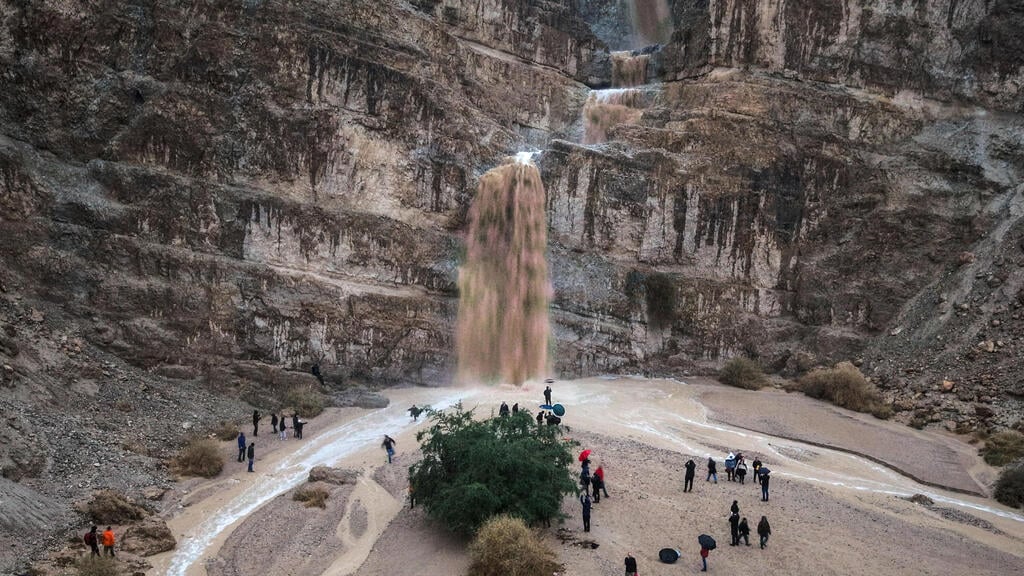
Israel Meteorological Service Director Dr. Amir Givati said that when such large amounts of rain fall over a short period, most of the water runs off as surface flow rather than seeping into groundwater or being stored for later in the season. “This is a loss for the water economy,” he said. He added that flash floods also cause damage compared with rain that falls in smaller amounts over more frequent events, and that long dry spells between heavy storms are harmful to agriculture. “Soil and crops don’t need such large quantities at once, but rather irrigation every few days,” he said.
As forecast, urban areas experienced flooding because water could not infiltrate the ground. Adi Noy, head of the Central District Planning Department at the Jewish National Fund, said that increased construction on open and forested land worsens flooding. Forests and open spaces, she said, allow rainwater to seep into the ground and slow runoff. “The latest system illustrated how ground cover directly affects flood intensity,” she said.
In Kiryat Gat, where 90 millimeters of rain fell, the Lachish stream overflowed its banks, flooding the nearby Galikson neighborhood and causing extensive property damage.
Caregiver trapped in flooded home
Yosef Shunem Halevi, a 100-year-old member of Ashkelon’s Yemenite community, lives in the city’s old Migdal neighborhood, which includes former Arab homes. Late Tuesday night, his caregiver alerted the family that the house was completely flooded and that she was trapped inside. Halevi was not at home at the time.
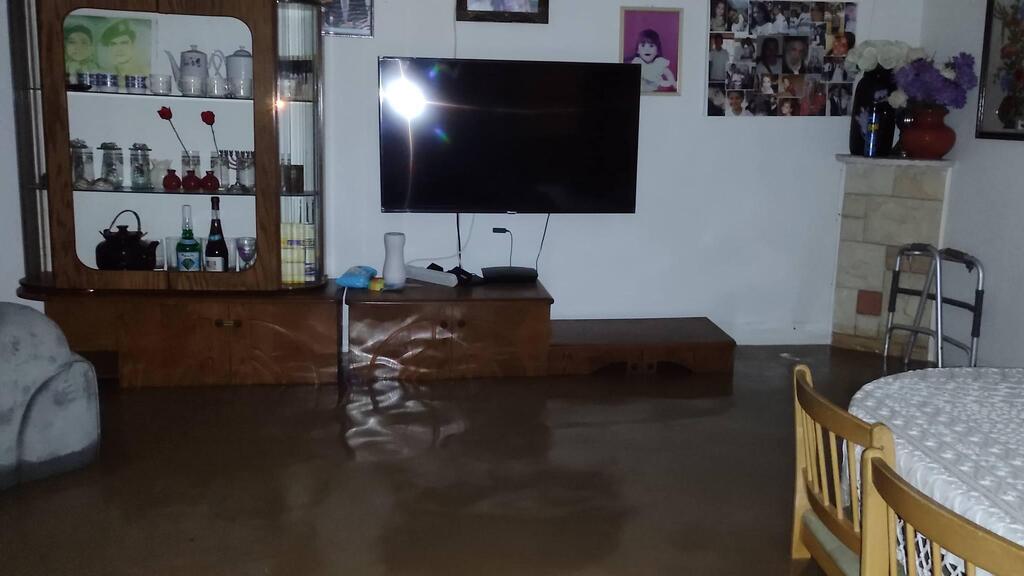
Flooding at the home of 100-year-old Yosef Shunem Halevi
(Photo: Tomer Shunem Halevi)
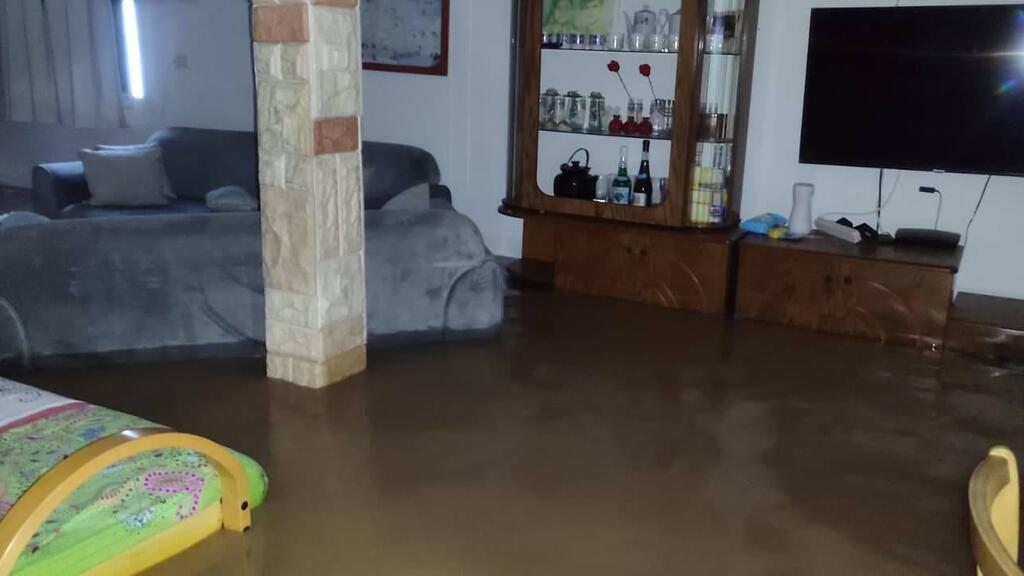
(Photo: Tomer Shunem Halevi)
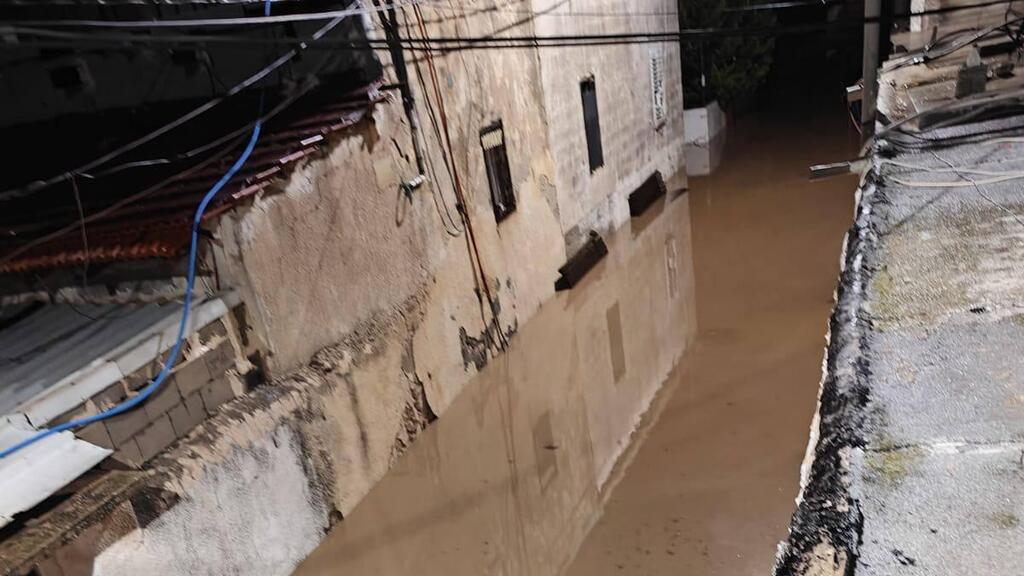
The neighborhood where Yosef lives
(Photo: Tomer Shunem Halevi)
His grandson Tomer, a photographer for ynet, said the family received the call around 1 a.m. “She said the water kept rising. She climbed onto a table until we arrived to rescue her,” he said. “Rescue forces didn’t arrive, and we had to wade through freezing water about a meter deep in a street that had turned into a river. Everything was destroyed — all the household contents, including medical equipment, an electric bed and an oxygen generator. Luckily he was hospitalized and only the caregiver was there. Otherwise he could have died of hypothermia before we got there.”
‘The citizen is again left alone’
The environmental group Adam Teva V’Din said that seven years after the government decided to prepare for the climate crisis, Israeli citizens are once again being left to face the dangers alone. “The state’s preparedness amounts at best to unfunded contingency plans, or in many cases a complete lack of planning,” the group said. “In this life-threatening extreme event, the state again failed to provide security to its citizens. Israel must urgently begin implementing preparedness plans at both the local and national levels, because this storm is only a sign of what lies ahead.”
After several calmer days, Givati said the next rain system is expected to be relatively short, arriving early Monday and ending Tuesday. It will be far less significant than the recent storm, with generally lower rainfall totals. The rain will focus on inland areas and extend into the south.
Tonight is expected to be partly to mostly cloudy, with local light rain mainly along the southern coastal plain. On Saturday, light showers or drizzle are expected in northern and central Israel. Temperatures will rise slightly and return to seasonal levels.