

The Board of Peace for Gaza has issued its first construction contract, a provisional deal to build a rudimentary military outpost for 150 Moroccan troops inside the territory, according to a source familiar with the plans who spoke to The Guardian.
The contract, which has not yet been finalized, was awarded to Arkel International, a Louisiana-based company that has previously carried out work for the U.S. government in countries including Iraq.
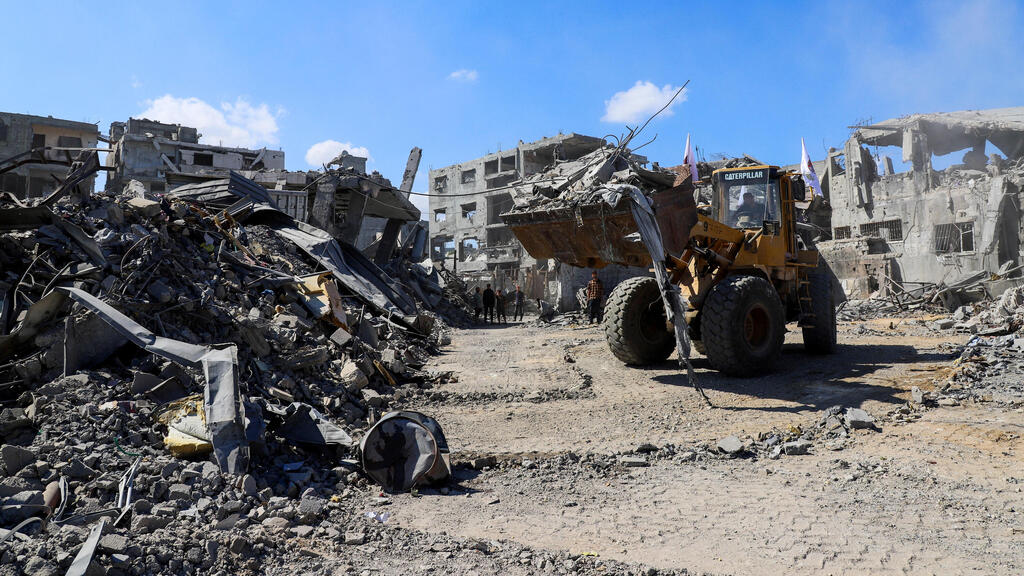
Reconstruction work in Gaza. archive
(Photo: REUTERS/Ebrahim Hajjaj)
A Board of Peace official said in an email that the organization and the Palestinian technocratic body overseeing Gaza were “in the final stages of preparing several contract awards,” but stressed that none had yet been completed.
The Palestinian body is known as the National Committee for the Administration of Gaza.
“One prospective contract concerns facilities to support the international stabilization force, which will assist in implementing the roadmap’s security and governance arrangements,” the official said.
“This contract will be one of many that are essential for the future of Gaza.”
The planned outpost would measure just 100 by 120 meters and house a contingent of Moroccan soldiers rotating from a base inside Israel, according to the source.
It would be built in an Israeli-controlled section of Gaza about one mile, or 1.6 kilometers, from the Israeli border. The facility would also have a “quick extraction route” to evacuate the small force if it came under attack.
A United Nations resolution authorizing the Board of Peace also approved the establishment of an International Stabilization Force for Gaza.
Several countries have been discussed as possible contributors to the force. Morocco has pledged a small contingent, but the ISF’s legal framework has not yet been finalized, and it remains unclear when the troops will deploy.
Earlier contracting plans reviewed by The Guardian described the 150-person outpost as the first stage of a much larger military base intended to accommodate 5,000 members of the international force.
The larger compound was expected to include vehicle fighting positions, a raised defensive perimeter and basic facilities intended for short-term military deployments.
According to the preliminary contract, the first stage would include “tents and cots for forces to sleep, as well as chemical toilets and handwashing stations.”
“At this phase, this is what we would consider habitable,” the plans stated.
The modest proposal marks a sharp contrast with the sweeping vision previously presented for Gaza’s reconstruction.
At the Board of Peace’s first meeting in January, Jared Kushner unveiled a master plan for a “New Gaza” featuring a waterfront city, mixed-use towers, industry and large-scale economic development.
The Guardian reported in July that the original territory-wide reconstruction plan had been drastically reduced to a small pilot project in southern Gaza.
The proposed military outpost is therefore not only the Board of Peace’s first prospective construction contract in Gaza, but also an early test of whether its far larger security and reconstruction plans can move beyond the planning stage.