


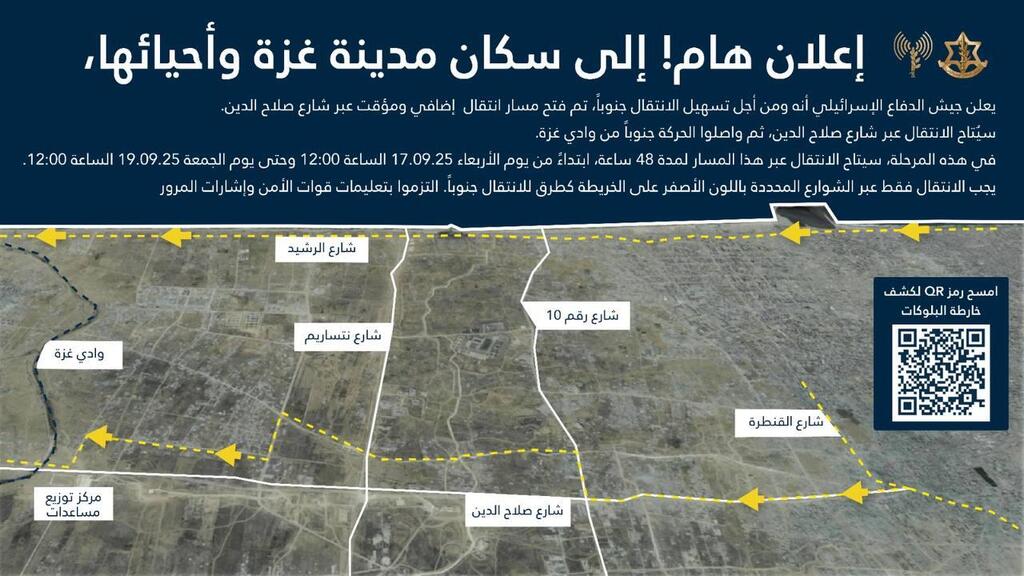
The IDF announced Wednesday that it will temporarily open a second evacuation route for residents of Gaza City to head south, as growing congestion along the main coastal road has slowed movement and raised safety concerns.
The new corridor will run along Salah al-Din Street, the main north-south artery through the Gaza Strip, and will be open for 48 hours—from noon Wednesday until noon Friday, Sept. 19. The IDF instructed residents to use only the yellow-marked paths on official maps, which identify designated safe passages.
The decision comes as Israeli ground forces continue their push into Gaza City. In recent days, traffic on the coastal al-Rashid Road, previously used for evacuations, has slowed to a crawl. Many families reported difficulties finding transportation and voiced frustration over limited options.
Salah al-Din Street cuts through Gaza from north to south and passes east of Gaza City. The IDF has used it before in similar humanitarian operations, including early in the war when it served as a route for displaced civilians fleeing northern Gaza.
As with the previous operation, the IDF said Palestinians may cross freely via the open route—most likely through the Natzarim Corridor—without being screened at military checkpoints.
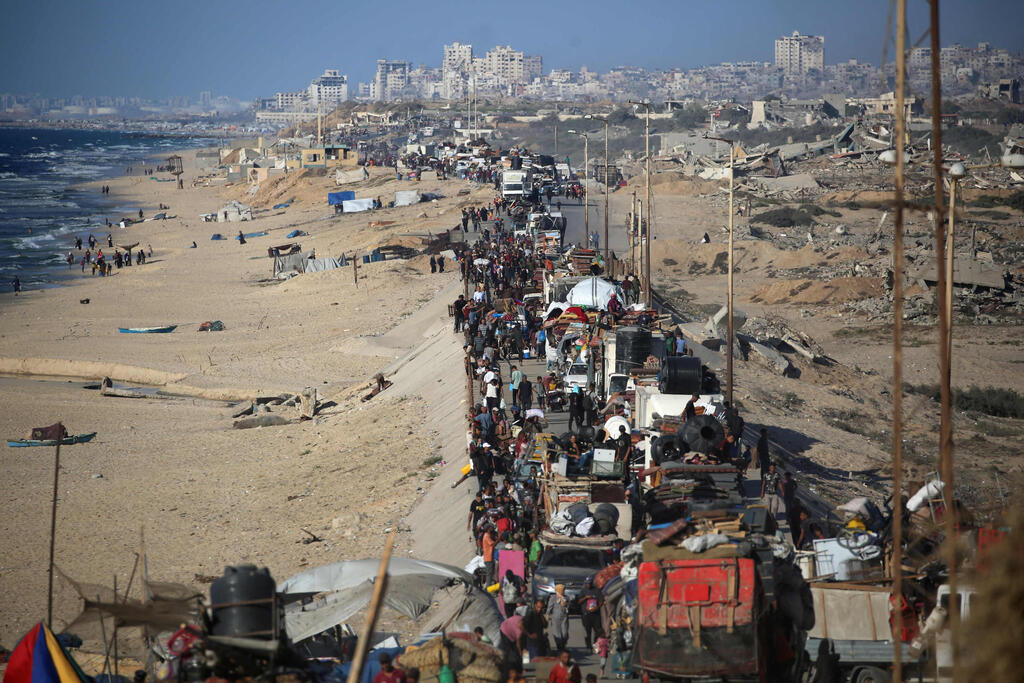
Palestinian civilians evacuating from Gaza city southward
(Photo: Eyad BABA / AFP)
In interviews with international media, some residents expressed fear and uncertainty about evacuating. Fatima al-Zahra Sahweil, 40, told the Guardian that she is unsure whether to leave: “I don’t own a tent to give us shelter, and they are too expensive to buy. I would not be able to take all of the belongings and supplies I have already bought several times before. Then there is the suffering we would face in searching for water and the lack of empty spaces to stay in. So if I leave, I would simply be going into the unknown.”
In the Wall Street Journal, another resident, Manar Ashi, a mother of three from the Rimal district of Gaza City, said simply: “I wish I could leave.”
The IDF accused Hamas of circulating fake maps and leaflets to mislead civilians. “We’ve repeatedly urged Gaza residents to relocate to the humanitarian zone in al-Mawasi for their own safety,” the military said. “We call on civilians not to fall for rumors and disinformation.”
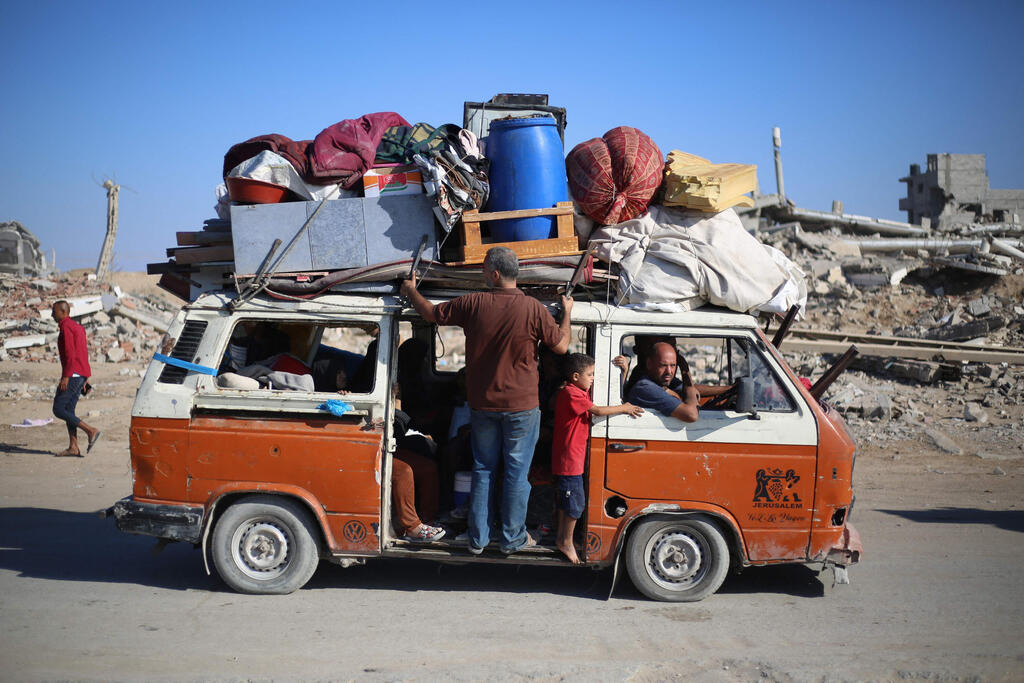
Palestinian civilians evacuating from Gaza city southward
(Photo: Eyad BABA / AFP)
Military officials reiterated longstanding accusations that Hamas uses civilians as human shields. “The organization is in a state of panic and is using lies as a weapon,” the IDF said.
According to Israeli estimates, roughly 370,000 people have already fled Gaza City, while about 500,000 remain. “Conditions in the south are better,” the IDF said. “Hamas is using violence to prevent residents from leaving. We’ve launched extensive aid campaigns. Over 20,000 tents have already arrived, and more are on the way—along with food, medicine and water. In fact, there are more water lines than before the war.”
Officials expect the pace of evacuation to increase as ground operations continue to advance.